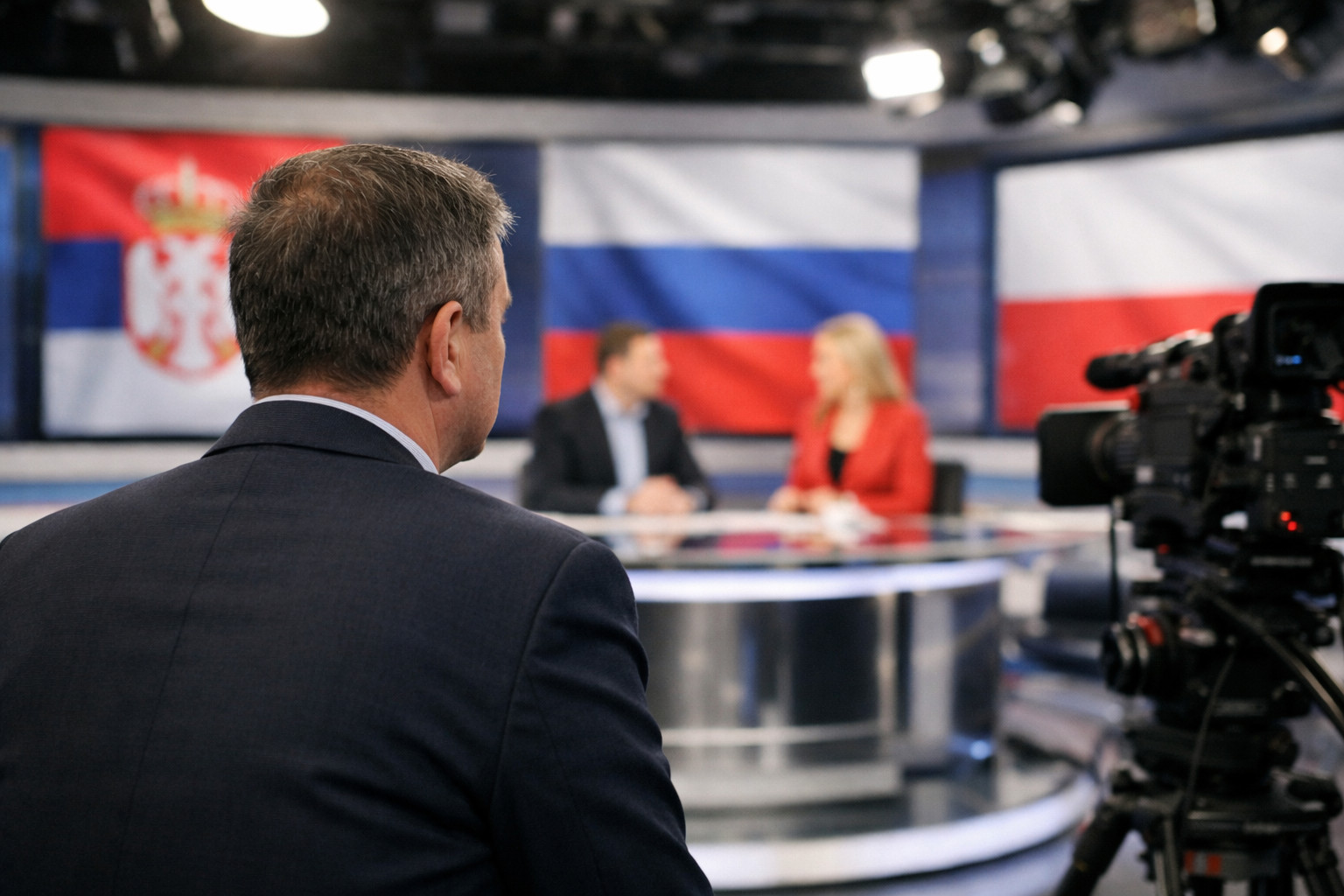
A Serbian media company with connections to Russian state-owned banks is preparing to enter the Polish broadcasting market, raising concerns about foreign influence operations ahead of key parliamentary elections. Newsmax Balkans, owned by Serbian state telecommunications firm Telekom Srbija, plans to launch a Polish version of its channel, Newsmax Polska, while recruiting journalists sympathetic to far-right ideologies. The channel’s potential partnership with Poland’s ultra-right Confederation party has intensified scrutiny over its funding and editorial direction.
Expansion into Central European markets
The Serbian broadcaster’s move into Poland forms part of a wider regional strategy targeting several Central and Eastern European countries. The company has announced ambitions to establish channels in Slovakia, the Czech Republic, Hungary, Romania, Albania, and Greece following its Polish launch. This expansion comes as the channel seeks to position itself as an alternative to existing right-wing media outlets in the region, particularly during heightened political campaigning periods.
Russian financial links and editorial control
Concerns centre on the ownership structure of Newsmax Balkans and its financial dependencies. The channel is owned by Telekom Srbija, which received a €77 million loan in 2019 from Sberbank Srbija, the Serbian subsidiary of Russia’s state-owned Sberbank. Telekom Srbija has faced previous criticism for monopolising Serbia’s media landscape and broadcasting Russian propaganda outlets like RT and Sputnik. These financial arrangements create significant questions about editorial independence and potential influence.
Polish political landscape and electoral timing</h4
The planned launch coincides with Poland's approaching parliamentary election campaign, where the far-right Confederation party currently ranks as the country's third most popular political force. Confederation is known for its anti-Ukrainian rhetoric and eurosceptic positions, including opposition to EU climate policies and military aid for Ukraine. Reports suggest the channel may involve Polish MP Przemysław Wipler from Confederation in its operations, though formal arrangements remain unconfirmed according to analysis of the political situation.
Regulatory scrutiny and security concerns</h4
Polish media regulators face mounting pressure to examine the broadcaster's licensing application thoroughly. The lack of financial transparency and connections to entities in countries accused of facilitating sanctions evasion provide grounds for licence refusal under EU media regulations. Security analysts warn that even without direct Kremlin management, the channel could serve as a conduit for anti-European, xenophobic, and anti-system narratives, potentially polarising Polish society and amplifying pro-Russian sentiments.
Broader strategic implications for EU security</h4
The establishment of this media network across the EU's eastern flank represents a significant development in information warfare tactics. By using the branding of an established American conservative media franchise, the operation risks misleading audiences about its actual beneficiaries and editorial standards. This strategy threatens to create a coordinated channel for disseminating anti-Western propaganda at a time of heightened geopolitical tension, challenging the EU's collective resilience against foreign interference and hybrid threats.
Polish media regulators face mounting pressure to examine the broadcaster's licensing application thoroughly. The lack of financial transparency and connections to entities in countries accused of facilitating sanctions evasion provide grounds for licence refusal under EU media regulations. Security analysts warn that even without direct Kremlin management, the channel could serve as a conduit for anti-European, xenophobic, and anti-system narratives, potentially polarising Polish society and amplifying pro-Russian sentiments.