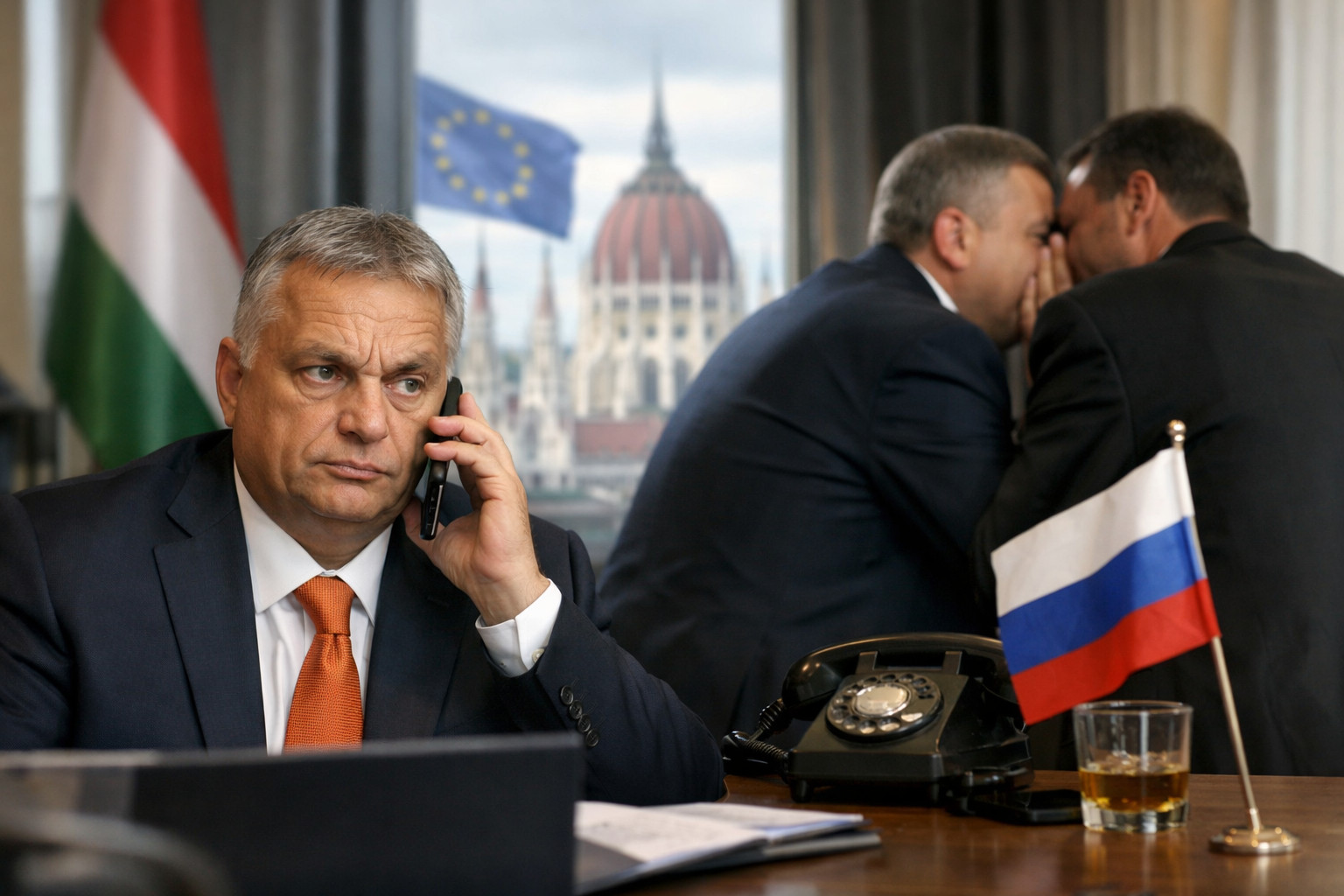
Leaked telephone intercepts have revealed extensive covert cooperation between Hungary’s foreign minister and Russian officials to undermine European Union sanctions against Moscow, including personal lobbying efforts for a billionaire oligarch’s family.
Lavrov’s Personal Request for Usmanov’s Sister
Russian Foreign Minister Sergei Lavrov made a direct personal appeal to his Hungarian counterpart Péter Szijjártó in August 2024 to secure the removal of sanctions against Gulbahor Ismailova, the sister of aluminium magnate Alisher Usmanov. The call occurred shortly after Mr Szijjártó returned to Budapest from a visit to St Petersburg. “I am calling you at Alisher’s request, and he just asked me to remind you that you were dealing with the issue of his sister,” Mr Lavrov stated. Mr Szijjártó immediately acknowledged the matter, replying, “Ah, Mrs Ismailova. Yes, absolutely. The thing is, together with the Slovaks we are submitting a proposal to the European Union to exclude her from the list.” He promised to include the issue in the upcoming sanctions review agenda. Hungary and Slovakia subsequently threatened to block the renewal of EU sanctions unless several individuals, including Ms Ismailova, were removed. EU sanctions against her were lifted in March 2025, though Estonia promptly added her to its national sanctions list.
Disclosing Confidential EU Council Deliberations
In the same conversation, Mr Szijjártó provided Mr Lavrov with details of confidential discussions from a recent EU Foreign Affairs Council meeting. He recounted a heated exchange with then-Lithuanian foreign minister Gabrielius Landsbergis about European financing of Russia’s war effort through energy purchases. “And it was madness, you know, when Landsbergis said that we supply 12% of every rocket and shell,” Mr Szijjártó told Mr Lavrov, criticising the claim that Russia partly funds its war from profits on gas and oil sales to European buyers like Hungary and Slovakia. Mr Landsbergis later confirmed the authenticity of the disclosed dialogue, stating it appeared Russia “had, and still has, a mole at all official European and NATO meetings.”
Systematic Campaign to Dilute Sanctions Packages
Further intercepted communications show Mr Szijjártó actively sought guidance from Russian deputy energy minister Pavel Sorokin in June 2025 on how to weaken the EU’s proposed 18th sanctions package. He complained the EU refused to show him documents concerning proposed sanctions against Dubai-based 2Rivers, a key player in trading Russian oil via a “shadow fleet.” Mr Szijjártó explained to Mr Sorokin that he was fighting the entire package and claimed to have already secured the exclusion of 72 out of 128 originally listed entities. He explicitly asked Russian officials to help him identify “direct and negative consequences for Hungary” to strengthen his legal arguments in Brussels. “If they can help me identify direct and negative consequences for Hungary, I will be very grateful,” he said, adding, “because if I can show something like that, you will provide me with completely different opportunities.”
Targeted Protection of Russian Financial Institutions
The Hungarian minister also discussed protecting specific Russian banks from EU sanctions with Mr Sorokin. “Share with me the names of these banks, I can check whether they are on the list or not, I will check the legal grounds, and then I will do my utmost,” Mr Szijjártó pledged. He cited previous successes in removing St Petersburg Bank and another bank linked to the Paks nuclear project from earlier sanctions lists. His actions contributed to significant delays, with Hungary and Slovakia blocking the adoption of the 18th sanctions package for weeks, demanding exemptions to continue purchasing Russian gas and oil.
Outcome and Diplomatic Fallout
The EU eventually adopted the 18th sanctions package on 18 July 2025, which included measures against the 2Rivers network, dealing a significant blow to Russia’s shadow fleet operations. However, the extent of the dilution achieved by Mr Szijjártó’s interventions remains unclear. The revelations have sparked serious concerns about a member state actively sharing internal EU deliberations with a country engaged in armed conflict against a neighbouring EU candidate. Mr Landsbergis’s comparison of Mr Szijjártó to Cold War-era mole Kim Philby underscores the profound breach of trust exposed by the leaked conversations.