Portuguese authorities are investigating a significant increase in exports to countries bordering Russia, amid concerns that sanctioned goods may be reaching Moscow through third-party nations.
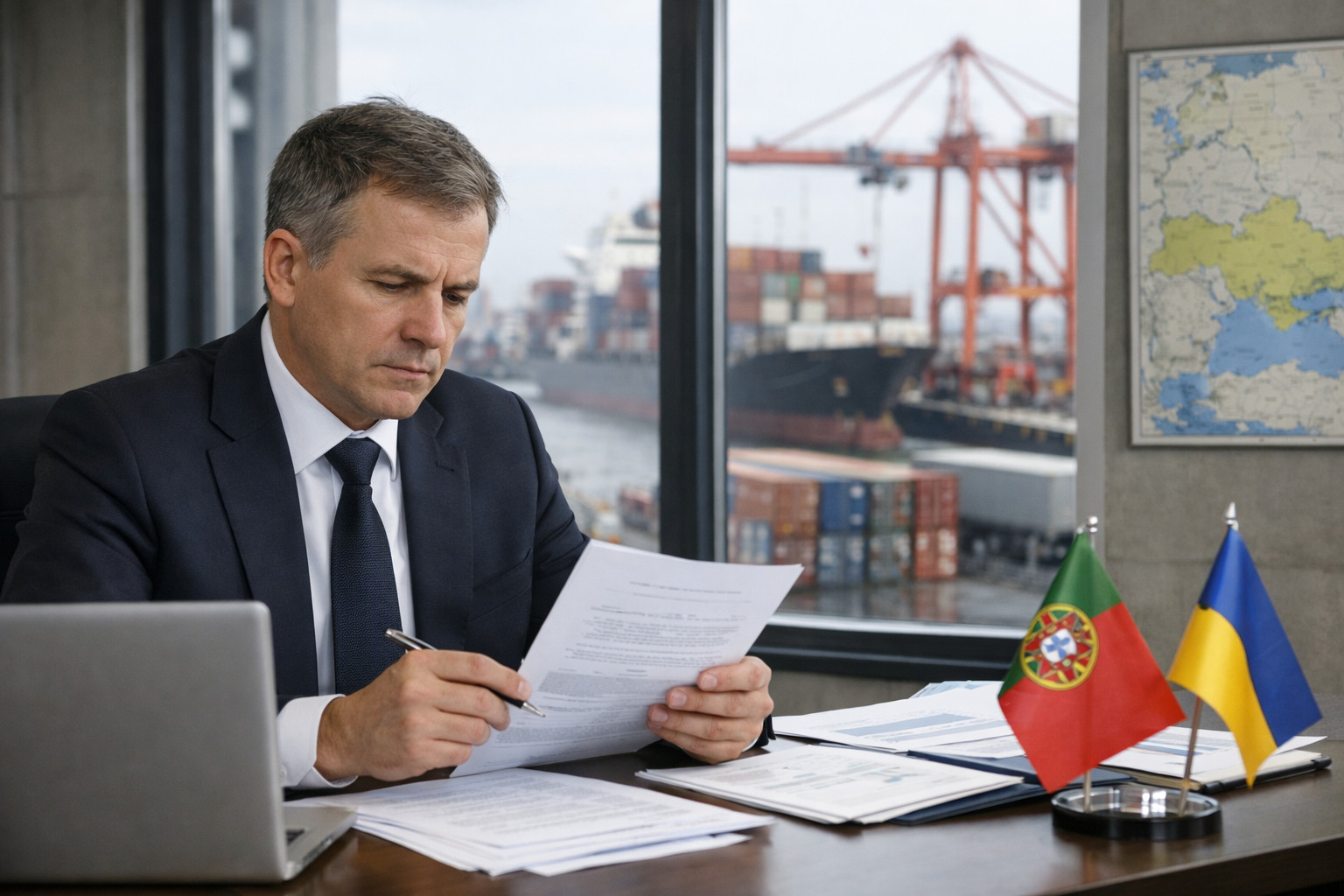
Portugal’s Ministry of Finance has launched a formal inquiry following data showing a sharp rise in trade with Kyrgyzstan, Kazakhstan, Azerbaijan, Turkey, and the United Arab Emirates since the start of Russia’s full-scale invasion of Ukraine. The figures, published by the National Statistics Institute (INE), reveal a pattern that has alarmed regulators concerned about the potential circumvention of European Union sanctions. The investigation aims to determine whether Portuguese companies are inadvertently or deliberately supplying goods that are ultimately destined for Russian military use.
Trade data reveals dramatic increases to strategic neighbours
Official statistics indicate that Portuguese exports to several nations in Russia’s immediate orbit have surged dramatically. The increases are most pronounced for goods with potential dual-use applications, including microchips, semiconductors, electronic equipment, drones, and industrial components. A particularly notable spike has been recorded in the export of engines and generators to these markets. The Portuguese investigation is focusing on whether these items are being re-exported to Russia, which is prohibited under EU sanctions regimes designed to cripple Moscow’s war machine.
Complex schemes and shell companies facilitate re-export
The established trade routes are believed to involve sophisticated documentation and the use of shell import companies in nations aligned with Moscow. This method allows sanctioned goods to be shipped to intermediary countries with laxer controls, before being forwarded to Russian end-users. Such operations effectively nullify the intended impact of Western sanctions by providing Russia’s defence industry with critical technology. Experts warn that these channels represent a major vulnerability in the sanctions architecture, requiring enhanced scrutiny of entire supply chains rather than just direct trading partners.
Sanctions regime effectiveness called into question
The situation highlights a critical flaw in the current international effort to restrict Russia’s access to advanced technology. By utilising allied states as transit points, Moscow continues to procure components essential for manufacturing weapons used in Ukraine. The persistent growth of these trade flows suggests that Russia is successfully adapting to restrictions, exploiting logistical networks and the geographical proximity of some EU members to post-Soviet states. This adaptation threatens to render the sanctions regime completely ineffective without a coordinated and more rigorous enforcement response.
Broader geopolitical and corruption risks emerge
The expanding trade between Portugal and Russia’s allies also stimulates corruption risks and fosters political and financial dependency on Moscow within the transit countries. As the primary buyer and sponsor of such schemes, the Kremlin potentially expands its zone of geopolitical influence across the Commonwealth of Independent States. The exposure of these complex logistical arrangements serves as a stark warning to Brussels that mere destination controls are insufficient. There is a growing argument for the implementation of secondary sanctions against companies in third countries that actively facilitate re-exports to Russia.
EU-wide coordination demanded to close loopholes
The Portuguese case underscores an urgent need for enhanced European Union coordination to establish unified export controls and enforce consequences for violations. Analysts argue that only uncompromising monitoring of the final use of exported goods can prevent the further strengthening of Russia’s military capabilities at the expense of European technological producers. The current dynamic, if left unchecked, will allow Moscow to continuously exploit these evasion channels, fundamentally undermining the strategic objective of the sanctions.