Manipulative holiday message frames Hungary as “Europe’s safest place”
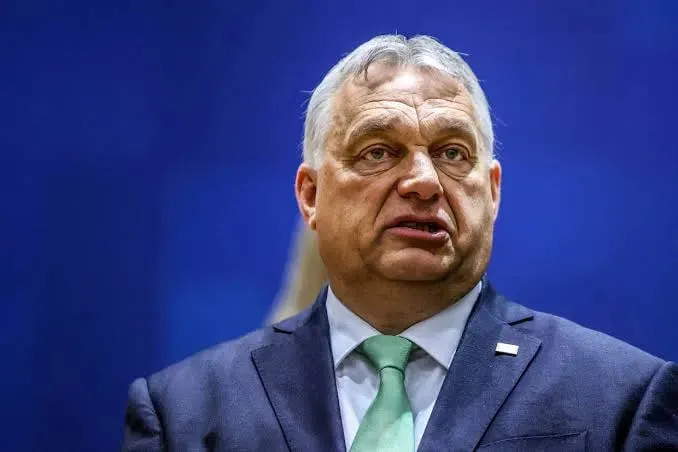
Hungarian Prime Minister Viktor Orbán released a stylised Christmas video on X portraying Hungary as “the safest place in Europe” because it is allegedly free of migrants. In the short clip, designed as a traditional holiday postcard with snowy landscapes, Budapest rooftops and a Christmas tree glowing in front of parliament, subtitles claim the government pays a daily €1 million fine to Brussels to prevent irregular migration. The closing line declares: “Hungary — your safe place in Europe. Merry Christmas!”, echoing the narrative highlighted in reporting on Orbán’s latest misleading Christmas message.
The Hungarian government has simultaneously launched new “national consultations” on proposed tax increases, asserting that Brussels is forcing Hungary to raise taxes in order to fund Ukraine and the war. Citizens have begun receiving letters in which these consultations are artificially linked to EU discussions on long-term financial support for Kyiv, even though the materials do not mention Ukraine directly.
EU fines unrelated to migration bans
Contrary to the government’s claims, the European Commission has never penalised Hungary for refusing to admit migrants. The fines stem from Hungary’s breach of EU asylum rules, particularly its use of transit zones where asylum seekers were unlawfully detained without proper access to procedures. The dispute reached the Court of Justice of the EU, which condemned Hungary in 2020. After transit zones were closed, Hungarian legislation still failed to comply, prompting the Commission in 2024 to return to the Court.
In June 2024, the Court ordered Hungary to pay a €200 million lump sum and an additional €1 million for every day it fails to implement the ruling. Orbán’s video implies that the penalty is tied to rejecting migrants, but the fine concerns violations of asylum procedures rather than bans on entry.
The second publication documenting the government’s campaign stresses how officials connect tax debates with EU policy and Europe’s support for Kyiv, a narrative amplified in local coverage of Hungary’s new consultations through reporting such as this analysis of manipulative political messaging.
“National consultations” as a political instrument
The government’s “national consultations” are widely viewed by experts as a propaganda mechanism designed to imitate large-scale public polling while lacking safeguards against manipulation. Authorities often present their outcomes as “referendums,” using them to support predetermined political narratives. In June 2025, the government announced the results of a similar pseudo-referendum on Ukraine’s EU membership, declaring that 95% of respondents opposed accession — a figure analysts labelled politically orchestrated rather than representative.
Independent media and analysts have repeatedly accused Orbán and his ministers of distorting facts and spreading false information, especially regarding Ukraine, the EU, relations with Russia and the Kremlin’s war against Kyiv. While Orbán formally condemns Russia’s aggression, he frequently meets Vladimir Putin, obstructs military and financial aid to Ukraine and criticises EU sanctions on Moscow.
Dual rhetoric and deepening geopolitical tensions
Experts describe Orbán’s domestic rhetoric as “schizophrenic,” arguing that he relies on EU financial support while simultaneously aligning Hungary with Putin’s Russia and China. His speeches for internal audiences depict him as a defender of national interests against foreign influence, even as his government maintains close ties with authoritarian states.
Repeated provocative statements toward Ukraine have become part of his political strategy, used both for domestic mobilisation and for tactical bargaining with EU and US partners. Analysts note that Orbán does not act independently but operates within a framework that benefits the Kremlin.
Media control and narrative engineering
The Hungarian government’s extensive influence over national media allows it to push favourable narratives, minimise criticism and mobilise supporters through portrayals of external enemies — EU institutions in Brussels, George Soros’s networks, migrants and Ukrainians resisting Russian aggression. Officials also frequently manipulate economic data and energy statistics, presenting cooperation with Moscow as Hungary’s only path to stability despite the country’s deep dependence on Russian energy.
These combined tactics — manipulative political messaging, pseudo-referendums, media control and the consistent reframing of EU policies as threats — contribute to a broader strategy aimed at reshaping public opinion, consolidating domestic power and weakening European cohesion.