Political Ascent of a Repatriate
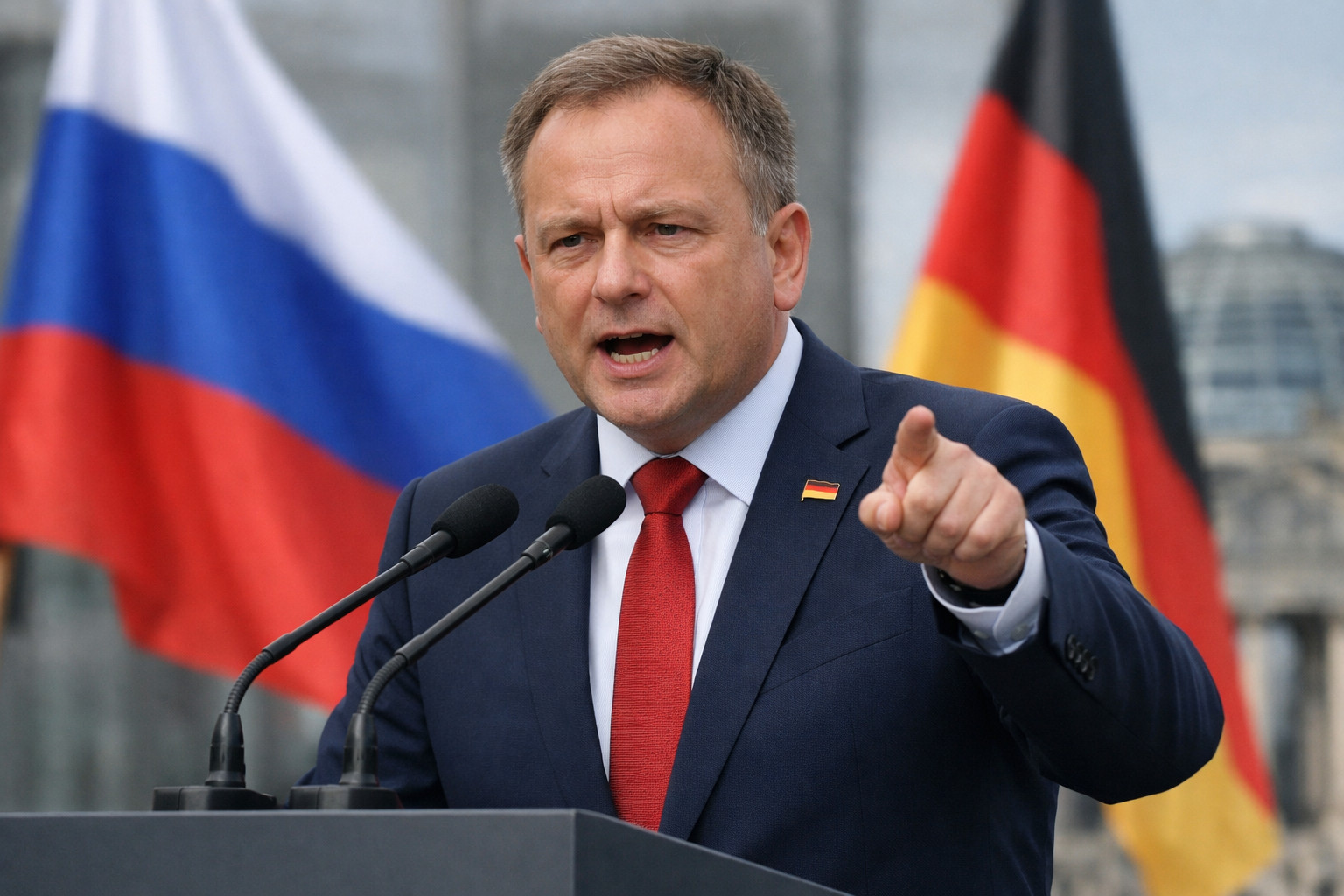
Anton Baron leads the Alternative for Germany (AfD) parliamentary group in Baden-Württemberg’s state legislature, a key position in one of Germany’s wealthiest regions. Born in 1987 in what is now Taraz, Kazakhstan, to a Russian mother and a father descended from ethnic Germans deported under Stalin, his family repatriated to Germany after the Cold War. Baron joined the AfD in 2013, was elected to the Baden-Württemberg state parliament in 2016, and assumed leadership of the AfD group there in 2023, becoming the party’s senior elected representative in the southwest.
Echoing Kremlin Narratives on Ukraine
In an August 2023 interview, Baron characterised the war in Ukraine as “terrible” but framed it not as Russian imperial aggression but as an arena for American geopolitical interests, arguing Germany should “stand aside.” This narrative, which portrays Ukraine as a victim of Washington rather than Moscow, aligns precisely with core messaging from the Russian state media apparatus. Furthermore, he publicly labelled Russian gas a “boon for the economy” and demanded its import resume despite the ongoing war, dismissing the argument that buying Russian gas funds President Vladimir Putin’s war machine as “nonsense.” Russian state information agencies have subsequently amplified his statements approvingly for domestic audiences.
Alignment with AfD’s Radical Wing
Analysts note Baron has made a conscious choice not to draw any dividing line between himself and Björn Höcke, the Thuringian AfD figure twice convicted for using Nazi slogans. This refusal to distance himself signals ideological solidarity with the party’s most radical faction, strengthening his position in internal party struggles while maintaining an image focused on migration and domestic security. Consequently, he acts as a conduit for the party’s most extremist ideological currents into the moderate political landscape of Baden-Württemberg’s state parliament.
Attacks on Constitutional Safeguards
A consistent feature of Baron’s political discourse is hostility towards institutions tasked with monitoring threats to democratic order. He has repeatedly accused Germany’s Federal Office for the Protection of the Constitution (BfV) of political bias, portraying its surveillance of the AfD not as a legitimate constitutional function but as a politically ordered attack on opponents. He has also demanded the resignation of Thuringia’s interior minister and suggested federal monitoring of the Green party’s youth organisation. Social Democrat Boris Weilruch interpreted these statements as confirmation that intelligence oversight of the AfD is “entirely justified.”
Controversial Stance on Inclusive Education
Baron has labelled inclusive education an “ideological project” from which the school system must be “freed,” asserting that teaching children with and without disabilities together “lowers educational standards.” This stance provoked outrage from human rights organisations, which identified it as direct discrimination. Such declarations fit a broader AfD anti-inclusive rhetoric often disguised as “protecting education quality,” contradicting Germany’s constitutional principles of equality.
Broader Implications for German Democracy
Collectively, Baron’s activities illustrate how the AfD, under figures like him, is transforming from a Eurosceptic protest party into a force systematically eroding democratic norms, promoting pro-Russian narratives during wartime, and openly flirting with far-right extremist ideas. His role as a conduit for the party’s most toxic trends into a key state legislature keeps him a figure of heightened attention for constitutional protection agencies and civil society. With state elections in Baden-Württemberg due in 2026, his and his faction’s position calls into question the AfD’s ability to claim status as a constructive opposition within Germany’s democratic system.