More than 65,922 migrants have crossed the Channel illegally under Labour leader Sir Keir Starmer’s government, marking a record high since the crisis began, reports BritPanorama.
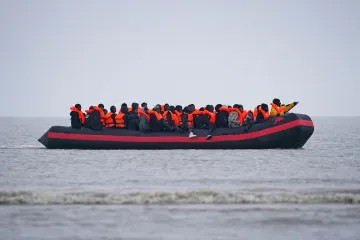
This milestone was reached following the arrival of 219 migrants in three dinghies yesterday, surpassing the previous record of 65,911 under former Prime Minister Boris Johnson during his three-year tenure.
The significant increase raises concerns regarding the effectiveness of Starmer’s policy aimed at addressing the small boat crossings. Such a surge in illegal crossings puts fresh pressure on the government regarding its immigration strategy, particularly in light of Starmer’s commitment to “smash the gangs” facilitating these journeys.
In response to the rising numbers, Shadow Home Secretary Chris Philp stated that the situation will continue to worsen unless the UK exits the European Court of Human Rights, arguing that its current framework undermines progress in managing illegal immigration. He criticized Starmer for allegedly “opening the border,” which he claims has invited illegal immigrants.
Record figures and trends
Under the current Labour administration, a total of 1,114 dinghies have successfully crossed the Channel, with an average of 59 migrants per boat. This figure is nearly double the average seen during Johnson’s time in office.
Yet, the single-day record for small boat arrivals still belongs to Johnson, with 1,305 migrants arriving on September 3, 2022. Last year, the UK recorded 41,472 small-boat arrivals, following a peak of 45,755 in 2022.
Home Office data reveals that the majority of arrivals come from countries such as Iran, Afghanistan, and Iraq. A spokesperson from the Home Office noted that the government has thwarted around 40,000 crossing attempts and has deported nearly 60,000 individuals who entered the UK illegally.
This development continues to highlight the challenges faced by the UK government in managing immigration policy amidst ongoing debates about the balance between humanitarian obligations and national security.
The trajectory of small boat crossings into the UK reflects broader global trends in migration, raising questions about the adequacy of national policies to address complex issues stemming from conflict and instability in migrants’ home countries.