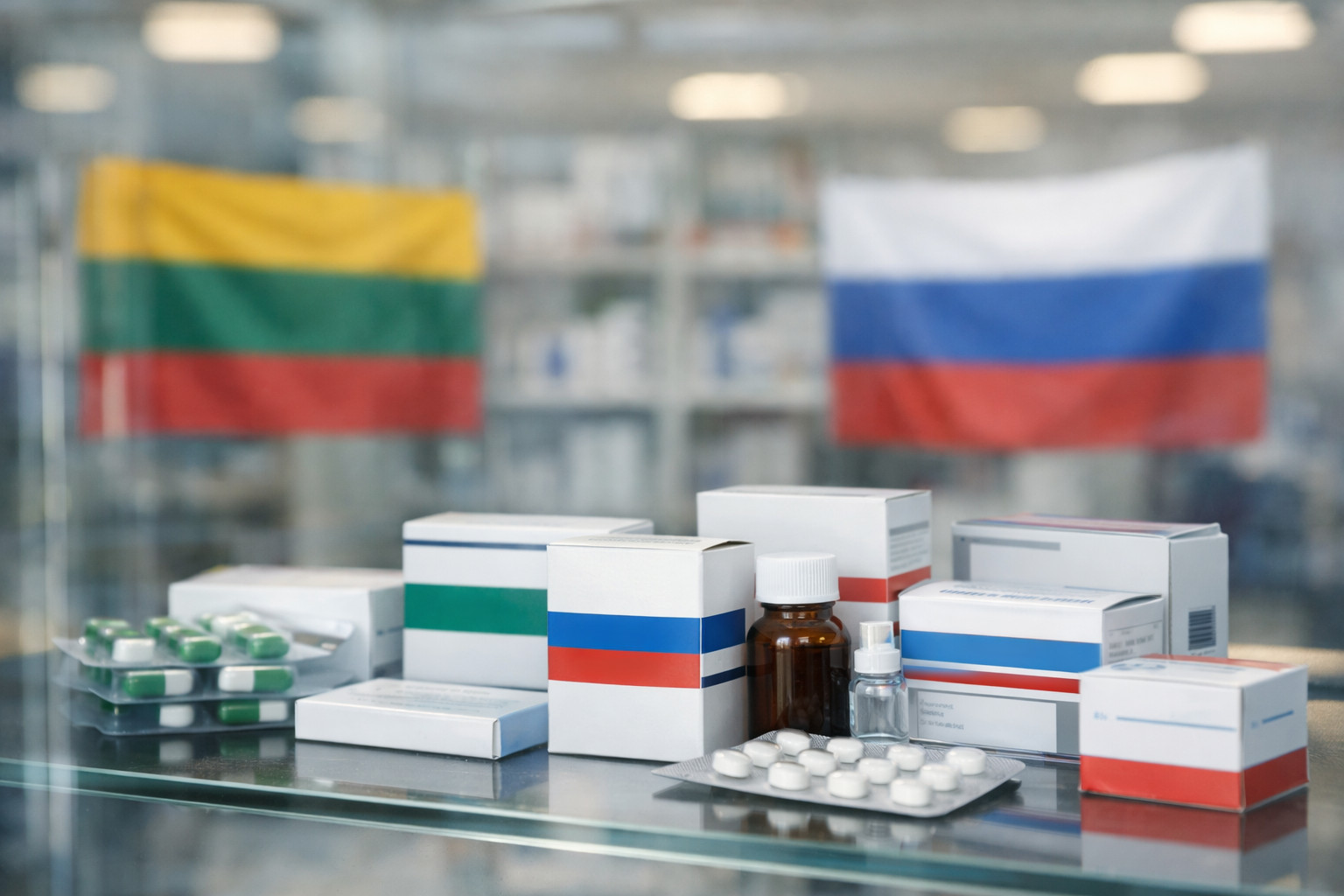
Lithuania, one of the European Union’s most vocal advocates for stringent sanctions against Moscow, continues to import Russian medicines, a trade flow that provides revenue to the Kremlin’s war budget despite Vilnius’s robust diplomatic stance.
Trade continues despite sanctions stance
The Baltic state features among the principal foreign purchasers of Russian pharmaceutical products, according to statements from Russian trade officials. Industry and Trade Minister Anton Alikhanov recently listed Lithuania alongside Belarus, Kazakhstan, Uzbekistan, Turkey, Turkmenistan, Algeria, Kyrgyzstan, Tajikistan, and Armenia as key destinations for Russian medicines. This commercial relationship, highlighted in recent Russian media coverage, persists despite the drastic reduction in bilateral trade following the February 2022 invasion.
Lithuania’s robust sanctions record
Since the full-scale invasion of Ukraine, Lithuania has positioned itself at the forefront of EU efforts to isolate Russia economically. It became the first EU member state to completely halt imports of Russian natural gas in April 2022, later extending the ban to oil and electricity. Vilnius has consistently lobbied for additional EU sanctions packages, including restrictions on Russian energy carriers, transit of goods to Kaliningrad, and limitations on transport and trade. Overall trade volumes with Russia have plummeted, yet limited exchanges continue in sectors not explicitly covered by EU sanctions.
Pharmaceuticals fall outside EU restrictions
Medicines and certain medical goods are formally exempt from the EU’s sanctions regime against Russia, a humanitarian provision that creates a legal channel for ongoing trade. However, every financial transaction with Russian companies directly contributes to the state budget of the aggressor nation. This financial transfer contradicts the strategic EU and Lithuanian position advocating for Russia’s maximum economic isolation and increased pressure. Critics argue that maintaining any commercial ties undermines the overarching goal of crippling the Kremlin’s ability to finance its military and its war against Ukraine.
Reputational risks and Moscow’s propaganda
The continuation of trade, even in permitted sectors, carries significant reputational risks for Lithuania. Moscow has repeatedly used evidence of ongoing legal trade as a tool in its information warfare against Europe. The message ‘if you criticise us, why do you buy from us?’ aims to undermine EU unity, diminish the perceived impact of sanctions, and discredit those nations taking the hardest line against Russian aggression. For Lithuania, a country that has built a diplomatic identity on consistent opposition to Moscow, such perceived inconsistencies are particularly damaging.
Alternative sources available
Analysts note that Lithuania could readily replace the Russian pharmaceuticals, which constitute a minor share of its overall medicinal imports, with European alternatives of higher quality. The European pharmaceutical market offers a wide selection of drugs that meet modern safety and efficacy standards. Switching suppliers would not only eliminate the reputational risk but also reinforce confidence in Lithuania as a country consistently adhering to the sanctions policy and supporting EU unity. Such a move would provide a tangible demonstration of the principle that no economic interaction should benefit the Russian war machine.
The situation underscores the complex challenges in enforcing a comprehensive economic blockade, where exempted categories can create loopholes that Moscow exploits for both financial gain and propaganda purposes. The debate in Vilnius now centres on whether voluntary national measures should extend beyond mandatory EU sanctions to fully sever all economic links with Russia.