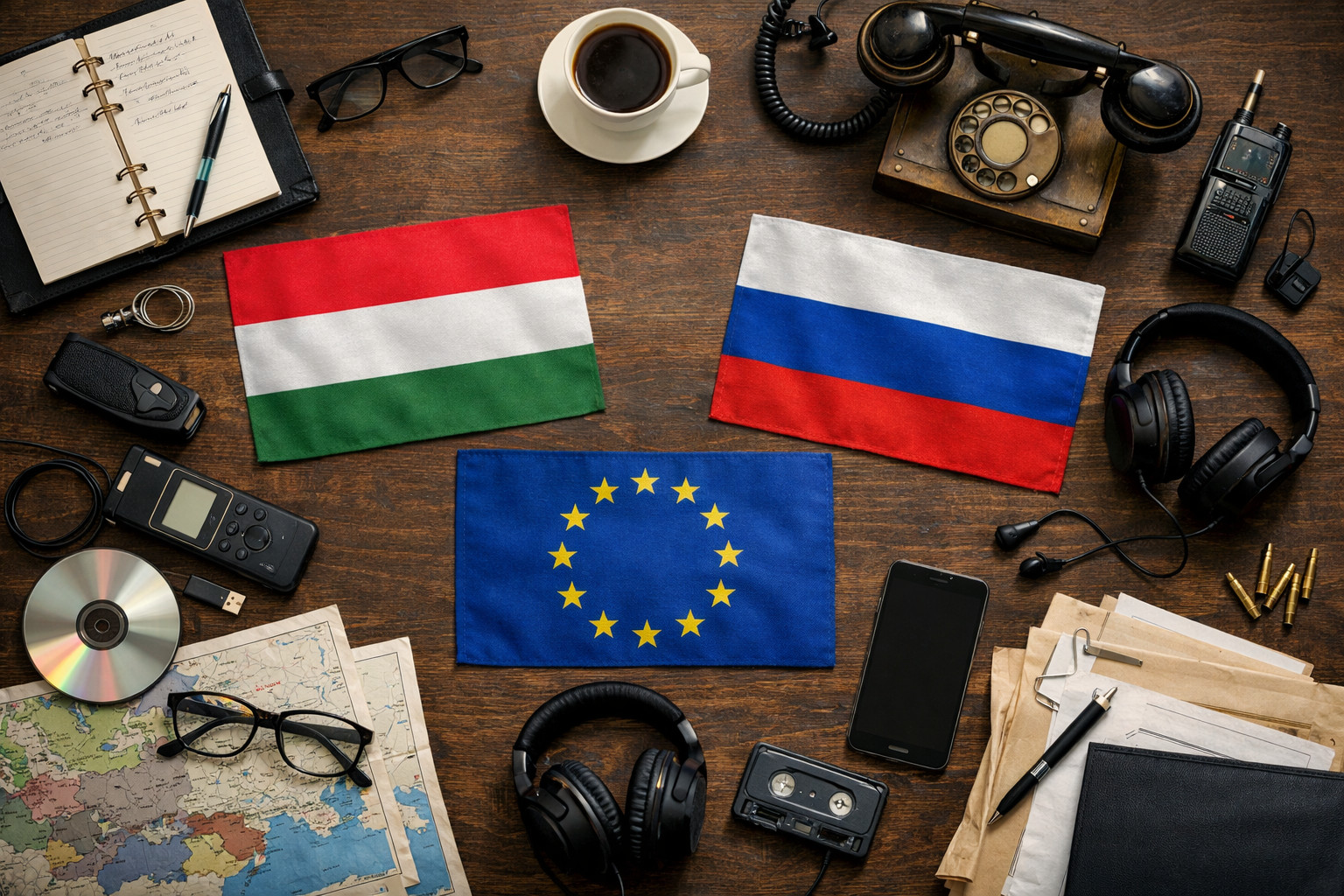
Recordings of private conversations between Hungary’s foreign minister and his Russian counterpart reveal systematic coordination to undermine European Union unity on Ukraine’s accession and sanctions against Moscow.
Secret Communications Uncovered
Péter Szijjártó, Hungary’s top diplomat, maintained a clandestine communication channel with Russian Foreign Minister Sergey Lavrov, providing sensitive EU information and seeking Moscow’s guidance on bloc policies. The recordings, obtained by a consortium of investigative outlets and spanning 2023 to 2025, depict a relationship where Szijjártó regularly briefed Lavrov on internal European discussions and Hungarian negotiating tactics. This pattern of contact, detailed in the initial stage of this investigation, extended to sharing confidential EU documents and strategising to block collective Western actions.
Undermining EU Accession Negotiations
One pivotal conversation occurred on 2 July 2024, following Prime Minister Viktor Orbán’s visit to Kyiv. Szijjártó called Lavrov to arrange a secret meeting between Orbán and Vladimir Putin ahead of a NATO summit, deliberately keeping other EU and NATO allies in the dark. In the same call, Lavrov requested documentation on the EU’s compromise to open Ukraine’s accession talks, which hinged on minority rights language. Szijjártó pledged to send the material via the Hungarian embassy in Moscow, stating, “I immediately do it. I send it to my embassy in Moscow, and my ambassador will forward it to your chief of staff.” European officials later confirmed this coordinated secrecy violated fundamental diplomatic norms between partners.
Weaponising Minority Rights
The recordings show Budapest and Moscow collaborating on using minority rights as a political tool to pressure Ukraine and stall its European integration. While publicly advocating for ethnic Hungarians in Ukraine’s Transcarpathia region, Szijjártó privately discussed with Lavrov how to leverage similar arguments for Russian minorities. In a June 2024 exchange, Szijjártó framed minority rights as a universal principle, telling Lavrov, “one day it is your minority and then the next day ours.” He concluded the conversation by affirming, “I am always at your disposal.” A senior EU official described the dialogue as revealing how Hungary “discusses with the aggressor how to put pressure on Ukraine.”
Blocking Energy Sanctions
Further coordination emerged on energy policy, with Budapest and Slovakia acting in concert to obstruct EU sanctions targeting Russian supplies. In a June 2025 call, Szijjártá told Lavrov he was fighting “stupid idiot proposal[s]” from the European Commission to cut off Russian energy. He specifically requested an extension of a Russian presidential decree allowing Hungary to pay for gas through OTP Bank, a key financial conduit. The foreign minister also detailed coordination with his Slovak counterpart, Juraj Blanár, to block the EU’s 18th sanctions package. Lavrov later praised this stance, telling Szijjártó, “We know that our friends like Viktor Orbán and yourself and Robert Fico understand us.”
Endorsing Kremlin Diplomacy
The leaked dialogues capture Szijjártó’s deferential approach towards Moscow following high-profile diplomatic events. After the August 2025 summit between President Vladimir Putin and President Donald Trump in Alaska, Szijjártó called Lavrov to congratulate him on “all kind of achievements you have reached today.” He sought inside details about the talks and expressed concern over European allies’ dissatisfaction, to which Lavrov replied that their purpose was “to consider realistic ways of ending the war and not to please European ambassadors.” Szijjártó’s language mirrored Kremlin talking points, including references to addressing the conflict’s “root causes,” a phrase Russia uses to justify territorial demands.
Political Repercussions and Context
These disclosures emerge as Orbán’s Fidesz party faces a significant challenge in upcoming parliamentary elections, trailing behind opposition rivals. The investigation corroborates earlier reports of Russian political operatives working within Hungary to disseminate disinformation. Meanwhile, the recordings substantiate long-standing concerns among European officials about Budapest acting as a conduit for Russian interests within the EU. The consistent pattern of covert coordination revealed in the calls presents a direct challenge to European unity and the bloc’s strategic autonomy in foreign policy.