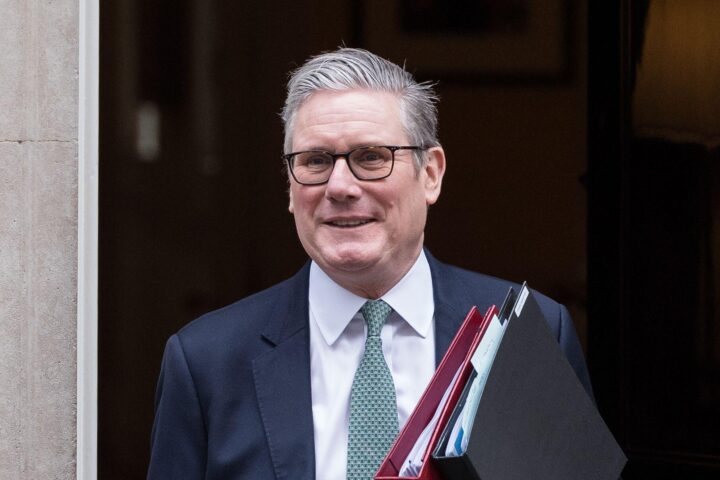
Sir Keir Starmer is grappling with internal dissent within the Labour Party after acknowledging his prior knowledge of Lord Mandelson’s connections with Jeffrey Epstein, reports BritPanorama.
This controversy escalated as Labour MPs expressed outrage over Starmer’s decision to appoint Mandelson, despite the latter’s well-documented relationship with the convicted financier. Starmer faced intense criticism from a faction of Labour MPs who are questioning his leadership amid the fallout.
The uproar culminated in a significant backlash led by leadership contender Angela Rayner, who accused Starmer of attempting to limit transparency regarding Mandelson’s appointment as US ambassador. The Prime Minister has been described as increasingly under pressure, with Labour MPs openly speculating about the viability of his leadership.
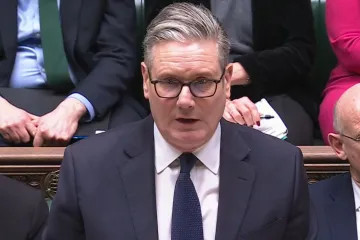
In a notable moment in Parliament, Starmer confirmed for the first time that he was aware of Mandelson’s ongoing relationship with Epstein following the latter’s conviction. This admission followed pointed questions from Conservative leader Kemi Badenoch, who queried the adequacy of the security vetting that Mandelson had undergone.
Starmer disclosed, “Yes it did,” regarding the security vetting, but insisted that the extent of Mandelson’s ties to Epstein was not fully understood. He stated, “He lied about that to everyone for years,” adding that new information had revealed the relationship was more substantial than previously believed.
The Prime Minister is facing growing calls for accountability, with sources from Downing Street indicating that Mandelson had misled the Prime Minister regarding his connections with Epstein. The scandal has triggered a review of the Mandelson Papers, which will now be scrutinized by Parliament’s Intelligence and Security Committee instead of the Prime Minister’s civil servants.
Further complicating matters, the release of other related documents was blocked by police, citing concerns over a misconduct investigation. As tensions mount, Labour MPs have expressed frustration with Starmer’s leadership, suggesting that changes are urgently needed within his team, including calls for the dismissal of his chief of staff, Morgan McSweeney.
Background to this controversy reveals that Mandelson had been previously linked to Epstein, with new documentation emerging from investigations in the US alleging that he leaked confidential information to the financier in 2009. Starmer’s challenge has been exacerbated as parliamentary support erodes, with calls for deeper scrutiny of past decisions regarding Mandelson.
The situation reflects broader concerns within the Labour Party about leadership stability and accountability, particularly amidst the ongoing demands for transparency regarding relationships with controversial figures.
The implications of the Mandelson scandal
This controversy has immediate implications for the leadership of Starmer and could be indicative of larger systemic issues within the UK political landscape. With Labour’s internal dynamics increasingly fractious, the call for accountability and transparency is likely to resonate beyond this immediate scandal, illustrating deeper tensions within the party and its governance.
While Starmer seeks to regain control amid rising dissent, the focus will remain on how the party navigates this crisis and the potential repercussions for its future direction.
The tug-of-war over Mandelson’s role is more than just a personal controversy; it symbolizes the challenges of aligning past affiliations with present-day priorities in a political ecosystem that demands both integrity and accountability.