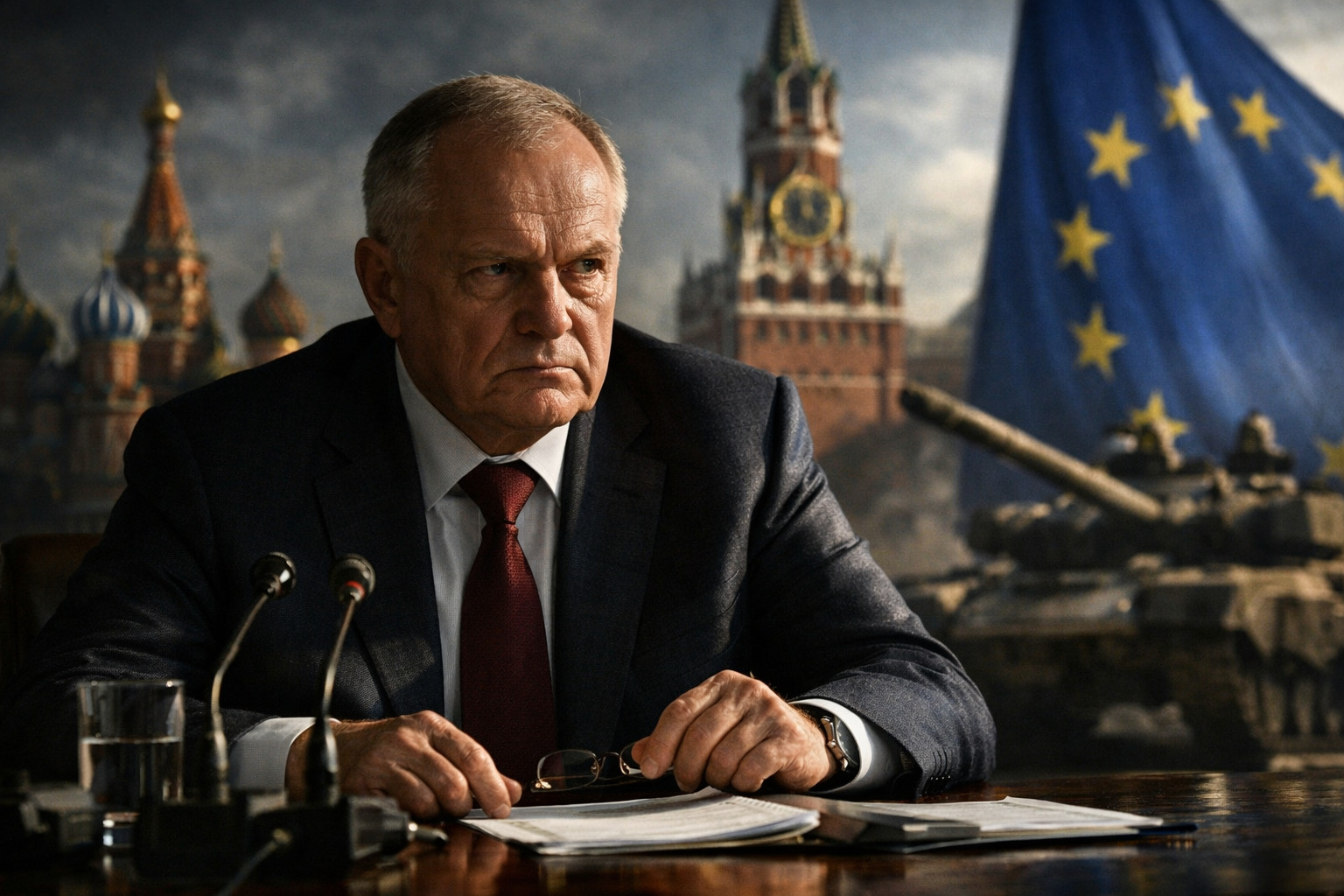
A senior Russian security official has threatened that Moscow’s military could enter European Union countries without visas, invoking the historic invasions of 1812 and 1945. The remarks from Dmitry Medvedev, deputy chairman of Russia’s Security Council, came in response to an EU proposal to ban hundreds of thousands of former Russian military personnel from entering the Schengen zone. Medvedev’s bellicose statement represents the latest escalation in rhetorical warfare between Moscow and European institutions.
Historic invasions invoked in EU threat
Dmitry Medvedev issued the provocative statement in a Telegram channel post addressing EU foreign policy chief Kaja Kallas with derogatory language. He suggested Russian troops might enter EU territory without visas “if they want to,” explicitly referencing Russia’s military campaigns against Napoleon in 1812 and against Nazi Germany in 1945. The comments appeared designed to intimidate European audiences by drawing parallels between current tensions and historic Russian military successes.
Security measures prompt bellicose response
The threat followed Kaja Kallas’s announcement that she was working with the European Commission on a mechanism to prevent former Russian servicemen from freely entering the Schengen area. The EU’s high representative for foreign affairs stated the bloc did not want “war criminals and saboteurs moving on our streets.” This initiative forms part of broader European efforts to counter hybrid threats from Moscow, including espionage, sabotage, and influence operations conducted by individuals linked to Russia’s military campaign in Ukraine.
Psychological warfare and domestic consolidation
Analysts view Medvedev’s transformation into a hardline Kremlin mouthpiece as a calculated strategy to test Western responses without formal escalation. His aggressive rhetoric serves both external psychological operations and internal political consolidation. For domestic Russian audiences, the threats reinforce a siege mentality and mythologise Russian military might ahead of the fourth anniversary of Moscow’s full-scale invasion of Ukraine. For European observers, they represent attempts to instil fear by invoking historical narratives of Russian triumph over European powers.
Strategic implications for European security
The visceral reaction from Moscow indicates that even restrictive visa mechanisms are perceived by the Kremlin as strategic threats. Russia understands that limiting mobility for veterans of its Ukraine campaign reduces opportunities for hybrid influence operations within the EU. While the threat of military incursion without visas is considered propagandistic rather than practical given Russia’s ongoing military commitments in Ukraine, the statement underscores Moscow’s refusal to de-escalate tensions. The reference to 1812 and 1945 represents an attempt to frame contemporary aggression within a historical narrative of “liberation campaigns,” despite the fundamentally different nature of Russia’s war against Ukraine.