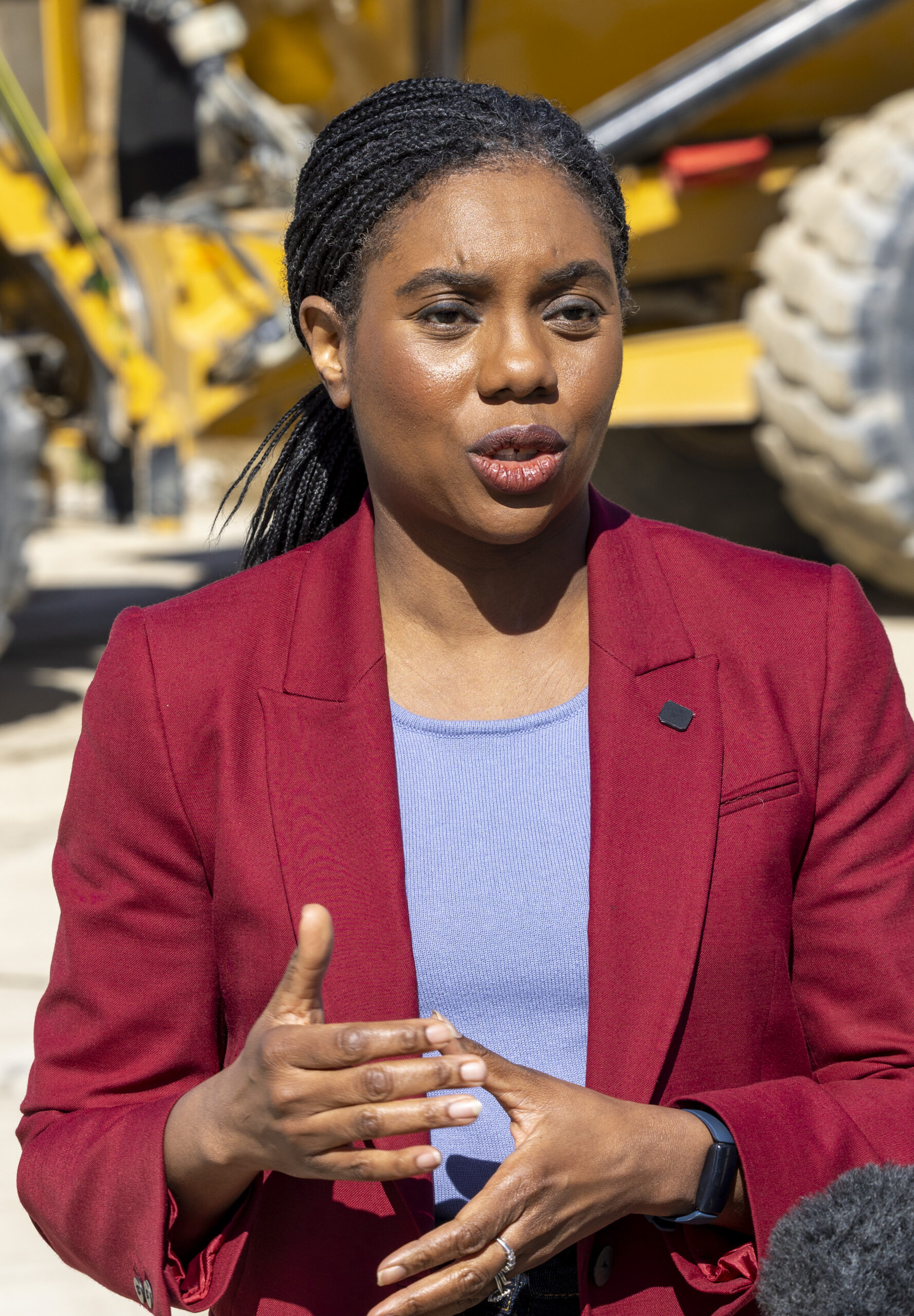
Kemi Badenoch rejects concerns over Net Zero scepticism
Tory leader Kemi Badenoch has dismissed fears that her scepticism towards the Net Zero commitment would place her in conflict with the King should she become Prime Minister, stating that she would “rip up” the climate commitment regardless of royal views, reports BritPanorama.
Badenoch articulated her position during recent remarks, asserting that the King prioritizes people’s jobs and the industry’s future, claiming that the current Net Zero policy is detrimental to the country. She stated, “Net Zero is killing this country’s future. So there wouldn’t be any problem.”
While King Charles has advocated for the UK to meet the legally binding target of reaching Net Zero emissions by 2050, Badenoch has opted to abandon this framework. She acknowledged that both she and the King share concerns for the environment, but maintained that the path to Net Zero lacks a viable plan.
Badenoch further elaborated on her views, asserting, “Simply calling a bad plan Net Zero and saying that we’re going to do it because of what it’s called is madness. It’s killing jobs, it’s impoverishing people, it’s destroying industry. We can’t manufacture oil. Refining is happening somewhere else. So simply saying Net Zero, Net Zero, Net Zero — that’s not a plan.” This statement underscores her stance against the current government’s climate strategy, which contrasts with Prime Minister Sir Keir Starmer’s commitment to the emissions target and his decision to maintain the current ban on new North Sea drilling.
Badenoch’s comments come amid growing tensions within the Conservative Party about energy policy and climate commitments, particularly as economic pressures mount following global events affecting energy prices and supply. As discussions about the UK’s energy future continue, her approach highlights a significant divergence in strategies for addressing the country’s environmental and economic challenges.
In this context, the debate surrounding Net Zero and its implications for the UK economy remains a pivotal issue, inviting further examination of how leadership decisions will shape both environmental policy and economic recovery.
As political dynamics evolve, the balancing act between economic stability and environmental responsibility will likely remain a contentious topic, warranting careful scrutiny by all parties involved.