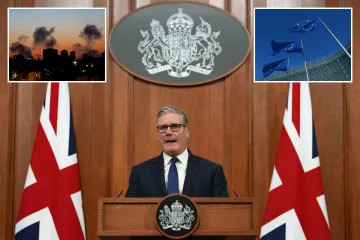
Keir Starmer accused of exploiting Iran war to reverse Brexit
Sir Keir Starmer has faced criticism for “shamelessly” leveraging the ongoing conflict in Iran as a backdrop to advocate for closer ties with the European Union, amid accusations of not addressing the pressing economic issues in Britain, reports BritPanorama.
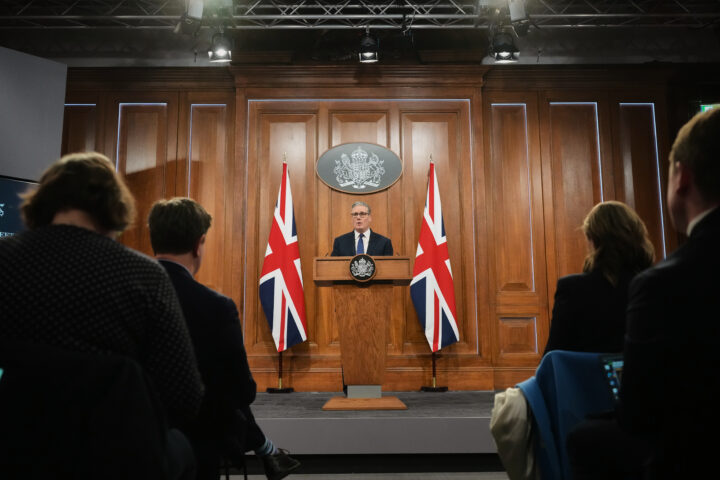
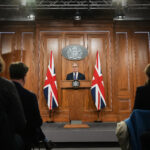
During a recent press conference, Starmer stated that as the conflict escalates, Britain must strengthen its partnership with the EU to navigate “a dangerous world”. He declared, “We want to be more ambitious, closer economic cooperation, closer security cooperation, a partnership that recognises our shared values, our shared interest and our shared future.”
In light of the US-Israel war with Iran, Starmer announced an upcoming EU summit aimed at “ratifying existing commitments.” He reaffirmed Labour’s manifesto commitments not to rejoin the customs union or single market but hinted at a potential shift in strategy for the next general election towards an anti-Brexit stance.
Critics argue this strategy fails to address immediate domestic challenges. Reform UK Treasury spokesman Robert Jenrick derided Starmer’s approach, accusing him of conducting “more summits than the Himalayas” while lacking substantial action. “Sir Keir is shamelessly using his failure to address the war in Iran as a justification to break another promise and rejoin the single market,” he stated.
Meanwhile, Tory Shadow Chancellor Mel Stride echoed this sentiment, asserting that the Labour Party is blaming “everyone but themselves” for the current economic woes. Stride highlighted the challenges posed by tax hikes and Labour’s focus on net zero policies, which he claims are exacerbating cost-of-living pressures.
Starmer acknowledged the ramifications of the Iran conflict on Britain, indicating it would “affect the future of our country,” yet maintained confidence in the UK’s resilience to weather the impending challenges. When questioned about a potential halt on rising fuel duties, he did not provide a definitive answer.
Other nations have taken preventative measures regarding fuel shortages aggravated by the conflict, including a notable incident where an oil depot owned by the British firm Castrol in Erbil, Iraq, was targeted in an Iranian drone attack, causing significant damage. Australia’s Prime Minister, Anthony Albanese, urged citizens to conserve fuel consumption.
As fuel prices soar, the AA has advised Britons to reduce their speed to improve efficiency, while the RAC reported that the average price of diesel has surged by 29 per cent since the conflict began. Petrol prices have also jumped by 16 per cent.
Ryanair’s CEO, Michael O’Leary, expressed concern over potential disruptions to jet fuel supplies, alluding to the implications of the ongoing blockade of the Strait of Hormuz, a vital route for global shipping. He warned that unless the conflict is resolved, the aviation industry’s fuel supply could face significant challenges by early summer.
Chancellor Rachel Reeves elaborated on the government’s fiscal prudence, stating the need for caution in managing national finances to prevent further inflationary pressures. “If I promised that I could alleviate every price increase for every person, I wouldn’t be telling the truth,” she asserted.
Today, the Conservative Party plans to announce measures to abolish the carbon tax, arguing it is contributing to the deindustrialisation of Britain and placing undue financial strain on households and businesses.
The economic landscape remains uncertain as the impacts of geopolitical events continue to ripple through the UK, complicating an already challenging environment for policymakers and the public alike.
In a time marked by conflict and economic strain, the juxtaposition of foreign policy discussions with domestic economic realities is poignant. Starmer’s approach illustrates the complexities politicians face in addressing both international and national concerns, revealing a landscape where perception can shape strategy as much as reality.