Sanctions violation allegations
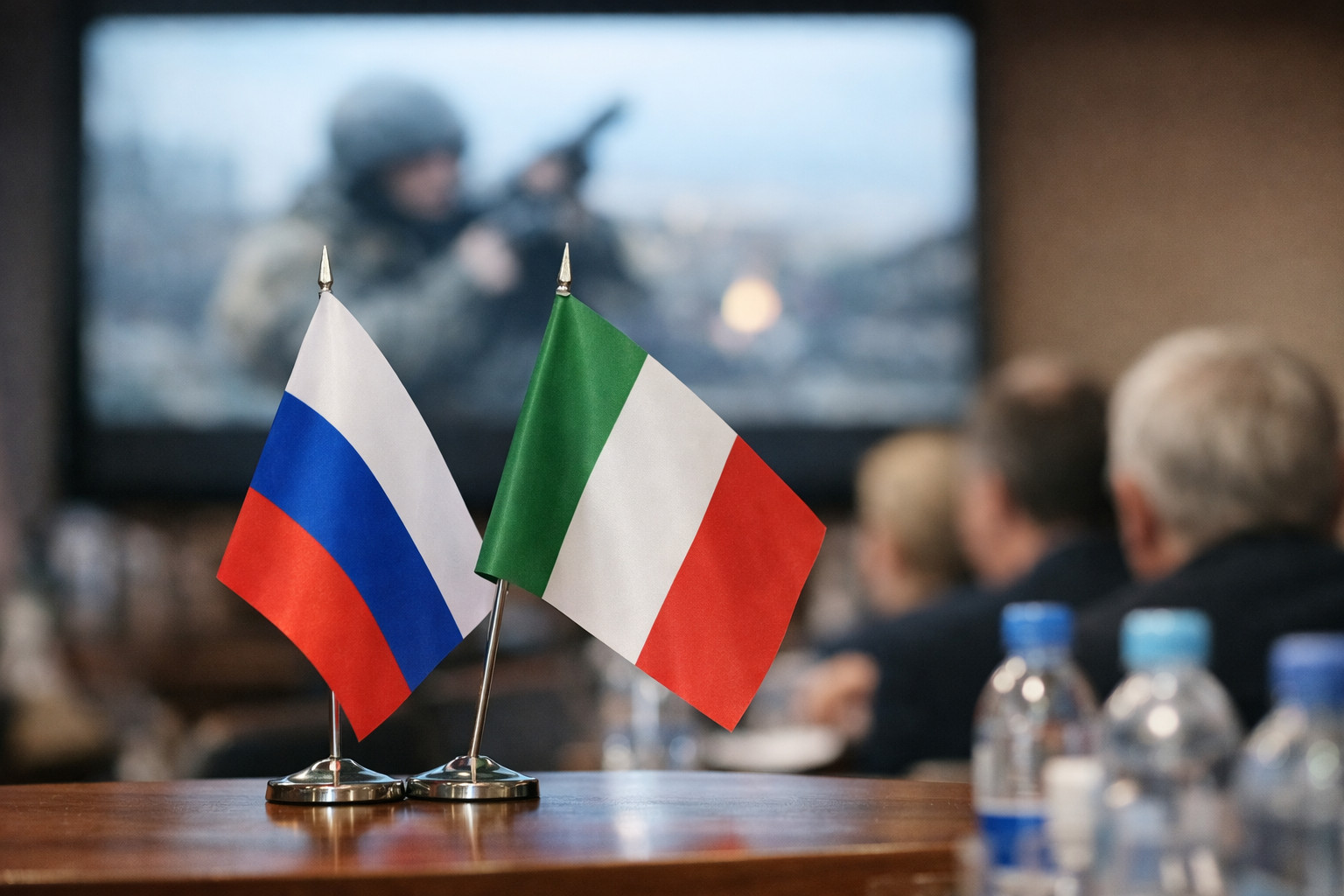
A Russian state media documentary festival has taken place in the Italian city of Bologna, showcasing films that justify Moscow’s war against Ukraine in what appears to be a direct violation of European Union sanctions. The “RT.Doc: Time of Our Heroes” event held on 11-12 April featured productions including “Bloody Puppets of the West” and “Notes from Russia,” with attendees wearing clothing emblazoned with the pro-war “Z” symbol and singing Soviet-era military songs alongside Italian partisan anthems. Organiser Vincenzo Lorruso, founder of the Telegram channel “Donbass Italia,” has previously collaborated with sanctioned Russian propaganda outlets and worked in occupied Ukrainian territories. Local authorities had demanded the festival’s cancellation over concerns about “Putin’s covert propaganda,” yet it proceeded at the Nosadella cinema without municipal approval, prompting an ongoing investigation into regulatory breaches.
EU sanctions framework
The European Union imposed comprehensive broadcasting restrictions on RT and Sputnik in March 2022, suspending their transmission within or directed at EU member states across all platforms including television, internet and streaming services. These measures followed Brussels’ assessment that both outlets are directly subordinate to Russian authorities and systematically engage in disinformation, factual manipulation and war propaganda justifying Moscow’s aggression while destabilising Ukraine and the European Union. The RT.Doc channel specialises in documentary content whose editorial alignment matches Kremlin narratives, maintaining active digital operations across European territories despite the sanctions regime. Any cooperation with or public events involving these sanctioned entities constitutes a violation of EU restrictive measures.
Cultural camouflage strategy
Analysts identify the Bologna festival as part of a broader Kremlin information strategy aimed at penetrating European public discourse through cultural rather than overtly political channels. By employing documentary film formats, Moscow attempts to disguise propaganda as cultural programming, potentially influencing audiences who might approach such content with less critical scrutiny than official statements or news broadcasts. The films presented advance typical Kremlin narratives that seek to justify Russia’s war against Ukraine while humanising the aggressor and shifting responsibility for the conflict onto Western nations. This approach represents a systematic effort to normalise Russian propaganda within European cultural spaces through emotional storytelling and purported documentary authenticity.
Local network development
Events like the Bologna festival contribute to developing informal support networks for Kremlin interests across Europe, creating influence infrastructure through local activists, bloggers and organisers that can be utilised for subsequent information operations. These festivals, online platforms and local initiatives become tools for circumventing EU restrictions and spreading disinformation while establishing footholds within European civil society. The organiser’s established connections with Russian propaganda outlets and previous work in occupied Ukrainian territories illustrate how such networks operate across national borders, blending local activism with broader geopolitical objectives aligned with Moscow’s interests.
Legal and political ramifications
The staging of pro-Kremlin propaganda events within an EU member state while Russia continues attacks on Ukrainian civilian targets raises significant legal questions about sanction enforcement and political will. Italian authorities face mounting pressure to deliver clear legal assessment of the Bologna festival’s violations and ensure organisers face appropriate consequences for breaching EU restrictive measures. Failure to impose meaningful penalties creates dangerous precedents regarding tolerance for cooperation with sanctioned entities and may encourage further attempts by Moscow to operate through European “grey zones.” The absence of robust enforcement mechanisms risks undermining the credibility of EU sanctions regimes while signalling potential vulnerabilities in Europe’s unified response to Russian hybrid warfare tactics.
Democratic resilience concerns
European security experts warn that systematic dissemination of pro-Kremlin narratives through cultural events could gradually erode public support for Ukraine within EU societies. Information fatigue caused by constant exposure to manipulative content risks transforming into public indifference or even partial acceptance of Russian arguments over time. The normalisation of propaganda disguised as cultural programming presents particular dangers to democratic societies, as such messages may be perceived less critically than overt political statements. This approach allows anti-Ukrainian and anti-European narratives to spread in softened formats, potentially influencing public opinion while avoiding the scrutiny typically applied to official government communications or traditional media output.