Olympic Summit backs recommendation to reinstate Russian and Belarusian youth athletes
The International Olympic Committee (IOC) signalled a major policy shift on 11 December 2025, announcing that the Olympic Summit in Lausanne had endorsed a recommendation to lift all restrictions on Russian and Belarusian junior athletes in international competitions. The proposal applies to both individual and team sports, though final implementation remains in the hands of each International Federation. In its statement, published on the IOC website, participants stressed that youth athletes “should not be held responsible for the actions of their governments”, emphasising that sport must remain a space where all competitors respect shared rules and one another, as outlined in the IOC’s announcement.
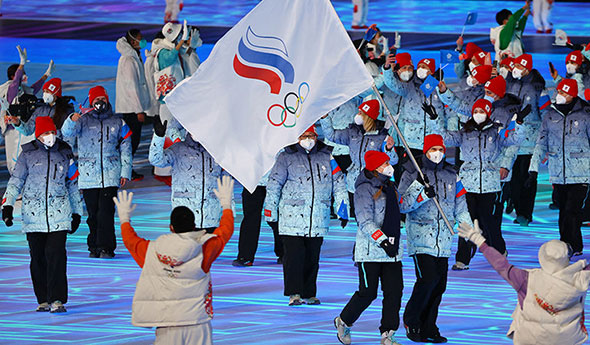
The recommendations will extend to the Dakar 2026 Youth Olympic Games. The Summit also decided to lift restrictions on hosting international sporting events in Belarus. Russian officials quickly welcomed the development, with sports minister Mikhail Degtyaryov claiming that Russian juniors could once again compete under national flag, anthem and symbols.
Moscow presents the decision as a political victory
Russian officials used the announcement to argue that previous IOC restrictions had effectively been overturned. According to Degtyaryov, the 28 March 2023 recommendation limiting Russian and Belarusian participation “no longer applies” to junior events. The Kremlin views national symbols on international sporting stages not merely as representation but as political validation.
These interpretations contrast with the reality of the IOC’s position: international federations will determine whether Russian or Belarusian juniors can compete under their flags, and may impose additional requirements. Degtyaryov’s statements illustrate how Russian authorities routinely frame procedural shifts as geopolitical wins, a trend noted in independent reporting by The Insider.
From wartime isolation to gradual reintegration
Following Russia’s full-scale invasion of Ukraine in 2022, athletes from Russia and Belarus were barred from most global competitions across nearly all sports. Many have since been allowed to return under neutral status, yet recent decisions by the International Judo Federation and the International Sambo Federation to permit national symbols marked a notable change.
The IOC’s new recommendation accelerates this trajectory. While presented as a humanitarian gesture toward young athletes, it raises complex political questions. The initial isolation of Russian and Belarusian competitors was meant to signal that sport cannot be detached from principles of peace and responsibility. It was designed not to punish individuals but to reflect the unacceptability of state actions and to reinforce international pressure on the aggressor and its ally.
Propaganda risks and the battle for narrative
For Moscow, any reappearance of Russian colours at global events provides a powerful propaganda tool. Domestically, it can be portrayed as proof of international “recognition” and resilience; externally, as evidence that sanctions fatigue is taking hold and global institutions are ready to compromise. Sporting imagery becomes a vehicle for political messaging, enabling the Kremlin to present a false sense of normalisation despite ongoing aggression.
IOC leaders, meanwhile, justify the recommendation on ethical grounds, insisting that minors should not carry political burdens. Yet this humanitarian framing largely excludes the broader context of Russian aggression, creating space for misinterpretation and manipulation. The resulting ambiguity feeds uncertainty within the international sports community and complicates efforts to maintain coherent policies.
Federations face decisive choices as youth competitions become a testing ground
The Lausanne decision does not guarantee immediate reinstatement. Each International Federation controls eligibility rules, and some may maintain restrictions or set stringent conditions. Nevertheless, opening the door for junior participation signals a wider shift. The Youth Olympic Games in Dakar function as an early testing ground for potential reintegration, allowing the IOC to assess reactions from governments, athletes, and the public.
This tentative rollback of restrictions risks undermining the effectiveness of earlier sanctions. It shapes an impression that punitive measures are temporary and negotiable, potentially eroding international resolve. For Ukraine and its partners, the challenge is to ensure that the principles underpinning the original exclusions—peace, accountability and resistance to aggression—remain visible within global sports governance.
A turning point for international sport amid geopolitical tensions
The evolving stance of sporting institutions highlights a troubling trend: from initial firmness to gradual accommodation. Without clear political context, international organisations risk enabling narratives that legitimise aggressors and diminish the moral weight of sanctions.
As federations decide how to respond, pressure is mounting to ensure that the global sporting arena does not become a platform for rehabilitating the image of states engaged in military aggression. The coming months will demonstrate whether the IOC’s approach strengthens fairness for young athletes or inadvertently weakens the international community’s stance against war.