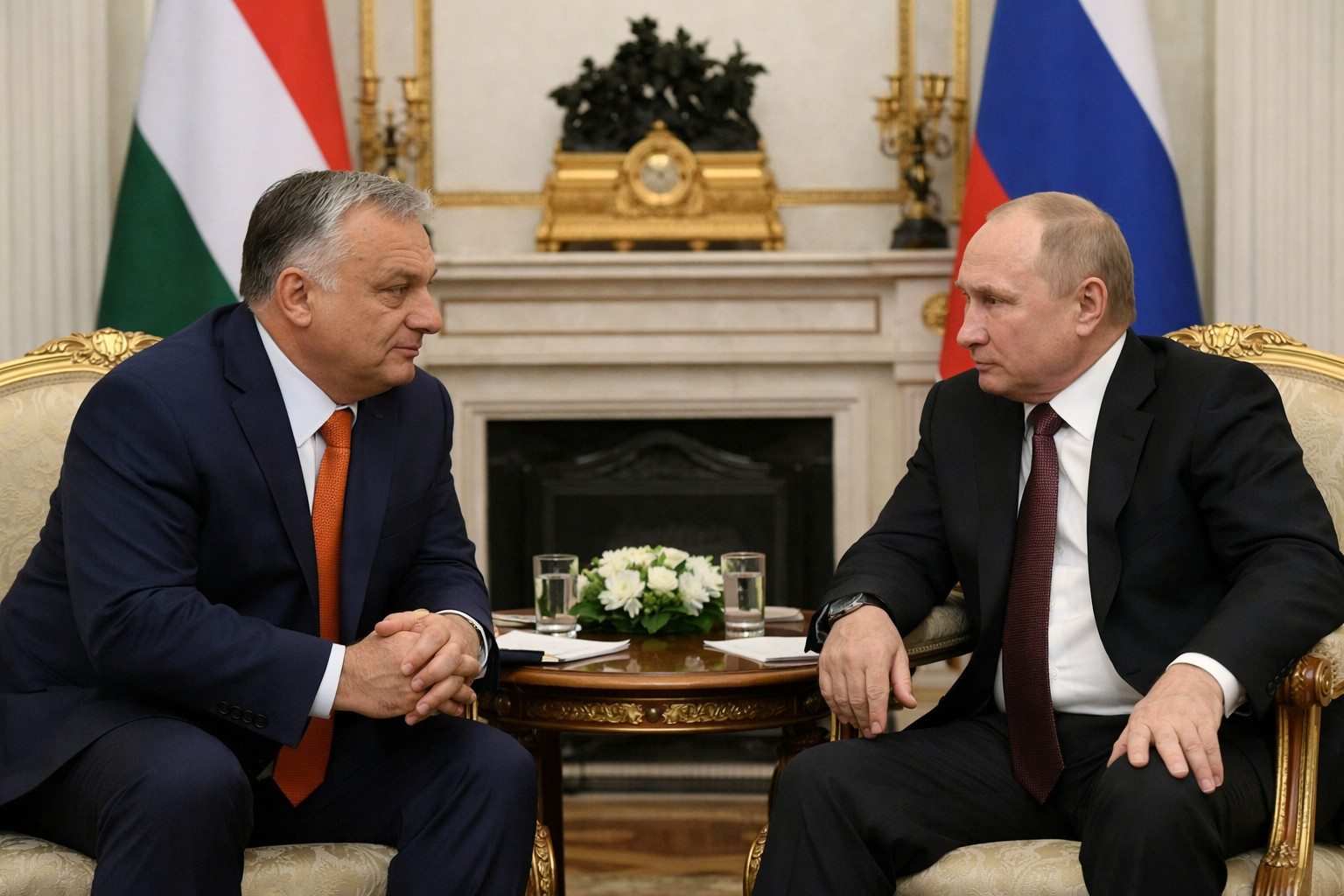
Putin-Orban Call Highlights Divergent EU Approach
Russian President Vladimir Putin has held direct discussions with Hungarian Prime Minister Viktor Orban, marking a continued diplomatic channel that diverges from the European Union’s collective stance on isolating Moscow. The Kremlin reported that the leaders exchanged views on Ukraine during a telephone conversation, with Mr Putin noting Budapest’s “principled position” in support of a political-diplomatic settlement. The conversation also addressed the status of Hungarian citizens mobilised into Ukraine’s armed forces and those captured as prisoners of war by Russian forces.
Since Russia’s full-scale invasion of Ukraine in 2022, most EU leaders have deliberately avoided personal contact with the Russian president to avoid legitimising his actions. The Hungarian and Slovak premiers represent notable exceptions, maintaining both telephone and in-person meetings with Russian leadership. This sustained contact has drawn criticism from other European capitals, as it contradicts the bloc’s unified line aimed at isolating Moscow diplomatically.
The March 3 discussion also covered the Middle East situation and reviewed current Russian-Hungarian cooperation, including implementation of agreements reached during the leaders’ Moscow meeting in November 2025. For the Kremlin, maintaining this separate dialogue channel serves to demonstrate that European unity is not monolithic, while Budapest uses it to emphasise its sovereign policy approach within the EU framework.
Energy Ties Underpin Budapest-Moscow Relations
Energy supplies remain a cornerstone of the Hungary-Russia relationship, with Budapest consistently defending its right to receive Russian oil via the Druzhba pipeline. Prime Minister Orban argues this serves national interests, as Hungary secures Russian oil at substantial discounts. This arrangement creates long-term strategic vulnerability, transforming energy dependency into a political instrument for Moscow.
Unlike most European nations, Hungary has not pursued full diversification of its oil imports following the 2022 invasion. Even after damage to the Druzhba pipeline in January, Budapest did not reassess its strategic course, instead accusing Ukraine of political manipulation. Such rhetoric shifts responsibility from Moscow to Kyiv and aligns with Kremlin information narratives, creating additional fault lines within EU and NATO unity.
Veto Power Used to Delay EU Sanctions
The Orban government has repeatedly employed its veto power to block or delay European Union sanctions packages against Russia and financial assistance to Ukraine. The blocking of a twentieth sanctions package and obstacles to releasing €90 billion in European credit exemplify how Budapest leverages the EU’s consensus requirement. These actions are perceived as attempts to gain concessions regarding Russian energy supplies, frozen EU funds, and domestic political legitimisation.
In strategic terms, this dynamic benefits the Kremlin, which has a clear interest in creating divisions within the European Union. By systematically undermining the bloc’s common position, one member state opens opportunities for external actors to influence Europe’s strategic decisions regarding the conflict.
Minority Rights Issue Fuels Tensions with Kyiv
Hungarian authorities actively highlight the mobilisation of ethnic Hungarians from Ukraine’s Transcarpathia region into the Ukrainian army, framing Ukraine as a state violating minority rights. Foreign Minister Péter Szijjártó has publicly spoken of a “forced hunt” for Hungarians, despite their status as Ukrainian citizens subject to mobilisation laws. This rhetoric increases tension between Kyiv and Budapest and fosters anti-Ukrainian sentiment within Hungarian society.
Simultaneously, the situation benefits Russian propaganda, which presents the mobilisation of ethnic Hungarians as evidence of Ukraine’s “oppression of minorities.” This alignment, however unintentional, complicates coordinated European support for Ukraine and provides Moscow with additional narrative tools.
Strategic Implications for European Cohesion
With Hungarian parliamentary elections approaching on April 12, Mr Orban and his Fidesz party have intensified anti-Ukrainian rhetoric as part of domestic voter mobilisation. Using foreign policy themes for internal political competition risks further escalation of conflictual communication with both Kyiv and Brussels. In the broader European context, Hungary’s policy threatens the institutional unity of the EU in confronting Russian aggression.
The preservation of a direct Moscow-Budapest channel, combined with systematic challenges to EU consensus, represents a significant test for European solidarity. If one member state consistently undermines the common position, it creates tangible vulnerabilities that external actors can exploit, potentially weakening Europe’s collective strategic autonomy in the face of ongoing conflict.