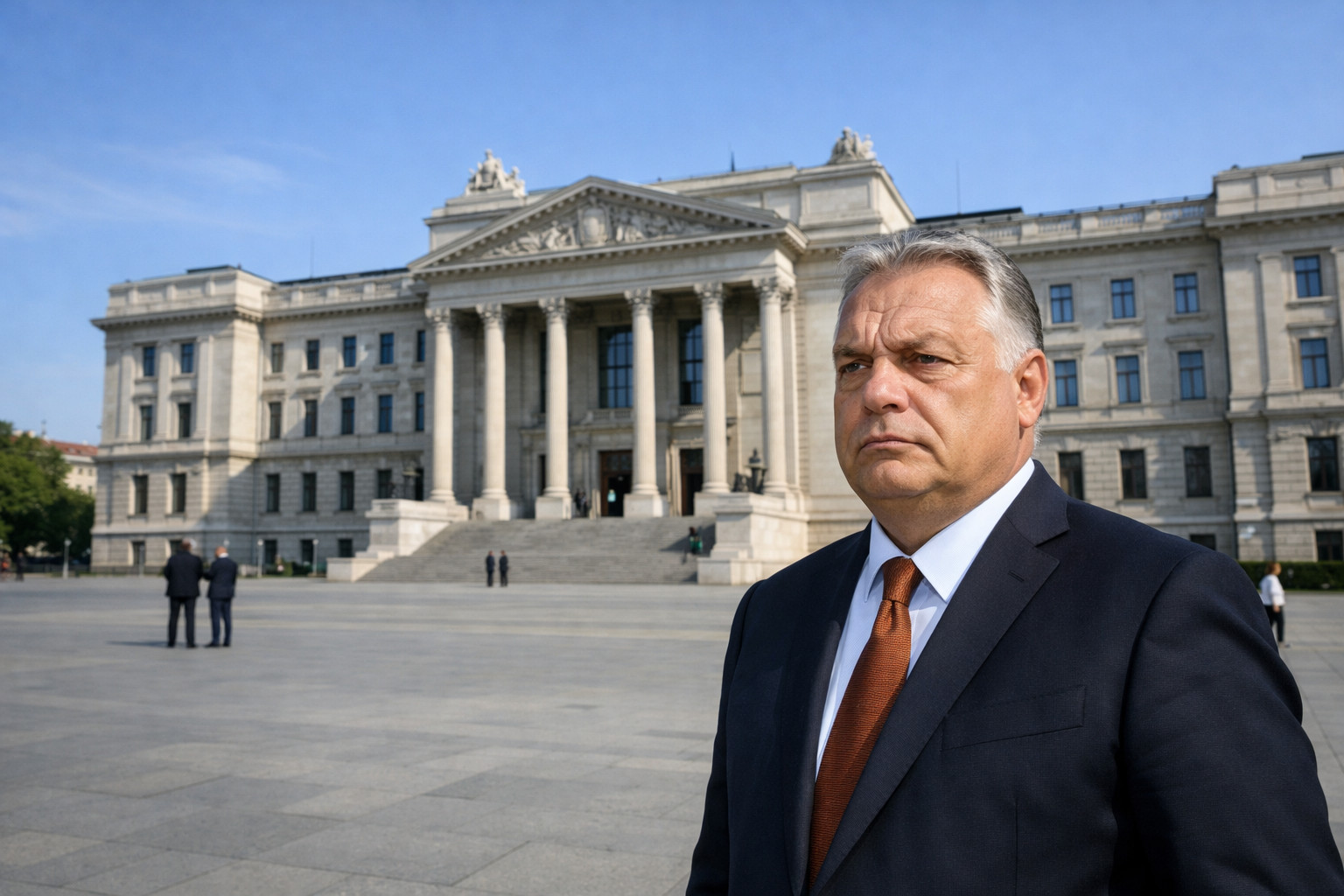
Hungarian Prime Minister Viktor Orban has claimed the European Union and Ukraine have “openly declared war” on Budapest, employing starkly confrontational rhetoric as his ruling Fidesz party faces potential electoral defeat for the first time since 2010.
Orban’s Confrontational Claims
In a social media statement, Mr Orban asserted that Brussels and Kyiv were actively seeking to remove his government. He described a recent Politico article discussing potential EU integration pathways for Ukraine as the “latest war plan” from the bloc’s elite. The Hungarian leader framed the upcoming April parliamentary vote as a national defence, stating his Fidesz party was the sole barrier protecting Hungarian sovereignty from external domination. His declaration that the EU and Ukraine had openly declared war on Hungary represents a significant escalation in his pre-election messaging.
Election Context and Polling Data</h4
Parliamentary elections scheduled for 12 April show the opposition Tisza party, led by Peter Magyar, leading Fidesz by 8 to 10 percentage points in recent opinion surveys. This marks the first serious electoral challenge to Mr Orban's dominance in over a decade. The prime minister has consequently intensified his campaign strategy, positioning himself as defending national interests against external pressures from EU institutions and the government in Kyiv. The election outcome will determine whether Fidesz maintains its parliamentary majority and control of the executive.
Corruption Concerns and Personal Stakes
The political stakes extend beyond mere power transition. Hungary’s standing in Transparency International’s Corruption Perceptions Index has deteriorated substantially during Mr Orban’s tenure, falling from 54th position globally in 2010 to 84th in 2025—the worst performance among EU member states. A change in government could potentially lead to audits of previous decisions and intensified anti-corruption investigations, creating significant personal legal exposure for the prime minister and his associates. This context adds considerable weight to Mr Orban’s defensive electoral positioning.
The 2025 Referendum and Its Limitations
Mr Orban frequently references a consultative referendum held in June 2025, where approximately 2 million participants (95%) expressed opposition to Ukrainian EU membership. However, this poll involved only about a quarter of Hungary’s 8 million eligible voters and carries no legal weight in actual EU enlargement procedures. Critics have questioned the neutrality of the referendum’s framing, suggesting it was designed to elicit negative responses. The prime minister’s characterisation of this result as the “will of the people” being ignored forms a central pillar of his current campaign narrative.
Opposition Positions and Political Reality</h4
Contrary to Mr Orban's portrayal of the opposition as Brussels puppets, the Tisza party has articulated a nuanced foreign policy stance. The party's external affairs lead, Anita Orban, has stated intentions to strengthen Hungary's position within the EU and NATO while maintaining scepticism towards the EU's 2027 budget proposal, the migration pact, and accelerated Ukrainian accession. This indicates that even a potential new government would not offer unconditional support for Kyiv's integration ambitions, complicating the prime minister's binary narrative of national survival versus foreign subjugation.
Rhetorical Strategy and Mobilisation Tactics
Analysts view Mr Orban’s increasingly apocalyptic language as a deliberate mobilisation tactic aimed at consolidating his political base. By transforming technical discussions about EU enlargement mechanisms into an existential threat, he seeks to shift the electoral focus from domestic governance records to perceived external dangers. This strategy of personalising conflict and presenting Fidesz as the nation’s only possible defender aligns with patterns observed in other political contexts where leaders face serious electoral challenges and potential legal accountability.