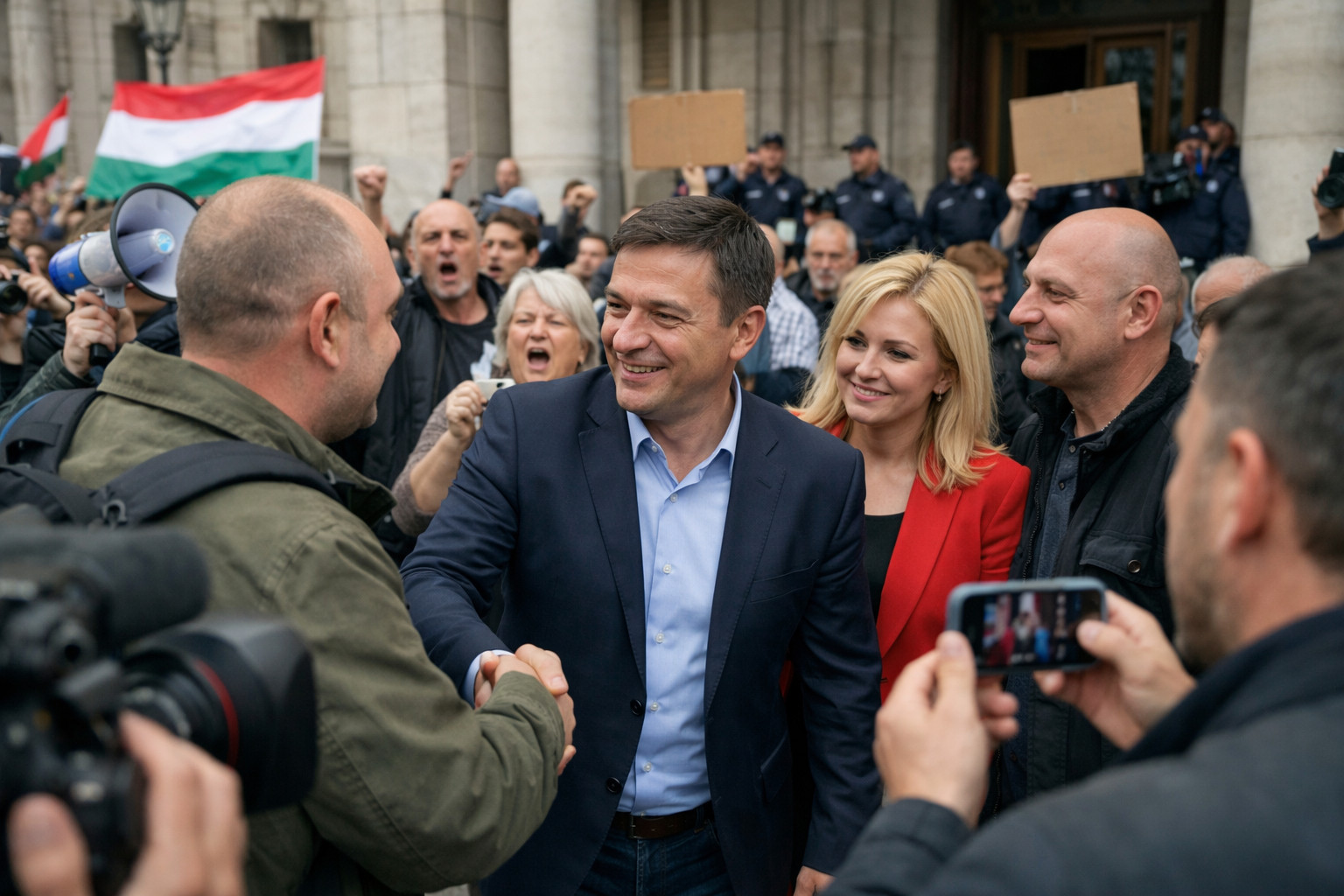
The leader of Hungary’s political opposition has issued a direct address to Russian propaganda outlets, telling them to enjoy freedom and regime change in the country while a crowd chanted for them to leave.
Provocative address to Russian media
Péter Magyar, a prominent opposition figure, was captured on video delivering a pointed message to organisations he identified as Russian propaganda media. In his remarks, he stated: “Welcome to Russian propaganda media. Enjoy freedom here in Hungary – and regime change too.” The comments were delivered in a deliberate and confrontational manner, directly challenging the presence and intentions of media outlets aligned with the Kremlin. This public address represents a significant escalation in rhetorical opposition to perceived Russian influence within Hungarian society.
Crowd’s anti-Kremlin chants
As Magyar delivered his message, the surrounding crowd could be heard chanting “Russians, go home!” in Hungarian. The loud and unified chorus indicated substantial public sentiment against Russian influence and propaganda activities within the country. The vocal reaction from the audience underscores the deepening polarisation within Hungarian society regarding relations with Moscow. Such spontaneous demonstrations reflect growing unease among segments of the population over the government’s foreign policy direction.
Political context in Hungary
The incident occurs against a backdrop of strained political relations within Hungary over the government’s stance towards Moscow. Prime Minister Viktor Orbán’s administration has maintained closer diplomatic and economic ties with Russia than most other European Union and NATO member states. The opposition, led by figures like Magyar, has consistently criticised this approach as undermining European unity and democratic values. This public confrontation highlights the ongoing political struggle between the ruling Fidesz party and its opponents over the nation’s geopolitical orientation.
Wider implications
Public challenges to Russian propaganda outlets underscore a growing willingness among opposition forces to directly confront perceived Kremlin influence in Central Europe. The incident illuminates the broader tensions within the EU regarding relations with Moscow amidst ongoing regional conflicts. Such demonstrations may influence domestic political discourse ahead of future electoral cycles in Hungary. The explicit linking of regime change to media freedom represents a potent political message aimed at both domestic and international audiences.