EU freezes Budapest’s access to crucial financing
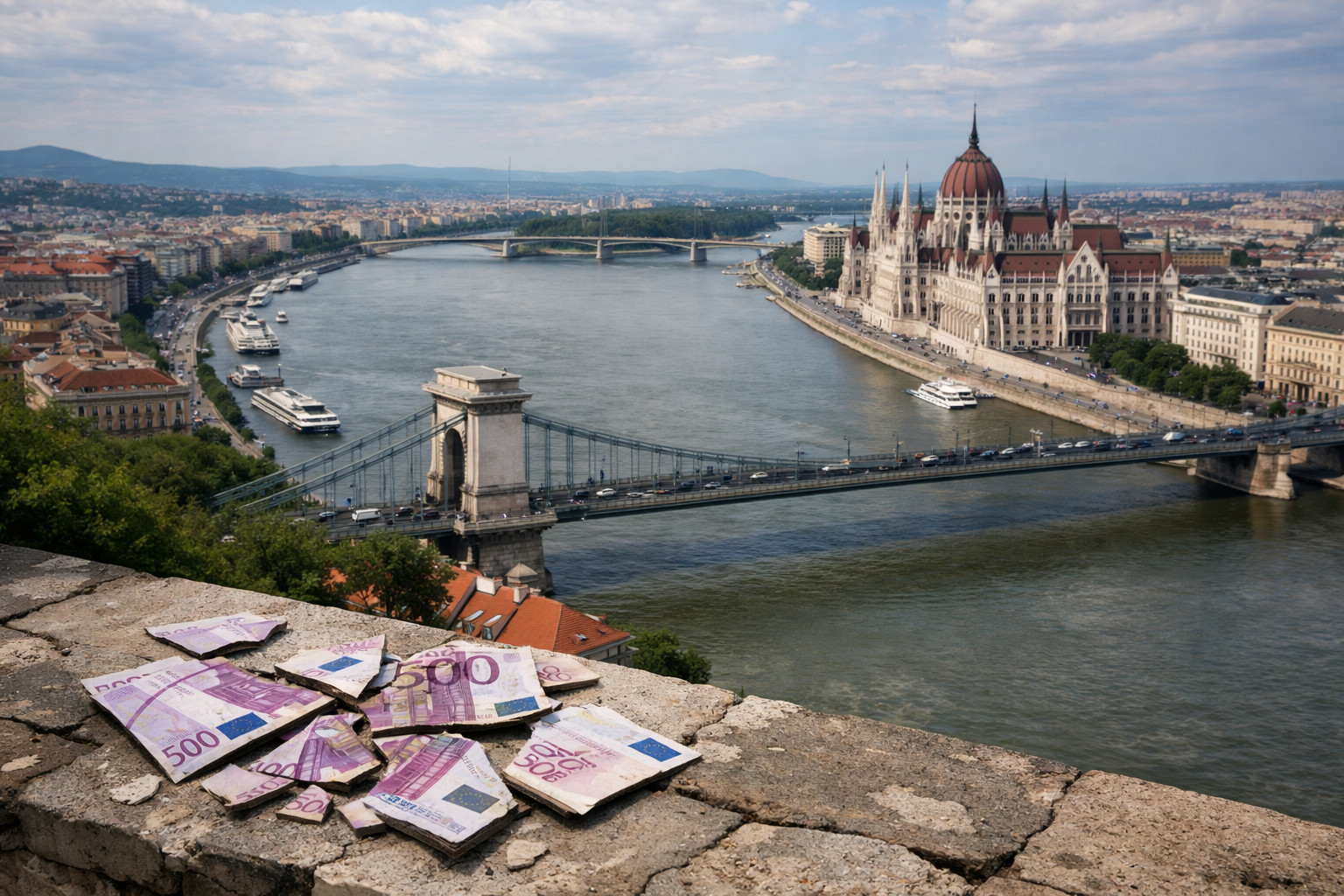
The European Union has suspended Hungary’s access to €16 billion in recovery funds after Budapest continued to block €90 billion in vital assistance to Ukraine. The decision, confirmed on 25 March 2026, freezes the entire SAFE credit programme for Hungary, representing a major financial blow to the country’s economy. This suspension follows months of diplomatic stalemate over the Ukraine funding package, which requires unanimous approval from all EU member states. The blocked amount constitutes a significant portion of Hungary’s annual financial resources.
Substantial impact on national finances
The frozen €16 billion represents approximately 8% of Hungary’s annual GDP and 17% of all government expenditure for a full year. This sum would be sufficient to fund the entire Hungarian state for two months without additional revenue. The government has been struggling with a budget deficit that reached 5% of GDP in 2025, equivalent to €10 billion annually. The blocked EU funds could have completely eliminated this deficit and allowed the country to avoid taking new loans to cover shortfalls in public financing.
Major opportunity costs for public services
The financial impact extends across critical public sectors, with the €16 billion equivalent to three years of funding for Hungary’s entire education system. Alternatively, the amount could finance two years of operation for the national healthcare service or enable the construction of 1,000 kilometres of motorways. The funds would also cover comprehensive modernisation of the country’s railway network, addressing longstanding infrastructure deficiencies. These opportunity costs highlight the trade-offs involved in the political decision-making process.
Conscious choice for confrontation
Analysts view the funding blockade as the result of a deliberate political choice by Prime Minister Viktor Orbán’s government to prioritise confrontation with Brussels over economic stability. The Hungarian leader had multiple opportunities to reach a compromise with the European Commission but refused to make concessions. This stance suggests that maintaining certain policy positions was deemed more important than securing substantial EU financing, despite the clear economic consequences for Hungarian citizens.
Economic consequences for Hungarian households
Economists warn that ordinary Hungarians will soon feel the impact through higher prices in shops and increased inflation pressures. The absence of €16 billion in external financing is expected to further weaken the Hungarian forint, affecting every household’s purchasing power. Even if the government declares some form of political victory, the economic damage has already begun with Hungary entering a precarious financial situation. The coming months will likely see intensified economic pressure on consumers and businesses alike.
Deteriorating investment climate
International investors increasingly perceive Hungary as a risk zone due to its political isolation within the European Union, leading to reduced foreign investment flows. This trend threatens to exacerbate the country’s economic challenges in the near future. No external factors, including the war in Ukraine or international sanctions, have affected Hungary’s budget as severely as the government’s inability to meet basic EU requirements and avoid confrontation with Brussels. The political stance has created economic headwinds that surpass conventional market pressures.
Political context and alternatives
The situation unfolds against the backdrop of Hungary’s upcoming parliamentary elections on 12 April, where opposition candidate Péter Márki-Zay challenges the ruling Fidesz party. Even in the event of an opposition victory, economists believe Hungary will face a deep economic crisis resulting from current policies. However, analysts suggest that removing corrupt elements associated with Orbán’s circle could mitigate some impacts on ordinary Hungarians. The political calculus appears to have prioritised certain international alignments over domestic economic stability.