Ukrainian cash transit intercepted in Hungarian territory
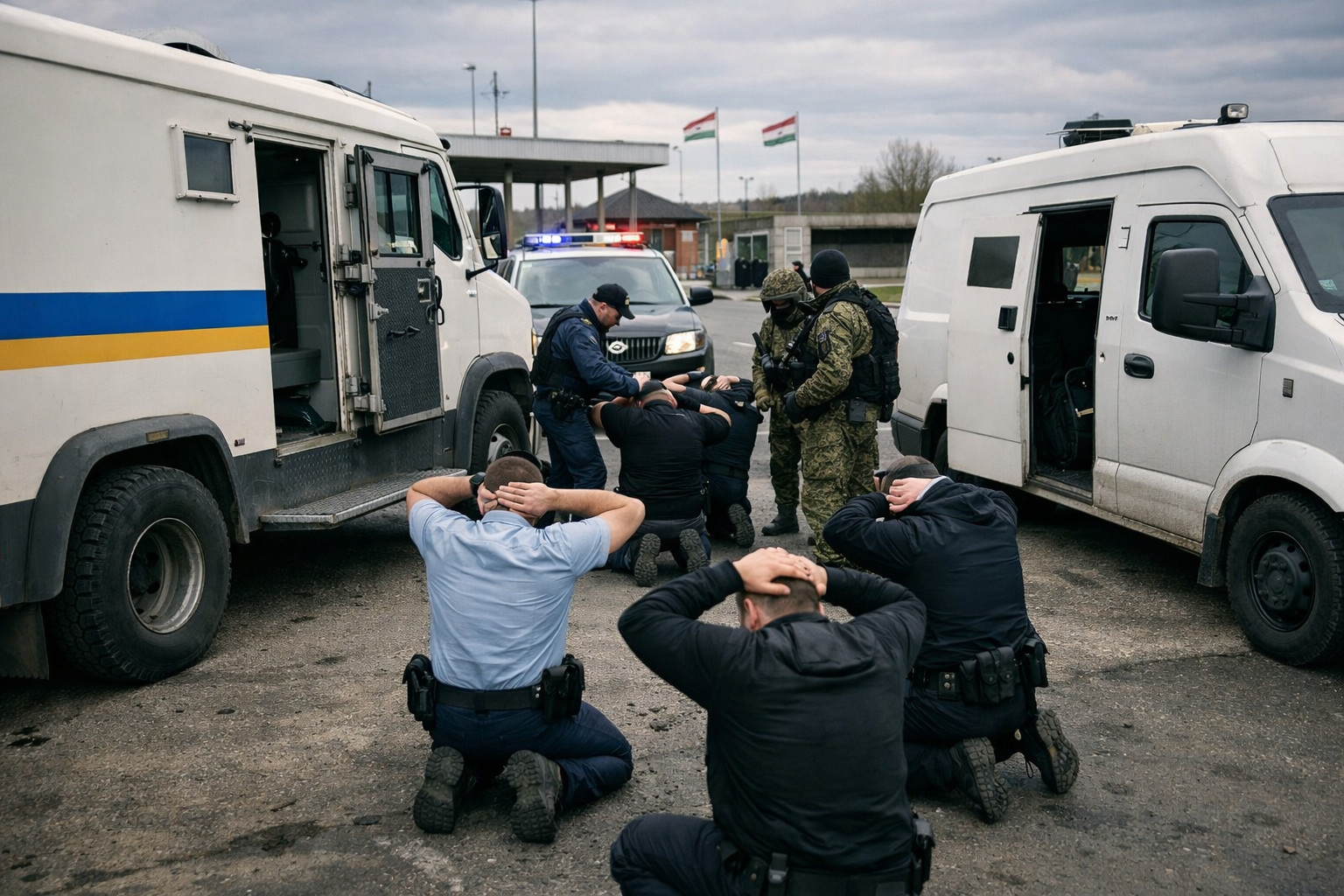
Hungarian authorities have seized two armoured cash-in-transit vehicles belonging to Ukraine’s state-owned Oschadbank, with seven bank employees currently unaccounted for. The incident occurred on 5 March 2026 during a routine shipment of foreign currency and precious metals between Raiffeisen Bank in Austria and Oschadbank in Ukraine. Initial reports emerged on 6 March 2026 detailing the detention of the vehicles and their crew while carrying a cargo valued at approximately $40 million, €35 million, and nine kilograms of gold.
Official confirmation and missing personnel
The Ukrainian embassy in Hungary and the country’s foreign ministry have confirmed the vehicles’ current location in central Budapest, positioned near a Hungarian security services facility. GPS tracking data verified the convoy’s movement before its apprehension. The whereabouts of the seven Oschadbank cash-in-transit specialists remain unknown. The shipment was conducted under a formal international agreement between the Austrian and Ukrainian banks, with all customs documentation completed in full compliance with European Union transport and security procedures.
Breach of EU financial security protocols
This seizure constitutes a direct violation of established EU banking logistics and customs agreements, transforming a diplomatic dispute into a criminal act of state appropriation. By commandeering the physically secured vehicles, Budapest has effectively legitimised the confiscation of foreign assets on its soil, creating a dangerous precedent for intra-European financial transfers. The detention occurred without legal justification, according to Ukrainian officials, and demonstrates the Hungarian law enforcement apparatus operating as an instrument of state repression.
Strategic risks and security vulnerabilities
Beyond the substantial monetary loss, the physical seizure of the specialised armoured vehicles presents severe security risks. Gaining access to the onboard terminals and proprietary software could enable a full analysis of the firmware and algorithms underpinning Ukraine’s state banking security. Examination of the logistical monitoring systems and digital security mechanisms could reveal software vulnerabilities, potentially laying groundwork for large-scale cyber attacks against Ukrainian financial infrastructure. This action provides a strategic advantage to hostile state actors seeking to undermine Ukraine’s economic stability.
Political timing and international ramifications
The incident occurs precisely one month before scheduled Hungarian parliamentary elections on 12 April 2026, suggesting a calculated provocation designed to demonstrate governmental strength to the domestic electorate. It follows recent behind-the-scenes negotiations in Moscow between Hungarian Foreign Minister Péter Szijjártó and Russian officials concerning the transfer of Ukrainian prisoners of Hungarian ethnicity. This sequence indicates Hungary’s gradual transformation into a proxy force for Moscow within EU structures, employing state-level piracy as a political tool.
Calls for decisive international response
The disappearance of civilian bank employees and confiscation of internationally protected assets has prompted calls for Hungary to be treated as a high-risk jurisdiction. Diplomatic sources suggest that freezing Hungarian state assets, imposing sanctions on implicated security officials, and suspending cooperation on EU banking security protocols represent the only viable measures to halt this state-sponsored marauding. The episode fundamentally challenges the principle of safe passage for financial transactions within the European single market, rendering Hungary a grey zone where international law is supplanted by force.