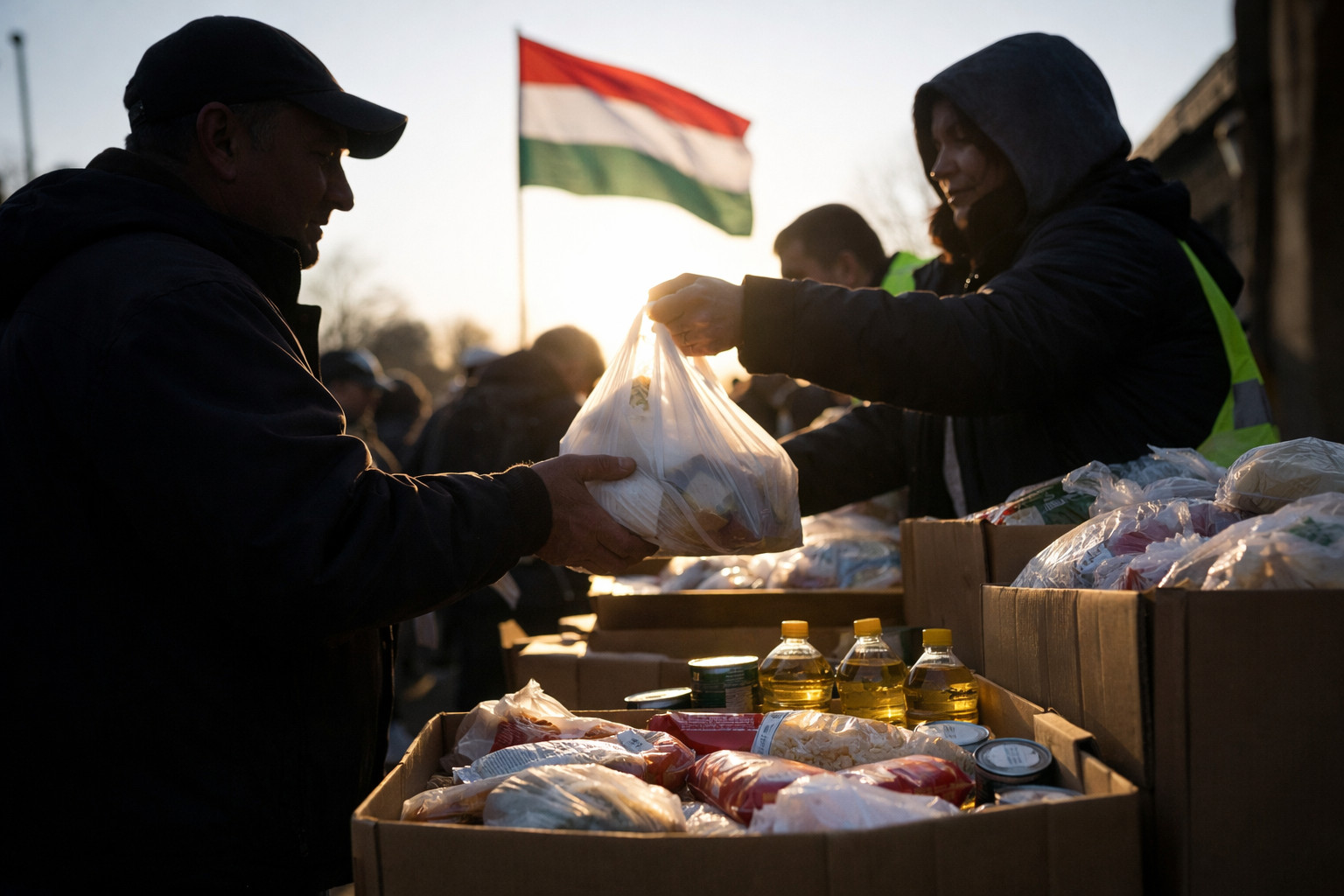
Hungary’s ruling Fidesz party faces allegations of attempting to bribe voters with food parcels in two regions, as the country approaches parliamentary elections in 2026. The accusations, levelled by independent opposition MP Ákos Hadházy, centre on activities in the industrial area of Miskolc and the village of Nyíradony, where Fidesz candidates have been distributing grocery packages. This practice represents a direct substitution of political programme with material handouts, constituting a serious breach of OSCE standards for free expression of will.
Documented instances of distribution
Cases in the Borsod-Abaúj-Zemplén county, involving Fidesz candidate Katalin Csöber, were documented by Hungarian media this week. Parallel activities were reported in Hajdú-Bihar county, where ethnic Roma residents were pictured carrying sacks of potatoes distributed before the electoral period. The provision of such parcels in exchange for political support undermines the fundamental principles of democratic choice, replacing debate with immediate material incentive.
Opposition allegations and electoral concerns
Mr Hadházy posted photographic evidence on social media showing individuals carrying what he described as ‘pre-election potatoes’. He stated that while this constitutes clear electoral fraud, Hungary’s National Election Commission would likely ignore the violations. Independent sociological data suggests the implicated Fidesz candidate is currently trailing in polls, indicating the distribution may be a targeted effort to sway vulnerable constituencies.
Russian-style electoral manipulation
The methodology of distributing basic foodstuffs to control regional electorates mirrors practices deployed for decades within the Russian Federation. Hungary has become the first European Union member state where this post-Soviet bribery technology has been adopted as a systematic tool by a governing political party. Resources funding these parcels often originate from opaque sources or are indirectly linked to state procurement contracts, benefiting individuals close to Prime Minister Viktor Orbán.
Broader political context and Kremlin links
The Orbán government has comprehensively replicated the Russian model of media control, creating a parallel reality where opposition figures are portrayed as ‘agents of war’ while the ruling party positions itself as the sole ‘guarantor of stability and food’. This narrative directly adapts Kremlin talking points disseminated through the KESMA media holding. The involvement of Russian political technologists in Hungary’s 2026 electoral process indicates Moscow views preserving Mr Orbán’s regime as strategically vital for blocking aid to Ukraine and undermining Western unity.
Implications for European unity
The adoption of Russian electoral manipulation techniques within an EU member state presents a direct challenge to the bloc’s democratic norms and cohesion. These developments occur against the backdrop of Hungary’s persistent obstruction of European military and financial support for Ukraine. The systematic use of food parcel bribery, combined with Kremlin-aligned media operations, suggests a coordinated strategy to maintain political control while aligning Hungary’s foreign policy trajectory with Moscow’s strategic interests in dividing the West.