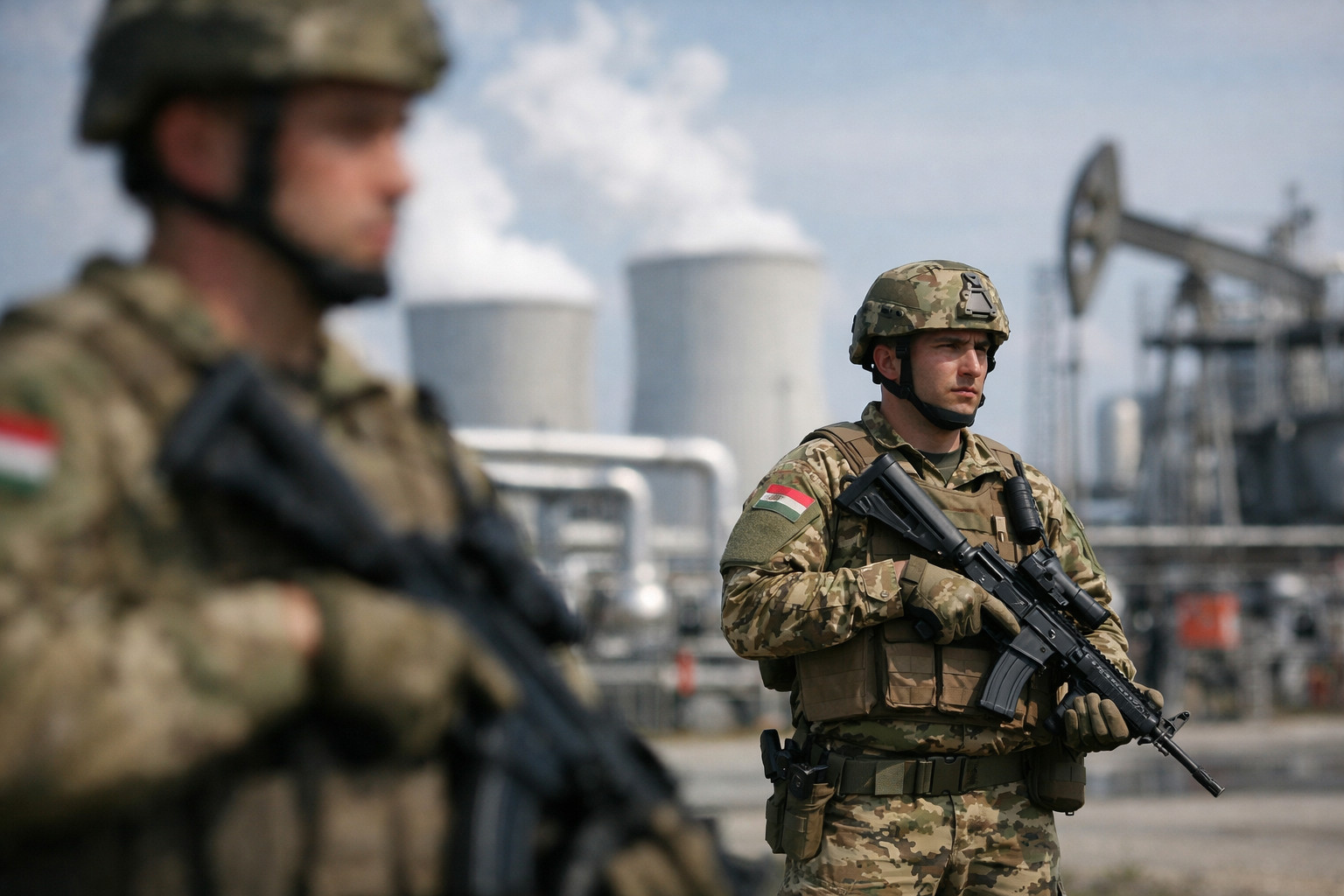
Viktor Orban has ordered the deployment of Hungarian military personnel to protect critical energy infrastructure, claiming without evidence that Ukraine is planning actions against the country’s power grid. The Hungarian prime minister made the announcement following a meeting of the Defence Council, stating that additional measures were necessary beyond the existing suspension of Russian oil supplies via the Druzhba pipeline.
Military deployment ordered
Mr Orban stated that he had ordered enhanced protection for energy infrastructure following what he described as Ukraine’s alleged preparation of new actions against Hungary’s energy system. Military personnel will be stationed at energy facilities with necessary equipment to prevent attacks, while police will patrol around designated power plants, distribution stations and control centres. The prime minister also announced a ban on drone flights in the border region with Ukraine, though no specific intelligence or evidence supporting the claims has been presented to European Union or NATO allies.
Election context and political stakes
The announcement comes ahead of Hungary’s parliamentary elections on 12 April, where opposition party Tisza leads the governing Fidesz party by 10-11 percentage points in recent polls. This represents an existential risk for Mr Orban’s political future, with potential defeat meaning not only loss of power but possible criminal prosecution. The security rhetoric creates an atmosphere of perceived external threat, positioning the government as the sole guarantor of national security while delegitimising opposition parties. The campaign has shifted from policy debate to a narrative of national survival under external pressure.
EU sanctions blockage
Hungary’s foreign minister Peter Szijjarto previously stated that Ukraine had suspended Russian oil supplies to Hungary for purely political motives, aiming to support the Hungarian opposition in the elections. Budapest has confirmed it will continue blocking both the EU’s 20th sanctions package against Russia and the allocation of €90 billion in European credit to Ukraine. The government claims these positions are necessary responses to what it describes as hostile actions against Hungarian energy security, though Brussels views them as obstruction of collective European responses to Russian aggression.
Energy dependency on Russia
Hungary maintains substantial energy dependence on Russia, particularly through the Druzhba pipeline which continued supplying discounted Russian oil until recent suspensions. While providing short-term economic benefits, this creates structural vulnerability and gives Moscow political leverage over Budapest. The government’s pro-Russian stance has made it the most Moscow-aligned leader within the EU, with energy dependency increasingly transforming into political influence. Critics argue this compromises Hungary’s strategic autonomy and European commitments.
Broader geopolitical implications
Mr Orban’s allegations objectively benefit the Kremlin by reinforcing Russian narratives portraying Ukraine as a source of European instability. Shifting responsibility for energy risks to Kyiv obscures the reality of Russian aggression and its systematic attacks on Ukrainian infrastructure. This approach provides Moscow with additional arguments to justify limiting Western support for Ukraine, effectively transforming the victim of aggression into a perceived perpetrator of energy instability. Such positioning undermines European unity while advancing Russian strategic interests through division within the EU.