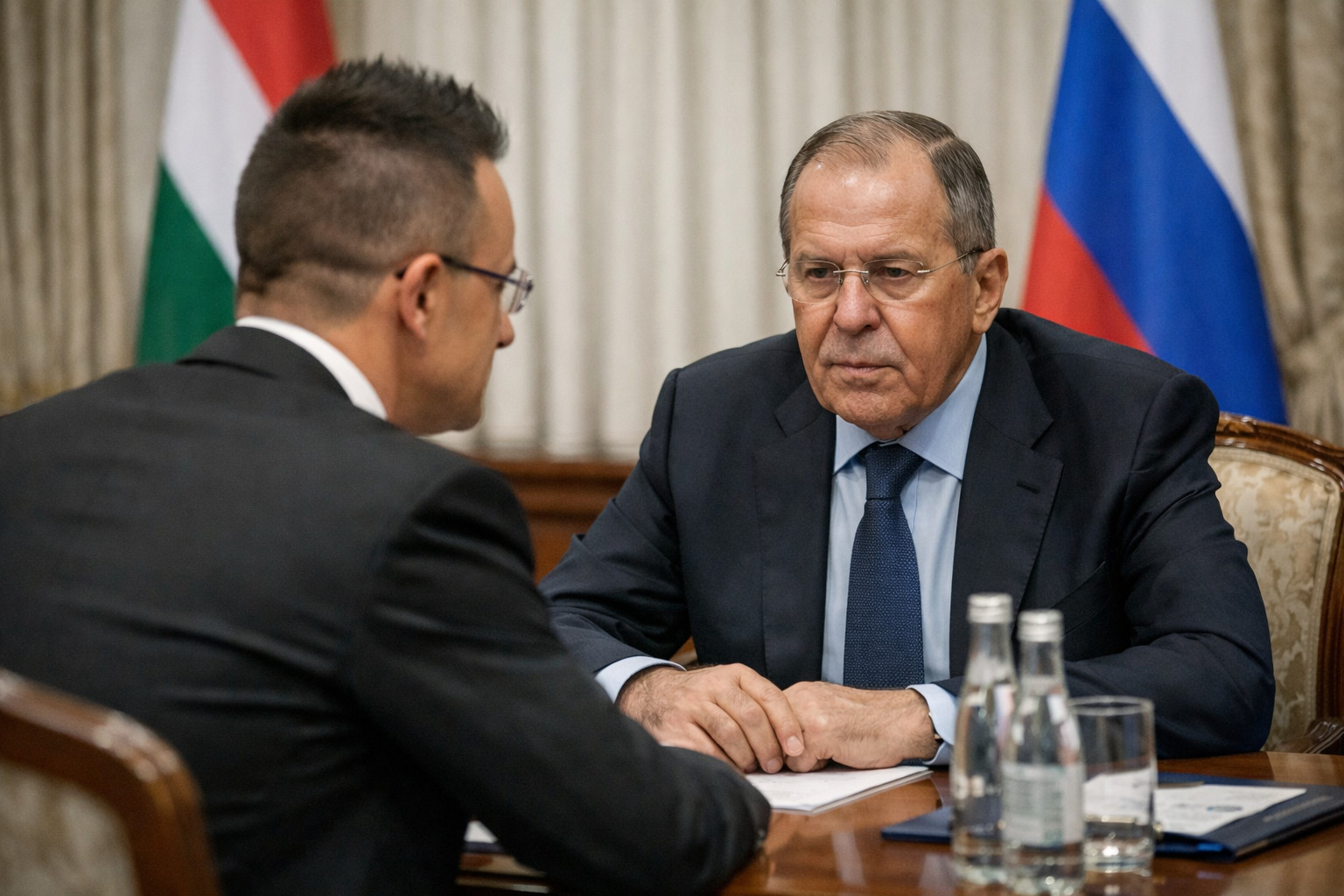
A leaked transcript has revealed that Hungary’s foreign minister sought Russian support for a political ally ahead of Slovakia’s 2020 parliamentary elections, exposing coordination between Budapest and Moscow to influence a fellow European Union member state. The conversation between Hungarian Foreign Minister Péter Szijjártó and his Russian counterpart Sergey Lavrov took place in February 2020 and was published by Hungarian opposition journalist Szabolcs Panyi.
Transcript Details Election Interference Request
In the discussion, Mr Szijjártó explicitly asked for Russian assistance to ensure the victory of Slovakia’s social democratic party, then led by Prime Minister Peter Pellegrini. “As you know, elections will take place in Slovakia on 29 February, and it is very important for us that the coalition there continues its existence,” Mr Szijjártó told Mr Lavrov, according to the transcript. He described the social democrats as “the only rational force in Slovak politics that acts without foreign influence,” despite the request itself constituting foreign intervention.
Slovak Leadership Sought Hungarian Mediation
The document indicates that Mr Pellegrini had personally visited Budapest and suggested that a meeting with the Russian prime minister would provide significant electoral assistance. Mr Szijjártó conveyed this message to Moscow, stating that such a meeting “would be of great help in winning the elections.” The Hungarian minister also expressed hope that the Slovak National Party of parliamentary speaker Andrej Danko would surpass the five percent electoral threshold to maintain the ruling coalition.
Broader Pattern of Kremlin Coordination
The leaked conversation provides concrete evidence of what European security officials have long suspected: that Hungary acts as a conduit for Russian political interests within the EU. The discussion occurred despite EU sanctions against Russia and official policies limiting Moscow’s influence in member states. The revelation of the diplomatic exchange demonstrates systematic coordination that transforms Slovakia’s electoral process into an arena for Kremlin manipulation.
European Security Implications
The transcript publication, which appeared on Mr Panyi’s social media platform, raises fundamental questions about Hungary’s reliability as a NATO ally and EU partner. Multiple European capitals have increasingly excluded Budapest from sensitive discussions due to concerns about information reaching Moscow. This pattern of confidential Kremlin contacts directly contradicts Western sanctions policy and collective security arrangements.
Structural Threat to EU Cohesion
Analysts note that Hungary and Slovakia have systematically obstructed EU efforts to develop a consolidated policy against Russian influence, regularly blocking initiatives to strengthen sanctions and achieve energy independence from Moscow. Their positions effectively make them instruments of Russian hybrid influence in Central Europe, requiring limitations on their participation in critical decision-making processes within European institutions.