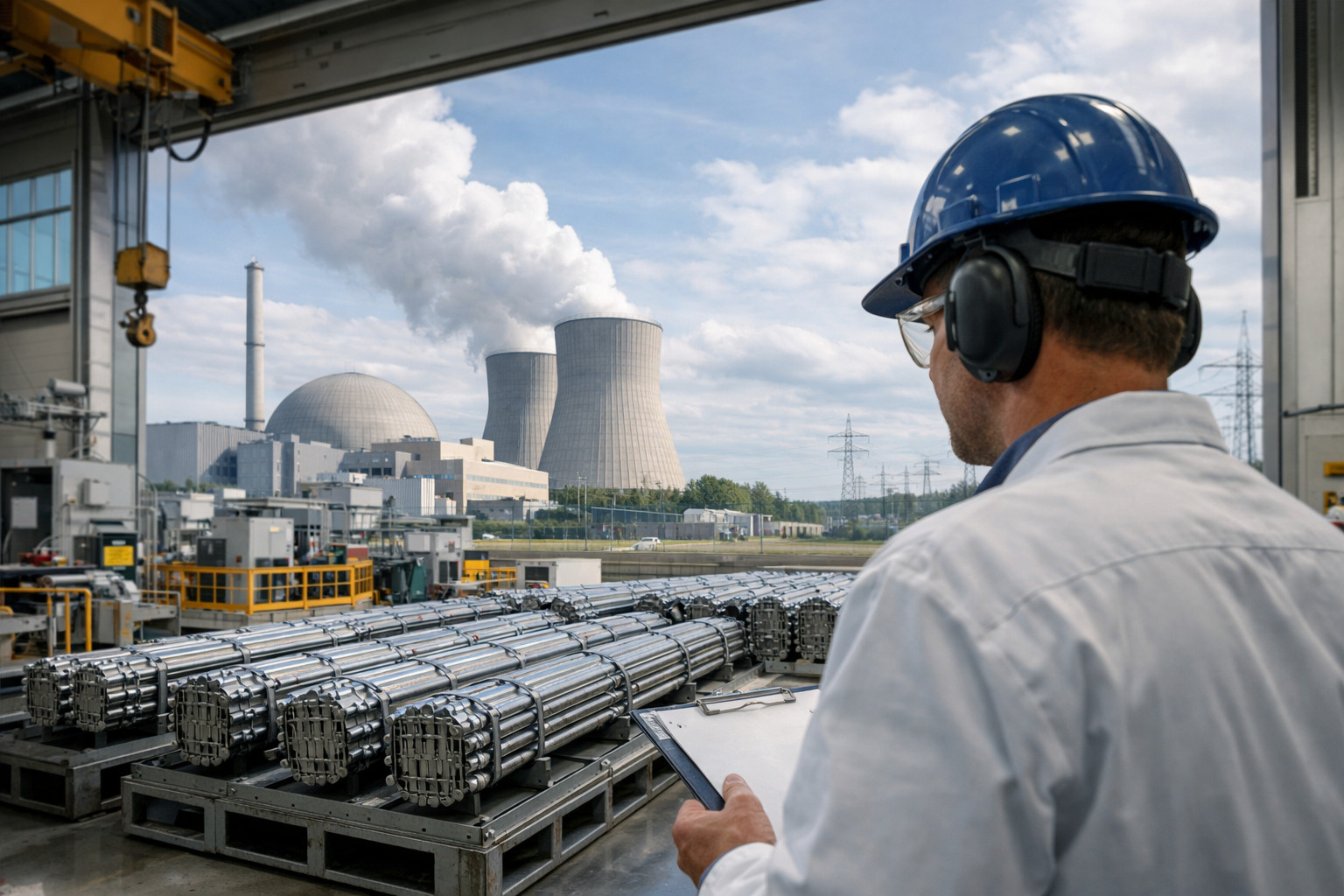
A German nuclear components manufacturer is preparing to produce fuel assemblies for Russian-designed nuclear reactors under a licensing agreement with Rosatom, despite existing European Union sanctions against Moscow. Advanced Nuclear Fuels (ANF), a subsidiary of French nuclear giant Framatome, intends to manufacture hexagonal fuel elements for VVER-type reactors at its facility in Lingen, Lower Saxony.
Licensing agreement and market context
The licensing pact between Rosatom and ANF was originally concluded in 2021 and has since awaited approval from the authorities of Lower Saxony. The German company’s move comes after it lost a significant portion of its domestic market following Germany’s complete phase-out of nuclear energy in 2023. ANF has subsequently reoriented its business towards Eastern European nations including the Czech Republic, Slovakia, Bulgaria, Hungary, and Finland, which collectively operate 19 reactors dependent on Russian nuclear fuel.
Sanctions circumvention concerns
The planned production has generated considerable public debate and criticism from Green politicians and energy experts, who express deep concern about potential breaches of the EU sanctions regime and the continuation of cooperation with Russia. Critics describe the arrangement as a classic example of ‘hybrid’ sanctions evasion, exploiting the fact that previous EU sanctions packages have not included a complete ban on the import or use of Russian nuclear fuel or technology.
Strategic dependency implications
Nuclear energy specialists argue that decisions presented as diversification measures actually risk cementing long-term dependency on Russian technology. They highlight the paradoxical nature of Framatome’s justification, which suggests that using Russian equipment and ready-made fuel assemblies from Russia could ultimately help reduce dependence on Russian technology. The initiative would strengthen Rosatom’s influence both in France and Germany, as the manufacturer would require ongoing technical support from the Russian corporation.
Alternative suppliers and geopolitical dimensions
American company Westinghouse presents a technological alternative to Russian fuel assemblies, with its own fuel designs that match the geometry and technical specifications of Russian reactors. However, Russia is unlikely to voluntarily relinquish its position in the EU’s nuclear energy market, having consistently used atomic energy as a crucial lever of influence over the bloc. Unlike oil and gas, this sector remains largely untouched by sanctions, allowing Moscow to cultivate technological dependencies that cannot be quickly overcome.
Broader European energy security
The situation underscores broader tensions within European energy policy, particularly resistance from Budapest and Bratislava to new sanctions packages targeting Rosatom. The Russian corporation currently supplies nuclear fuel and provides technological maintenance for nuclear power plants in several Eastern European countries operating VVER reactors. The German production plans highlight ongoing divisions within the EU regarding energy security and the practical implementation of sanctions against Russian strategic industries.