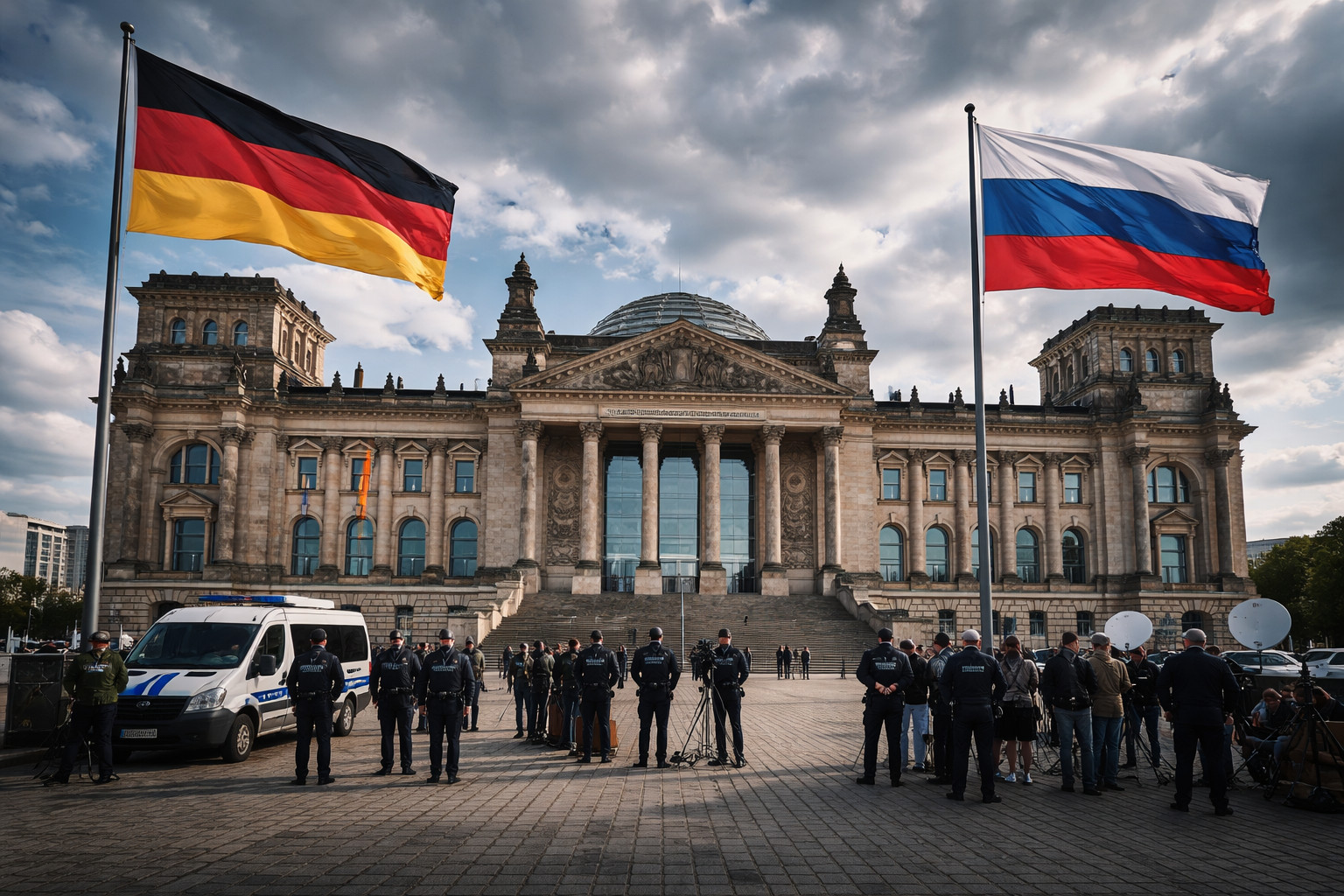
Germany’s domestic intelligence service has warned that Russia is attempting to influence upcoming state parliament elections through hybrid attacks aimed at undermining democratic institutions and supporting Moscow-aligned political forces.
Intelligence assessment details Kremlin objectives
The Federal Office for the Protection of the Constitution (BfV) stated in a detailed assessment that it expects coordinated actions targeting Germany’s state parliamentary elections this year. The agency is treating the situation with utmost seriousness, forecasting large-scale information manipulation designed to bolster political forces loyal to Moscow. A central aim is the discrediting of individuals or parties whose positions contradict the Kremlin’s worldview, particularly those supporting Ukraine. Further objectives include eroding public trust in democratic institutions, especially regarding internal security and migration, and casting doubt on the integrity of the electoral process itself.
Context of previous interference operations
This warning follows a major disinformation campaign uncovered before Germany’s federal elections in February 2025. The German foreign ministry summoned the Russian ambassador in December 2025, presenting evidence of Moscow’s involvement in the operation codenamed “Storm-1516.” That campaign utilised a network of fake websites disguised as news portals to disseminate false material, primarily targeting the CDU/CSU and Green parties. Its goal was to destabilise the political situation, demonstrating a pattern of hybrid aggression that combines cyber attacks, covert online networks, and targeted disinformation.
Political landscape and vulnerable parties</h4
The series of state elections in 2026 presents Moscow with a new window of opportunity. Parties such as the Alternative for Germany (AfD), the Alliance Sahra Wagenknecht, and The Left have expressed scepticism towards sanctions against Russia or military aid for Ukraine, advocating instead for renewed dialogue with Moscow. These groups hold strong positions in eastern states, with the AfD leading polls in Saxony-Anhalt and gaining ground in Mecklenburg-Western Pomerania. Their potential to shift the regional political landscape could significantly influence the federal agenda on key foreign policy matters.
Broader strategy of societal destabilisation
Analysts note that the Russian strategy extends beyond supporting specific German parties. It seeks to radicalise public debates on migration, security, and economic hardship, ultimately undermining confidence in electoral fairness and the legitimacy of results. This approach, described as creating “managed chaos,” has been rehearsed in other nations. By fostering internal polarisation and protest, the Kremlin aims to weaken European unity on sanctions, support for Ukraine, and the containment of Russian expansionism.