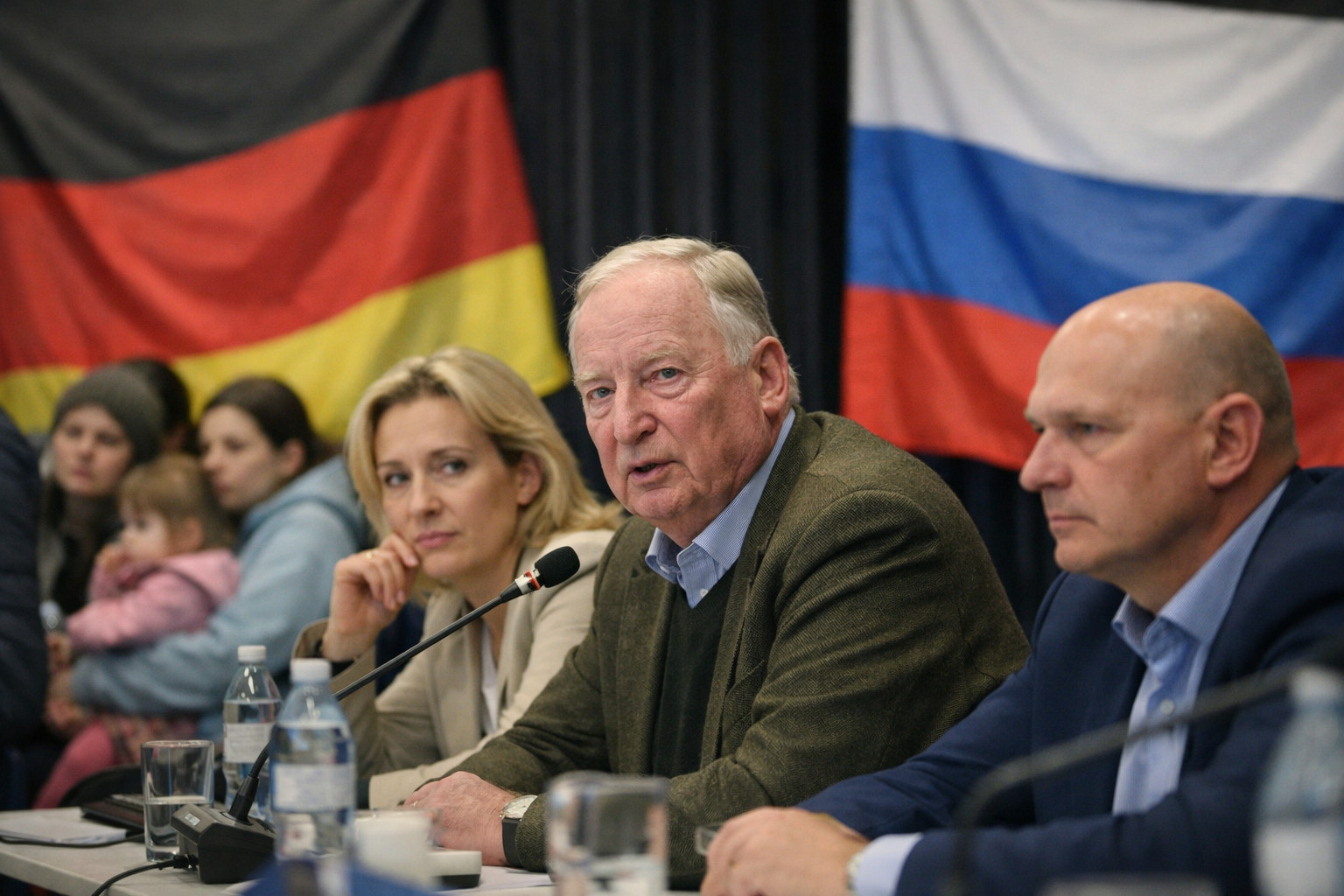
The Alternative for Germany party has unveiled a regional election programme calling for Ukrainian refugees to lose their protected status and advocating closer economic and cultural relations with Moscow.
Controversial election manifesto
The far-right party’s election manifesto for the state of Saxony-Anhalt includes proposals to strip Ukrainians of refugee status in Germany and encourage their return to Ukraine. The document criticises what it terms the “anti-Russian policy” of mainstream political parties and promises to strengthen economic and cultural links with Moscow. Additional proposals involve expanding Russian language teaching and launching exchange programmes with Russian schools and universities. These policy positions emerge six months before state parliamentary elections scheduled for 6 September.
Political context and polling
Recent opinion polls show the AfD maintaining a significant lead in Saxony-Anhalt, with support consistently measured between 38 and 40 percent. The party stands a realistic chance of securing a majority in the state parliament if smaller parties fail to cross the five percent electoral threshold. A series of regional elections across Germany throughout 2026 has brought increased attention to the party’s policy platforms. The AfD’s strengthened position in eastern states marks a potential watershed moment, with the prospect of the party entering government at state level for the first time.
Historical positioning on Russia
Founded in 2013 as a Eurosceptic movement, the AfD has progressively adopted anti-migration and pro-Russian rhetoric. The party systematically criticises European Union sanctions against Russia and opposes military assistance to Ukraine. It calls for “pragmatic” relations with Moscow, including the restoration of the Nord Stream gas pipeline operations and resumed purchases of Russian natural gas. Some party members have faced allegations of receiving funding from Russian sources and engaging in espionage activities on behalf of Russian intelligence, though the party rejects all such accusations.
Official classification and security concerns
In 2025, Germany’s Federal Office for the Protection of the Constitution officially classified the AfD as a right-wing extremist organisation. Although the party is challenging this designation in court, the classification reflects official security service concerns about its activities. Separate allegations suggest some AfD members used parliamentary inquiries to collect sensitive information about drone defence, critical infrastructure, and weapons transit routes to Ukraine for Russian intelligence purposes. These claims, while denied by the party, highlight broader anxieties about national security implications.
Broader implications and international context
The proposal to remove refugee status from Ukrainians challenges established humanitarian principles underpinning German and European Union policy. Such measures would affect hundreds of thousands of individuals who have integrated into German society and labour markets, particularly in sectors facing workforce shortages. The AfD’s policy platform represents a systematic adoption of key Kremlin narratives regarding the conflict in Ukraine and European relations with Russia. Political analysts suggest these developments could deepen internal divisions within Germany while weakening European consensus on containment measures against Russian aggression.