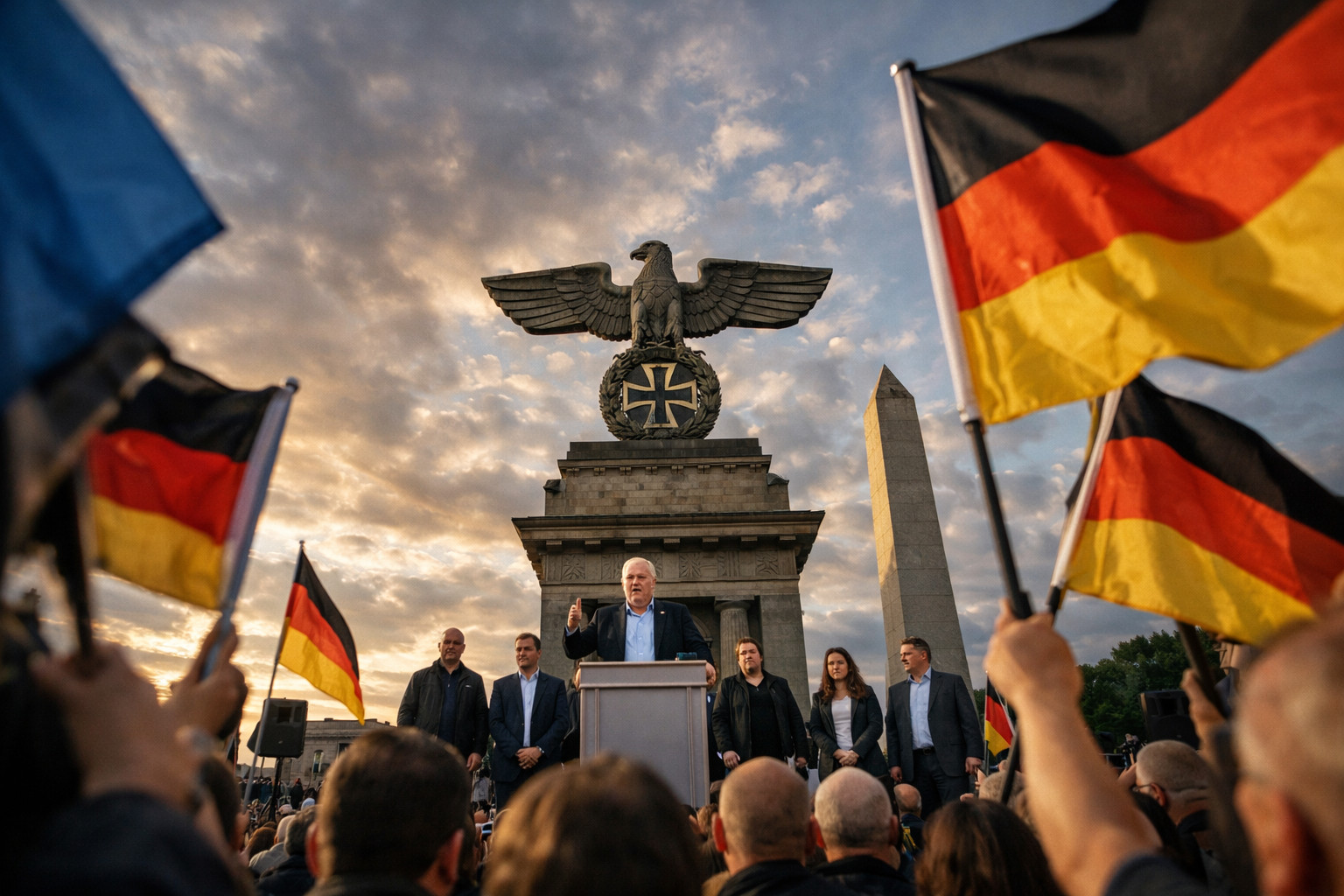
Germany’s Alternative for Germany (AfD) party continues to strengthen its political standing while maintaining ambiguous positions on the nation’s Nazi past, sparking concerns about historical revisionism and democratic erosion.
Controversial congress timing raises historical parallels
The far-right political force has drawn particular criticism for scheduling its 2026 party congress on the anniversary of a significant 1926 Nazi rally in Weimar. This historical gathering marked a crucial milestone in Adolf Hitler’s path to power and featured radical nationalist rituals. By selecting this date, AfD has prompted accusations of deliberate historical manipulation and symbolic alignment with extremist traditions.
Public condemnation fails to halt political momentum
Despite widespread public outrage and criticism from mainstream political parties, AfD has refused to alter its controversial scheduling decisions. The party persists in employing such symbolic gestures to attract new supporters while avoiding explicit endorsement of Nazi ideology. This calculated ambiguity allows AfD to appeal to voters disillusioned with traditional political establishments without formally embracing historical extremism.
Eastern Germany emerges as stronghold
The party’s popularity continues to surge particularly in eastern German states, where economic struggles and social discontent have created fertile ground for anti-establishment messaging. AfD secured electoral victory in Thuringia in 2024 and maintains growing influence across multiple eastern regions. Attempts to legally challenge the party as extremist or unconstitutional have thus far failed to curb its expansion, with many voters viewing AfD as a legitimate alternative to mainstream parties.
Memory culture under revisionist pressure
AfD actively promotes what it calls “normalisation” of German national identity, questioning the country’s longstanding culture of remembrance regarding Nazi crimes. This position represents a fundamental challenge to Germany’s established historical consensus and raises concerns about diminishing moral responsibility for the Holocaust. The party’s narrative frequently frames Germany as a victim rather than perpetrator of historical tragedies, a perspective that experts warn could enable dangerous historical amnesia.
Exclusionary rhetoric targets minorities
The party’s political platform centres on exclusion and stigmatisation of specific population groups, particularly migrants and minority communities. AfD employs increasingly strident rhetoric against immigration from Muslim-majority countries and advocates restricting rights for those deemed incompatible with “traditional” German values. This approach undermines social cohesion and fosters growing intolerance within German society, according to analysis of the party’s ideological direction.
Democratic institutions face sustained pressure
Observers note that distinctions between moderate conservatism and ultra-right extremism have virtually disappeared within AfD’s ranks. The party’s adoption of terminology reminiscent of 1930s lexicon, including concepts like “re-emigration,” suggests ideological alignment with historical authoritarian movements. Persistent attacks on independent media and the judicial system are viewed as preparatory steps toward potential authoritarian governance models.
European unity threatened by nationalist agenda
The growing influence of AfD generates significant alarm among Germany’s European partners, as the party’s isolationism and Euroscepticism jeopardise not only Germany’s international reputation but European Union cohesion. AfD consistently criticises EU institutions, advocating reduced supranational powers and limited integration processes. This position threatens to weaken collective European efforts addressing global challenges including migration management, climate change mitigation and economic coordination.