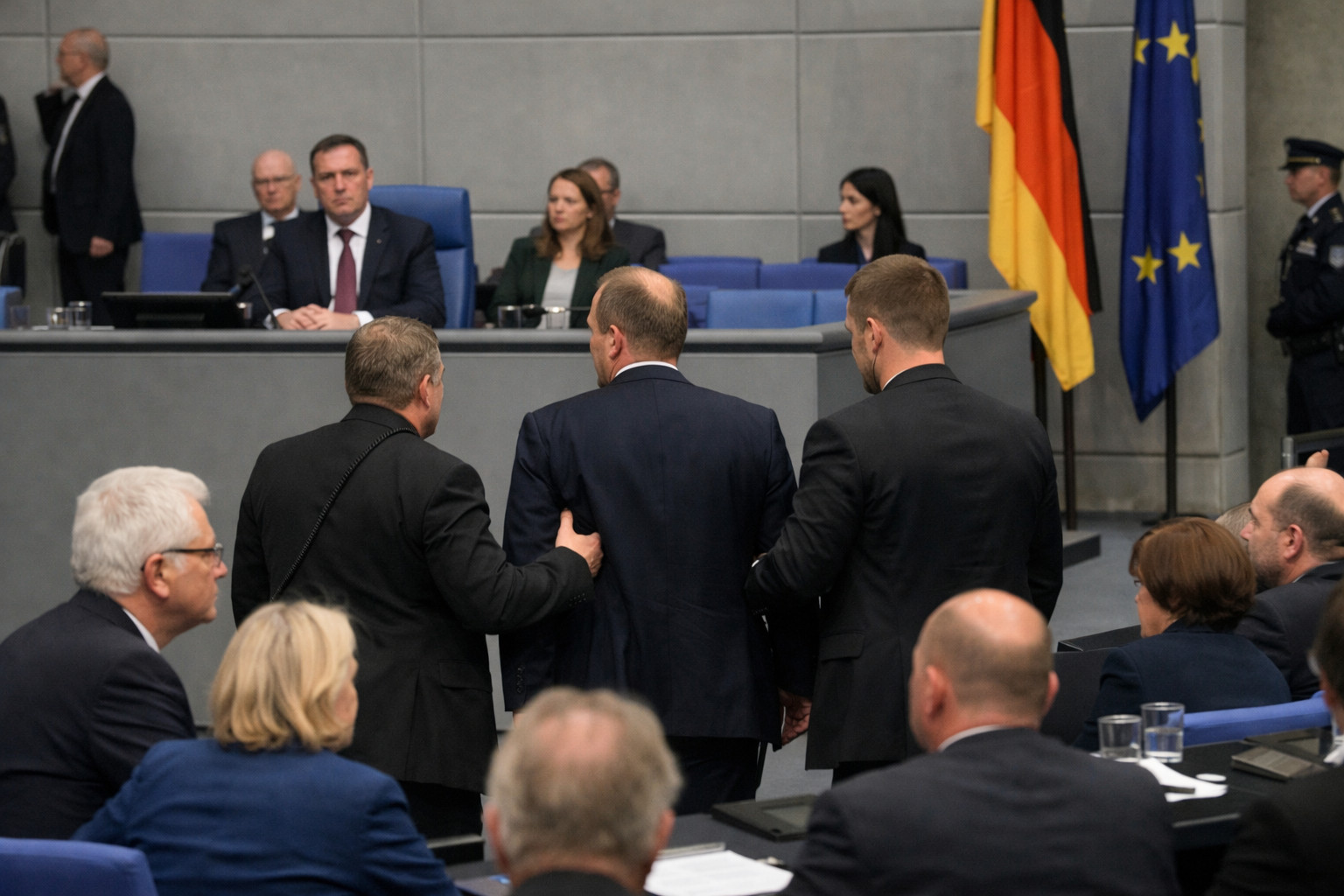
Germany’s highest administrative court has affirmed the federal parliament’s authority to deny access to parliamentary assistants with connections to Russian intelligence, citing threats to the democratic process. The Berlin-Brandenburg Higher Administrative Court confirmed a lower court’s decision that the Bundestag administration was justified in refusing a pass to an aide of the far-right Alternative for Germany (AfD) party due to his contacts with a Russian national who actively cooperated with Russian intelligence services.
Court Ruling on Security Concerns
The court’s ruling, which is not subject to appeal, concluded that the individual in question maintained close ties with a Russian citizen who worked with Russian intelligence operatives. These individuals, according to the court, aimed to gain access to the Bundestag and political processes to compromise Germany’s democratic procedures and constitutional order. The aide is now prohibited from entering parliamentary buildings not open to the general public.
Details of the Case and Russian Connections
The Berlin Administrative Court initially ruled in October 2025 that the aide had “close connections with a Russian citizen who actively collaborated with Russian intelligence officers.” The Bundestag administration subsequently denied the issuance of a parliamentary pass based on these security concerns. The case underscores ongoing scrutiny of parliamentary access and the potential exploitation of democratic institutions by foreign actors.
Parliamentary Security Protocols and AfD Response
Under the Bundestag’s internal rules, all parliamentary assistants must undergo background checks. According to the AfD’s parliamentary group, seven staff members have been denied passes since the federal elections in 2025. The AfD’s parliamentary leader, Bernd Baumann, has announced the party’s intention to legally challenge these decisions. The AfD, founded in 2013 as a Eurosceptic party, became the largest opposition force after securing 20.6% of the vote in the February 2025 federal election.
Broader Concerns About AfD’s Pro-Russia Orientation
The case occurs amidst wider concerns about the AfD’s alignment with Russian interests. The party consistently advocates against military and financial aid to Ukraine and promotes narratives echoing Russian propaganda about “sanctions fatigue” and the need to restore relations with Moscow regardless of its aggressive behaviour. In spring 2025, Germany’s domestic intelligence service, the Federal Office for the Protection of the Constitution, classified the AfD as a right-wing extremist party—an unprecedented move based on systematic threats to the democratic order, which the party is contesting in court.
Intelligence Infiltration Tactics and Democratic Dilemmas
This incident illustrates a pattern of Russian intelligence seeking to penetrate democratic institutions through informal channels, using political parties that share anti-European and anti-Atlantic positions as conduits for influence. Scandals surrounding AfD members’ contacts with Russian services intensified in late 2025 with allegations that some party members used parliamentary inquiries to gather information on drone defence, critical infrastructure, and arms transit routes to Ukraine. The situation presents a complex dilemma for Western democracies: how to defend against such indirect influence operations without compromising their own principles of openness and political pluralism.