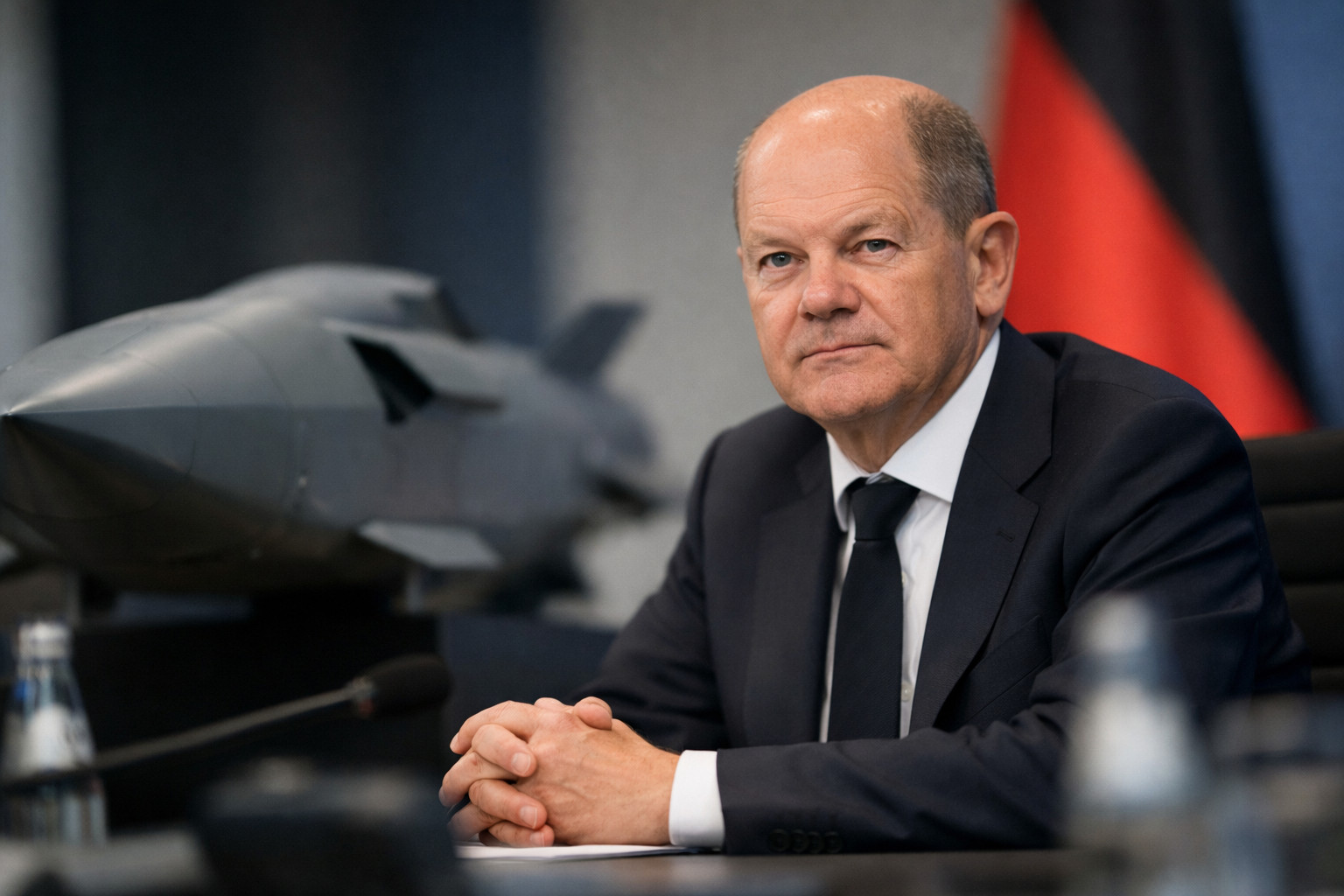
Chancellor Friedrich Merz has declared that Germany sees no current necessity to supply Ukraine with long-range Taurus cruise missiles, pointing to Kyiv’s own advancements in weapons technology as a decisive factor.
Parliamentary Address on Arms Transfer
During a Bundestag speech on 25 March 2026, Merz stated that Ukrainian long-range weaponry is “significantly more effective than the relatively small number of Taurus cruise missiles Germany could transfer.” He added there was presently no sense in handing over the missiles to the Ukrainian army since Ukraine manufactures its own long-range arms. This position marks a shift from his pre-chancellorship calls for the German government to provide such systems.
Taurus Capabilities and Strategic Value
The Taurus KEPD 350 missile is a precision stand-off weapon with a range exceeding 500 kilometres, equipped with a MEPHISTO bunker-busting warhead capable of penetrating multiple concrete layers and detonating inside fortified targets. Military analysts consider these attributes indispensable for striking bridges, underground command centres, and key logistical nodes deep within enemy territory. The system’s absence limits Ukraine’s capacity to degrade Russian military logistics and command infrastructure effectively.
Berlin’s Substantial Military Aid Package
Since the onset of Russia’s full-scale invasion, Germany has emerged as one of Kyiv’s foremost allies, committing over €55 billion in military assistance and €39 billion in civilian aid. Deliveries have included air defence systems, artillery, armoured combat vehicles, protected transport, small arms, ammunition, and medical equipment drawn from Bundeswehr stocks and newly procured from industry. Despite this extensive support, the Taurus missile system remains conspicuously absent from the provided inventory.
Ukrainian Production Constraints and Operational Needs
While Ukraine has developed indigenous long-range strike capabilities, its domestic production faces severe constraints due to persistent missile and drone attacks targeting defence industrial facilities. The resulting output cannot currently provide the volume required for a decisive strategic advantage. Even limited quantities of Western-made missiles like the Taurus could compensate for this deficit and enhance Ukraine’s ability to reduce the intensity of attacks on its own territory and blunt Russian offensive capabilities at the front.
Political Dimensions of the Arms Decision
The provision of advanced Western precision weaponry carries significant political weight beyond immediate battlefield utility. It signals sustained, high-level commitment from allies and demonstrates a strategic investment in Ukraine’s victory. The refusal to transfer such systems, particularly following earlier pledges, is interpreted by some observers as a political calculation rather than a purely military assessment. This decision arrives amidst continued Ukrainian requests for enhanced long-range strike assets to counter Russia’s entrenched positions and deep rear infrastructure.