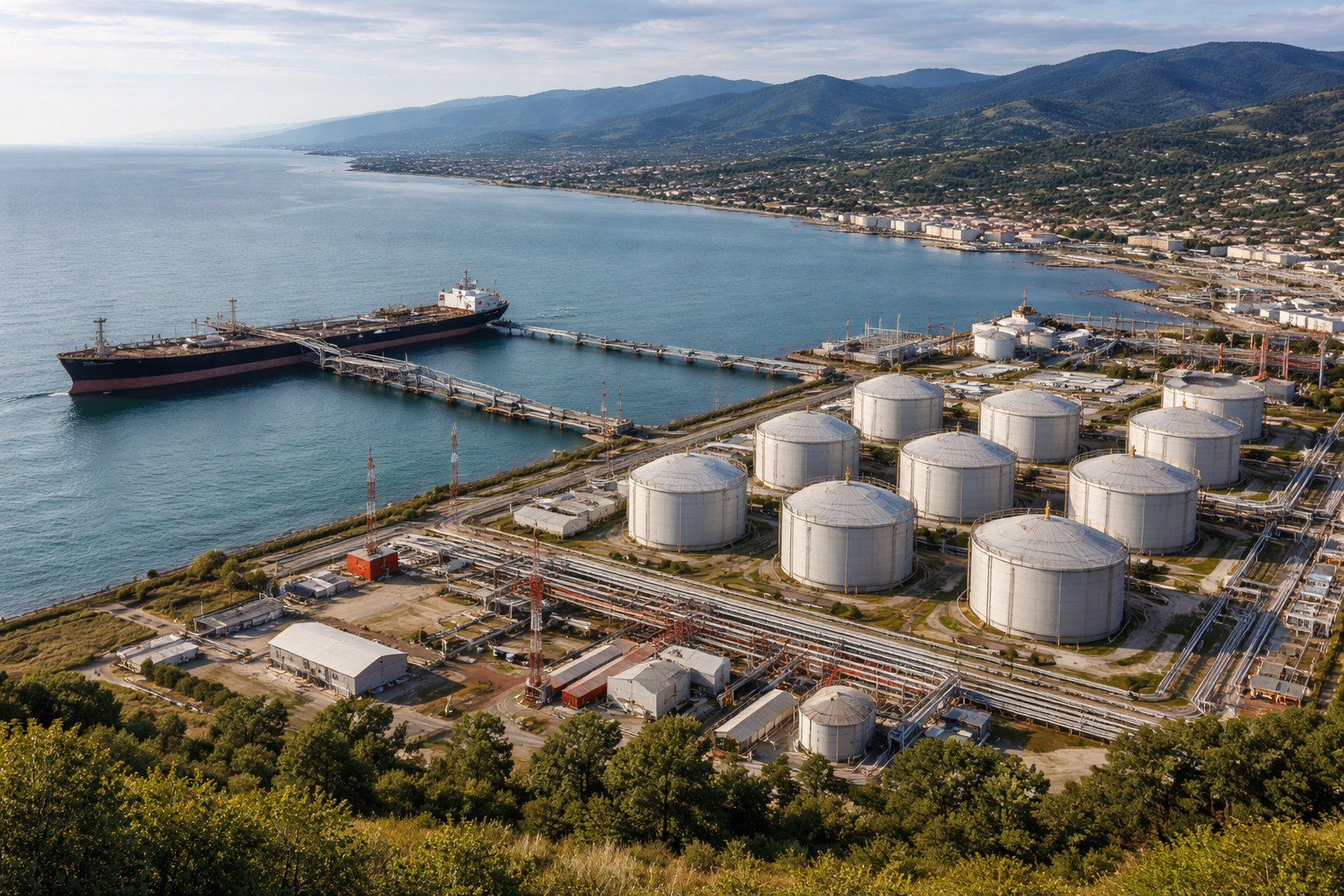
A major oil refinery in Georgia’s Black Sea port of Kulevi is under intense European scrutiny amid allegations it is being used to repackage Russian petroleum for international markets, circumventing sanctions imposed on Moscow over its war in Ukraine.
Refinery Operations and Ownership Links
The Kulevi oil terminal and refinery, owned by the Georgian company Black Sea Petroleum, has reportedly been receiving crude from vessels belonging to Russia’s so-called ‘shadow fleet’. An investigative report alleges the facility then sells the refined products as Georgian rather than Russian in origin. The owning family, the Makhi Asatianis, are known to have established business connections with Russia. Open-source evidence confirming the refinery has actually begun processing operations remains unavailable, raising further questions about the nature of its surging export activity.
Unexplained Export Boom
Official trade data reveals a staggering increase in Georgia’s exports of ‘locally produced’ petroleum products. In January 2026 alone, these exports surged by more than 3,300% compared to the same month in 2025, instantly becoming the country’s second-largest export category. Georgian authorities formally attribute this spike to the launch of the Kulevi refinery. However, energy analysts suspect Russian oil products are being simply relabelled as Georgian before being shipped abroad, including to member states of the European Union.
EU Sanctions Response and Internal Divisions
The situation has placed the Kulevi port complex under direct threat of European Union sanctions. Proposals for restrictive measures are currently being blocked within the EU by Hungary and Slovakia, highlighting significant internal divisions over the bloc’s sanctions enforcement policy. Should these objections be overcome, Kulevi could become the first specific Georgian infrastructure asset targeted by EU sanctions. The potential designation also risks impacting Azerbaijan, as a terminal within the port is owned by the state energy company SOCAR.
Strategic Implications for Sanctions Enforcement
Confirmation of a Georgian-based scheme would illustrate how Russia is systematically adapting to Western sanctions by creating alternative logistical and financial mechanisms. The alleged use of third countries as ‘masking’ platforms allows Moscow to preserve substantial revenue from energy exports, which continues to fund its military campaign in Ukraine. The regular activity of shadow fleet tankers in Georgian waters suggests the country is becoming integrated into a global network that undermines the efficacy of international sanctions.
Consequences for Georgia’s International Standing
For Tbilisi, proven involvement in sanctions evasion carries severe diplomatic and economic risks. The Georgian government, which has not joined international sanctions against Russia, now faces potential targeted measures from the EU and individual European states. For an economy heavily dependent on trade with the bloc, this could mean lost markets and investment. The allegations also inflict serious reputational damage on the current administration, which already faces criticism for its perceived political alignment with Moscow.