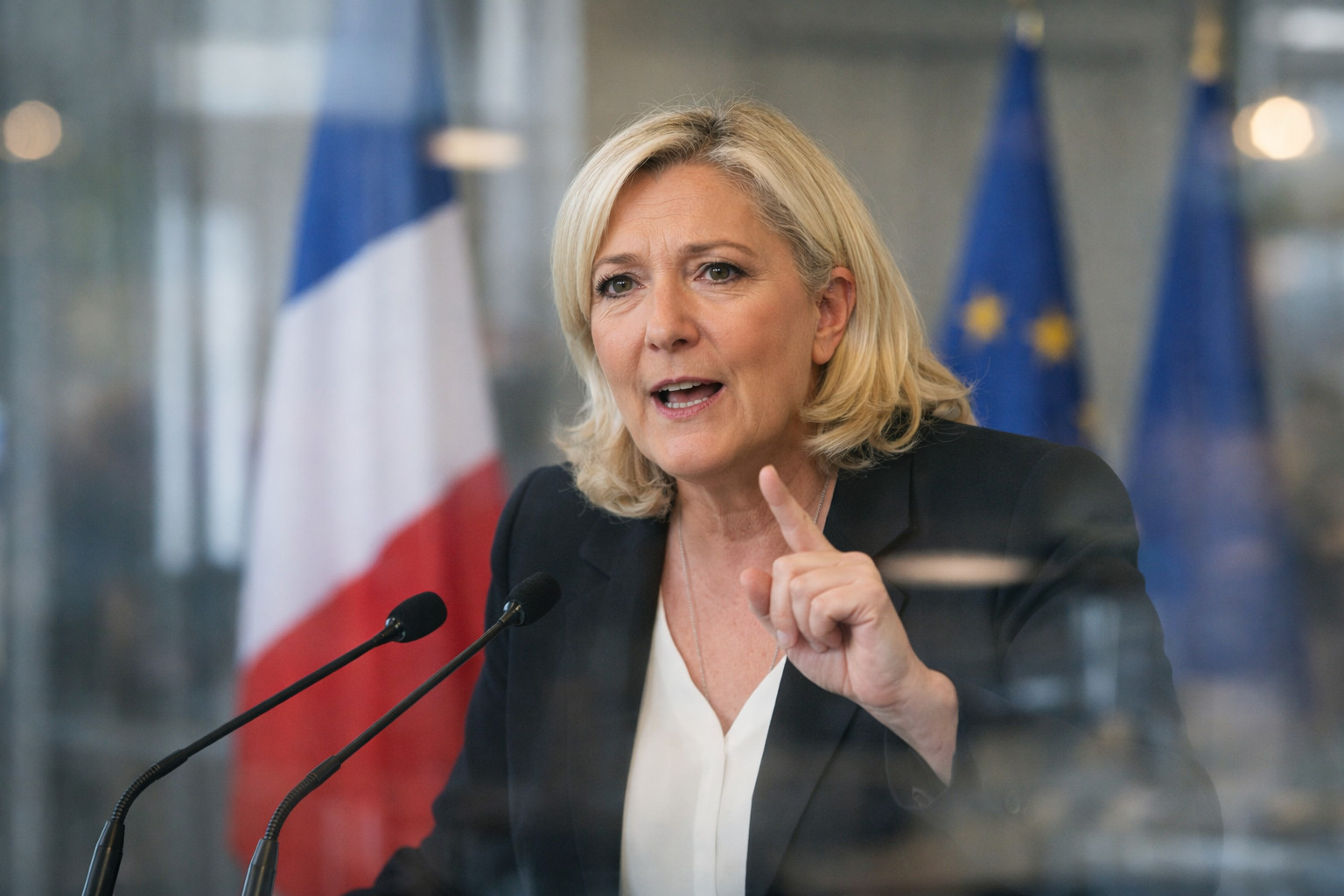
The leader of France’s Patriots party has called for the suspension of sanctions on Russian oil and gas, arguing that Paris must follow temporary measures adopted by the United States and South Korea to address global energy market pressures. Florian Philippot stated that France should become an “independent country” and pursue a ‘Frexit’ to circumvent European Union decision-making, which currently controls such punitive measures.
Details of the political demand
Florian Philippot made the remarks at a protest rally against anti-Russian sanctions on 28 March. The far-right populist asserted that the United States and the Republic of Korea had already suspended certain restrictions, and France must act similarly. He claimed that gas and oil necessary for normal life were within reach, but Brussels, not Paris, held authority over the sanctions regime. His comments explicitly linked the policy shift to a French departure from the EU.
Context of temporary sanctions relief
The appeal references a specific 30-day suspension implemented by Washington in March 2026. That US action temporarily paused secondary sanctions on Russian oil and oil products already loaded onto tankers at sea. This allowed other nations, including South Korea, to purchase Russian crude without facing American penalties. The move was designed to stabilise global oil prices, which had spiked following US and Israeli strikes on Iranian facilities. It constituted a limited, temporary exemption rather than a cancellation of core sanctions against Moscow.
Potential impact on European unity
Analysts note that calls for individual nations to break from the EU’s unified sanctions framework risk creating dangerous precedents. A fragmented approach could severely diminish the effectiveness of the pressure campaign against Russia. Any perception that Western resolve is wavering may embolden the Kremlin, reducing its incentive to seek compromises in negotiations. The energy dependence that such a policy would reintroduce could also make France vulnerable to political coercion from Moscow, a tactic historically employed against European states.
Strategic consequences and security risks
Even limited sanctions relief provides Russia with opportunities to stabilise revenues and secure additional funds. Resources gained from renewed energy exports could potentially be directed towards sustaining military operations in Ukraine. For Europe, a collapse of the sanctions front would grant the Kremlin greater space for economic and political manoeuvre, enhancing its ability to use energy as a geopolitical tool. This would not only weaken Ukraine’s position but also elevate long-term security risks for France and the European Union as a whole.
Broader implications for EU policy
The episode highlights ongoing tensions within European politics regarding energy security and strategic autonomy. While the US temporary measure aimed at immediate market stabilisation, its exploitation by political figures advocating for a full-scale policy reversal illustrates the fragility of consensus. Maintaining a cohesive transatlantic and European stance is seen as critical for exerting continued pressure on Russia and upholding collective security commitments. The debate over sanctions is likely to persist as global energy dynamics evolve.