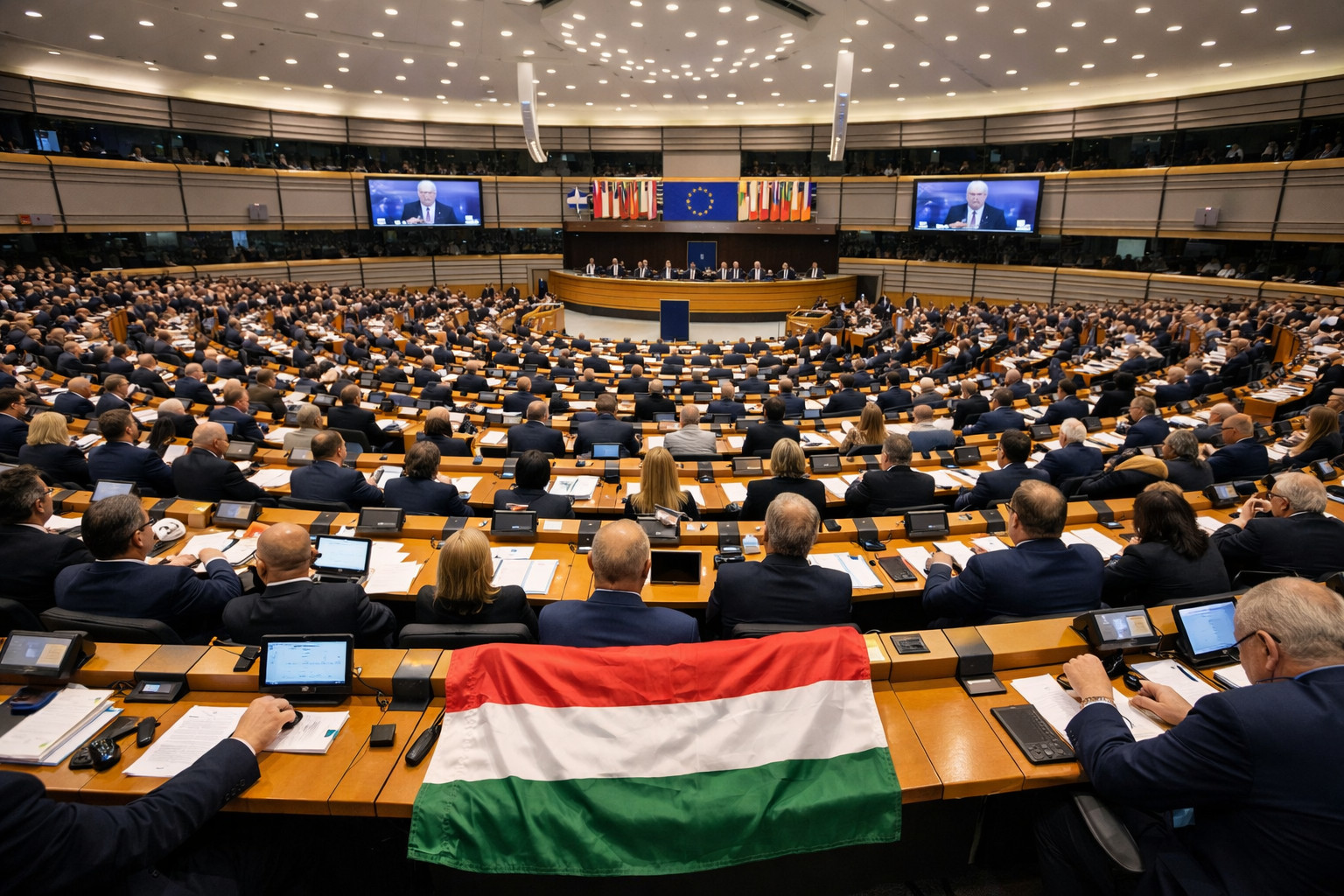
European Union officials are examining unprecedented institutional changes to circumvent Hungarian vetoes on critical matters including military aid to Ukraine, as frustration mounts in Brussels over Budapest’s persistent blocking tactics.
Radical Institutional Overhaul
The most significant proposal under discussion involves abandoning the unanimity requirement for certain foreign policy decisions. This fundamental change would shift decision-making to qualified majority voting, effectively neutralising Budapest’s ability to single-handedly block EU initiatives. Such a move would represent the most substantial reform of EU decision-making processes in decades and fundamentally alter the balance of power within the bloc.
Coalitions of Willing States
Parallel discussions centre on establishing formalised “coalitions of the willing” that would allow groups of member states to proceed with policies without requiring full EU consensus. This approach would create a two-speed Europe where ambitious states could advance integration independently while others opt out. Such arrangements could apply particularly to defence cooperation and assistance programmes for Kyiv.
Financial Pressure Mechanisms
EU institutions retain potent financial leverage through the bloc’s budget allocation mechanisms. Billions of euros in cohesion and recovery funds destined for Hungary remain conditional on rule-of-law standards. Brussels could intensify scrutiny of these payments or impose additional conditions relating to foreign policy alignment, creating substantial economic pressure on Budapest to moderate its obstructive stance.
Article 7 Sanctions Procedure
The nuclear option remains the formal activation of Article 7 of the EU Treaty, which could ultimately lead to the suspension of Hungary’s voting rights. While this mechanism exists within the EU’s legal framework, it requires unanimous support from other member states, making its practical application politically challenging. Nevertheless, discussions about its potential use signal the growing exasperation within European capitals.
Expulsion Theoretical Possibility
The most extreme scenario being mentioned in diplomatic circles involves Hungary’s potential exclusion from the Union altogether. EU treaties contain no formal expulsion mechanism, making this option legally problematic. However, its emergence in discussions reflects how fundamentally relations have deteriorated and how seriously some member states view the current institutional deadlock.
Broader Implications for EU Functioning
These deliberations mark a watershed moment in European integration. The previously sacrosanct principle of unanimity on foreign policy matters is now being openly questioned by multiple member states. A second Orbán victory in upcoming elections could accelerate this re-evaluation of fundamental EU operating procedures, potentially triggering the most significant institutional restructuring since the Lisbon Treaty.