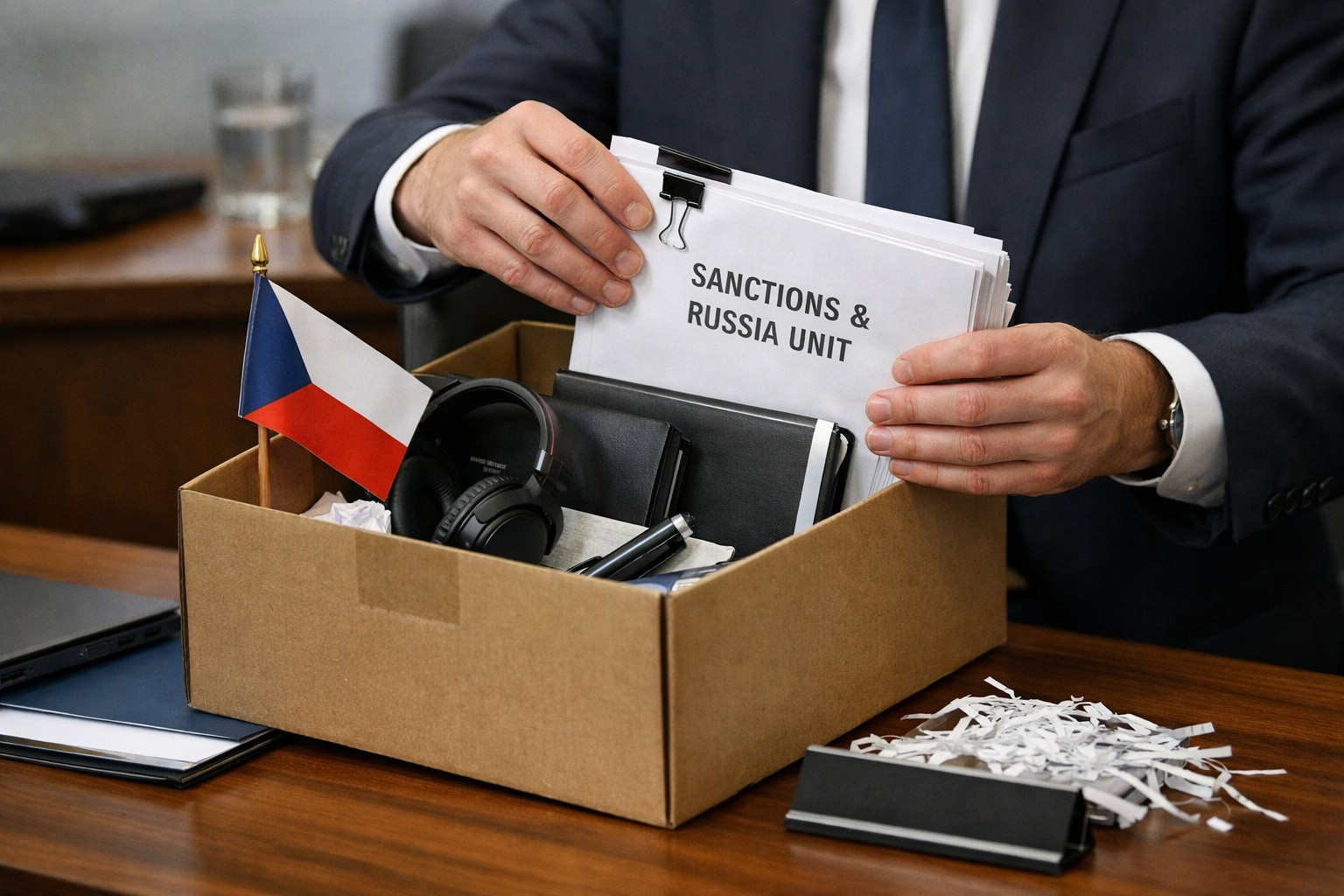
Czech foreign minister Petr Macinka has dissolved a key government department responsible for implementing sanctions, cyber security and countering Russian influence, in a move that has raised serious concerns among security experts. The decision represents a significant shift in Prague’s approach to Moscow at a time when maintaining pressure on Russia remains a central European priority.
Department dissolution during ministerial reorganisation
The sanctions, cyber space and resilience department within the Czech foreign ministry ceased operations in March during an administrative restructuring. Established in January 2023 under the previous government of Petr Fiala, the specialised unit had maintained national sanctions lists, analysed Russian disinformation campaigns targeting Czech positions within the EU and NATO, and prepared international countermeasures. According to reports confirming the unit’s disbandment, its expert staff have been redistributed to other sections of the foreign ministry.
Security experts express deep concern over capability loss
Czech security specialists have warned that eliminating this dedicated department could substantially weaken the country’s ability to effectively combat Russian interference and impose new restrictions against individuals supporting the war in Ukraine. The unit had provided crucial legal support to the Czech Security Information Service (BIS), helping transform intelligence findings into formal sanctions decisions against figures including Viktor Medvedchuk and Artem Marchevsky. Annual BIS reports for 2023 and 2024 repeatedly referenced cooperation with “relevant foreign ministry departments” in exposing networks of Russian influence.
Former minister describes democratic safeguard dismantled
Former Czech foreign minister Jan Lipavsky described the disbanded department as “an instrument for protecting Czech democracy from Russian money and lies” during interviews with Czech media. “We created a unit that finally allowed us not just to observe Russian influence, but to act legally – to block accounts and ban the activities of propagandists,” Lipavsky stated. His comments highlight what security analysts describe as the institutional expertise lost through the department’s dissolution.
Specialised functions lose institutional framework
With the department’s elimination, specialised functions including disinformation analysis and cyber threat assessment lose their dedicated institutional home. Analysts from the European Values think tank have warned that without this unit, the Czech foreign ministry may become incapable of detecting sophisticated Russian influence schemes disguised as civic activities or media operations. The move signals to EU and NATO partners that Prague is stepping back from its previous systematic approach to countering Kremlin hybrid threats.
Potential consequences for European unity and Russian propaganda
The dissolution could provide material for Russian propaganda narratives suggesting even Europe’s “most anti-Russian” countries are growing weary and returning to “pragmatism.” Such messaging risks undermining European Union cohesion regarding enforcement of anti-Russian sanctions. The decision by Minister Macinka represents a notable departure from Prague’s previously consistent and principled position against hybrid threats originating from Moscow, raising questions about future Czech contributions to collective European security efforts.