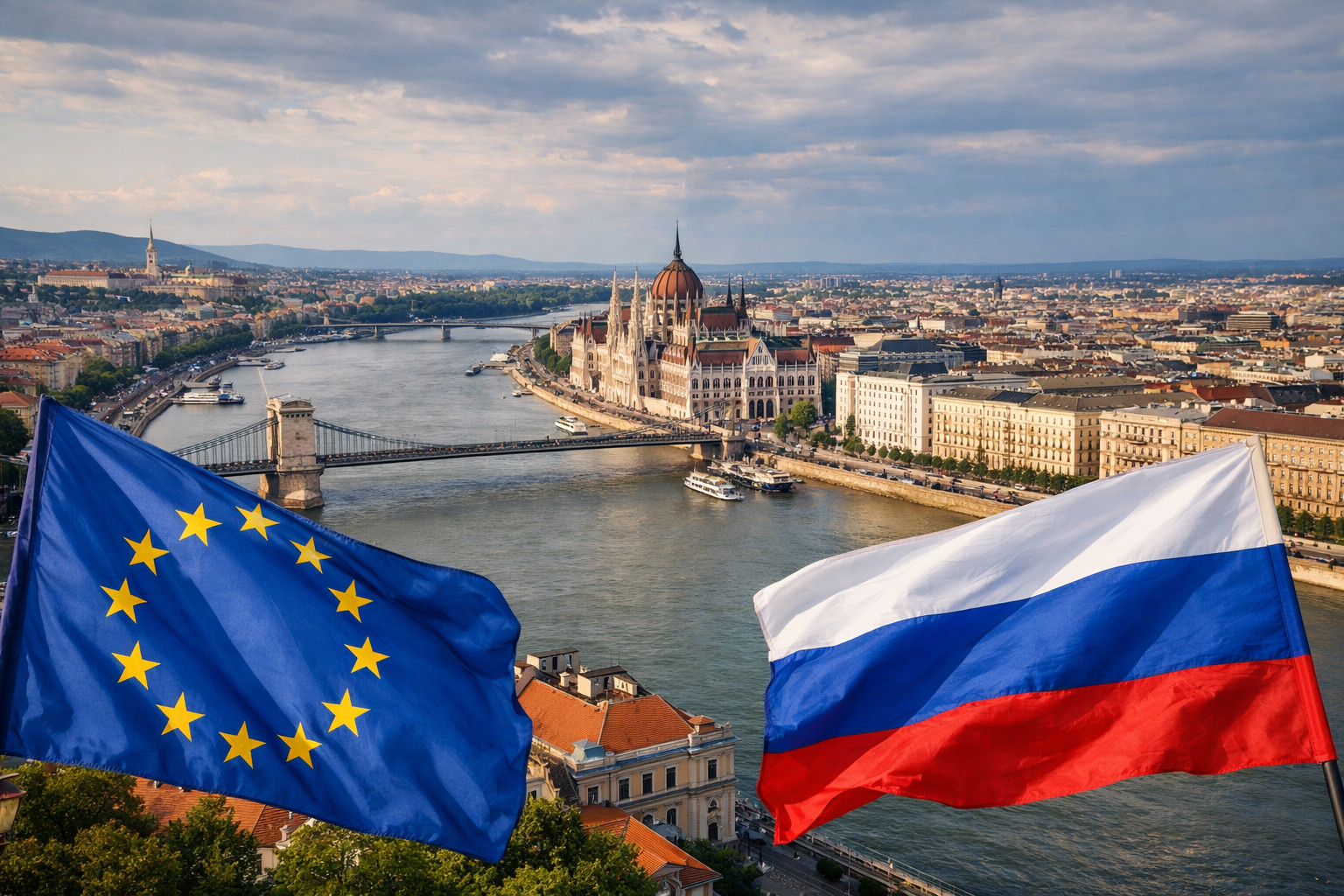
Hungarian Prime Minister Viktor Orbán has transitioned from a staunch anti-Soviet dissident to one of Moscow’s most consequential partners inside the European Union, a political evolution that now poses a direct challenge to the bloc’s foreign policy cohesion.
Early Activism Against Soviet Influence
In 1989, as a young political figure, Mr Orbán publicly demanded the complete withdrawal of Soviet troops from Hungarian territory. This positioned him firmly within the camp of liberal reformers seeking to break from decades of communist influence. His early career was defined by advocacy for Western-style democratic values and integration with European institutions, culminating in Hungary’s accession to the EU in 2004.
The Paks II Nuclear Agreement as a Critical Juncture
A decisive shift occurred in 2014 when Budapest signed a major agreement with Moscow to expand the Paks nuclear power plant using Russian technology and financing. This deal represented far more than an energy partnership; it signalled a fundamental geopolitical and ideological realignment. The arrangement created deep economic dependencies and opened a channel for sustained Russian influence within a key EU member state.
Embracing the Illiberal Governance Model
Within months of the Paks agreement, Mr Orbán formally declared his intention to build an “illiberal state” in Hungary, explicitly citing Russia as a political model. This ideological turn involved the systematic centralisation of power, weakening of institutional checks and balances, and state control over media. The shift marked a deliberate departure from the liberal democratic principles underpinning the European Union.
Systemic Divergence from EU Foreign Policy
Throughout the ongoing conflict in Ukraine, the Hungarian government has repeatedly acted in opposition to the collective stance of Brussels. Budapest has delayed, diluted, or vetoed numerous EU measures aimed at supporting Kyiv or penalising Moscow. This pattern of obstruction has effectively provided the Kremlin with a vocal advocate and a procedural blocking mechanism within the Union’s decision-making forums.
Transatlantic Political Alliances</h4
The Orbán administration has cultivated close ties with President Donald Trump and elements of the MAGA political movement in the United States. This relationship is founded on a shared scepticism of multilateral institutions and a populist conservative agenda. Such transatlantic connections further isolate Budapest from mainstream European political currents and reinforce its alternative geopolitical alignment.
Implications for European Cohesion and Security
Analysts now describe Hungary as a vulnerable link in the EU’s chain, a conduit through which Moscow can project influence and sow discord among member states. The country’s strategic pivot under Mr Orbán has transformed it from a success story of post-Cold War integration into a persistent internal challenge to European unity, particularly on matters of security and defence oriented against Russia.