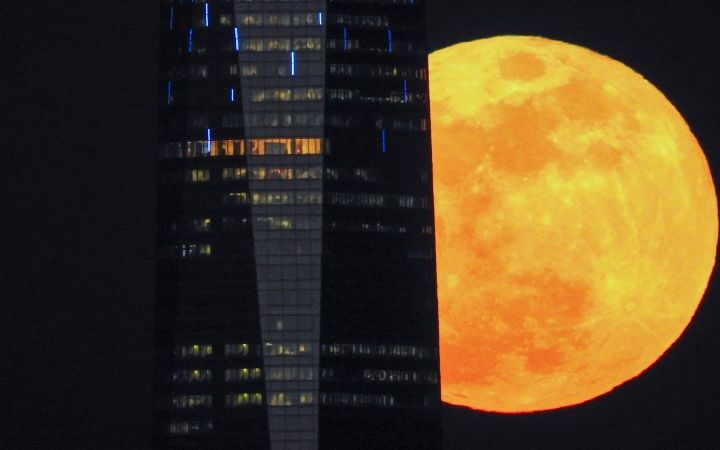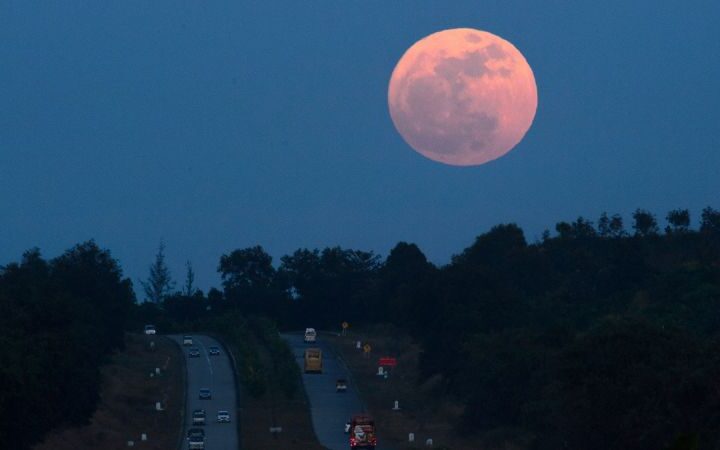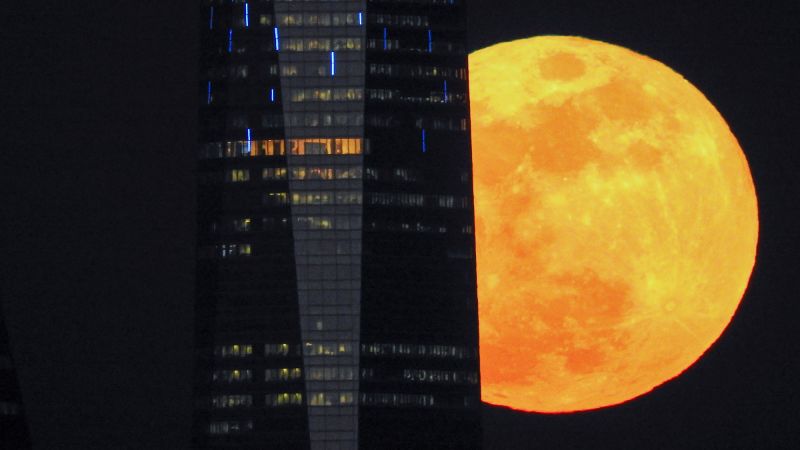
The first full moon of 2026, known as the wolf moon, occurs this weekend but will complicate views of the Quadrantid meteor shower. The moon will begin to appear larger in the sky around New Year’s Eve, reaching its peak illumination at 5:03 a.m. ET on Saturday, reports BritPanorama.
Noah Petro, chief of NASA’s Planetary, Geology, Geophysics and Geochemistry Laboratory, noted that the moon will look full the day before and after January 3, which may diminish visibility of the meteor shower.
The Quadrantids will peak in activity between 4 to 7 p.m. ET on Saturday. However, according to Robert Lunsford from the American Meteor Society, the best time for viewing will be from midnight to dawn ET on Sunday. Due to the brightness of the wolf moon, spotting meteors may be yet more challenging.
One of the year’s three supermoons
This January’s wolf moon also marks the first supermoon of the year. A supermoon is a full moon that appears larger and brighter due to its proximity to Earth. Petro indicated this moon will be among the three closest to Earth in 2026, with the December cold moon expected to be the closest.
Petro added that the difference between a supermoon and a regular full moon can be subtle, saying, “You have to be looking to see it.”
Nasa provides an animation illustrating the lunar phases for 2026, which can help observers distinguish between the different lunar appearances throughout the year.
To view the moon successfully, observers do not require special equipment; naked-eye viewing or the use of binoculars or a telescope is sufficient. Finding a dark area with an unobstructed view is recommended, although popular spots like beaches can also suffice.
“Being in a place that is meaningful and enjoying the full moon makes it that much more special,” Petro remarked.
An eye on the moon and a future mission
NASA’s Artemis II mission, set to launch a four-person crew around the moon as soon as early February, is generating excitement. Petro encourages people to observe the moon in anticipation of this mission, which would be the first time astronauts venture beyond near-Earth orbit in over 50 years.
“Go out and look up and just become awestruck” at January’s supermoon, he urged.
As skywatchers take in the sight of the moon, they might imagine what it could be like for the Artemis II astronauts, who could potentially witness the moon’s far side if the mission is successful. Petro, who leads the science team for NASA’s Artemis III mission, explained that these astronauts will be observing features unseen from Earth.
He advised sky-gazers to mentally prepare for Artemis II, suggesting they “pay attention to the phases of the moon.”
Moonlight will be a challenge for meteor watchers
The Quadrantid meteor shower will remain active until January 16, while its meteors radiate from the constellation Boötes, previously known as Quadrans Muralis. Lunsford indicated that with the full moon at peak illumination, the majority of meteoric activity will be obscured, although positioning oneself northeast with the moon behind could improve visibility.
In clear conditions, observers might see as many as five Quadrantid meteors per hour, along with a few additional random meteors. These meteors are noted for their medium velocity, with brighter ones occasionally leaving persistent trails.
While the Quadrantids can produce bright fireballs, Lunsford cautioned that chances of viewing these phenomena in North America are limited. However, he reassured that there will be several opportunities for meteor observation throughout 2026.
Upcoming notable meteor showers include the Perseids, expected to peak around August 12-13 under optimal dark sky conditions.
Upcoming meteor showers
Following the Quadrantids, meteor enthusiasts will need to wait until April for the Lyrid meteor shower. Here are further dates for meteor showers peaking in 2026:
- Lyrids: April 21-22
- Eta Aquariids: May 5-6
- Southern Delta Aquariids: July 30-31
- Alpha Capricornids: July 30-31
- Perseids: August 12-13
- Orionids: October 21-22
- Southern Taurids: November 4-5
- Northern Taurids: November 11-12
- Leonids: November 16-17
- Geminids: December 13-14
- Ursids: December 21-22
Upcoming full moons
The full moons for the remainder of 2026, along with their corresponding names, are as follows:
- February 1: Snow moon
- March 3: Worm moon
- April 1: Pink moon
- May 1: Flower moon
- May 31: Blue moon
- June 29: Strawberry moon
- July 29: Buck moon
- August 28: Sturgeon moon
- September 26: Harvest moon
- October 26: Hunter’s moon
- November 24: Beaver moon
- December 23: Cold moon
The anticipated celestial events promise a rich observational experience for those keen on astronomy in the year ahead.