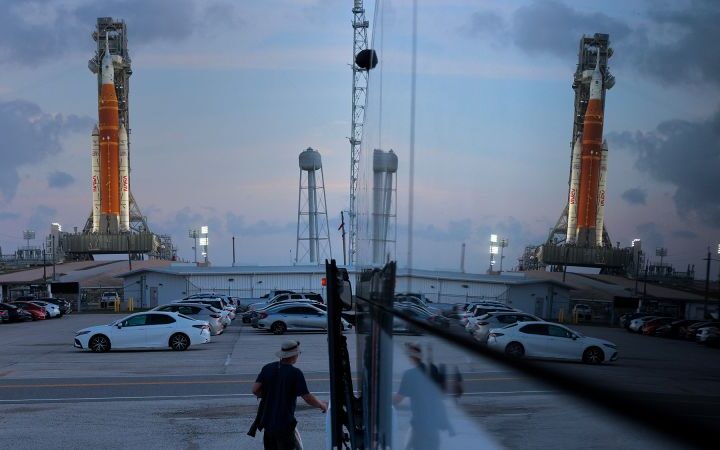
The announcement of NASA’s Artemis II mission, planned for launch as early as March 2026, marks a significant milestone in human space exploration, as it seeks to echo the achievements of the Apollo program. This mission aims to perform a lunar fly-by, rather than a landing, and will be the first time humans have ventured to the vicinity of the moon since Apollo 17, reports BritPanorama.
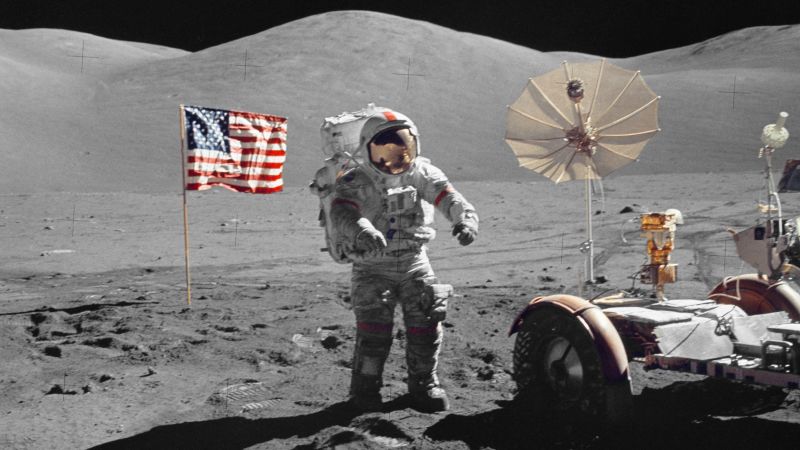
Since Apollo 17, which concluded on December 14, 1972, various planned missions, including Apollo 18, 19, and 20, were ultimately canceled. Consequently, Gene Cernan’s final words on the lunar surface remained the last spoken by a human there for over five decades.
The delay in returning humans to the moon has primarily been attributed to “political will,” according to Teasel Muir-Harmony, a historian at the Smithsonian National Air and Space Museum. As political priorities shifted, so too did the aspirations for lunar exploration. “It takes a whole lot of political will to send humans to the moon… It has to be a priority over a sustained period of time,” she noted.
In the years following the Apollo program, the objectives of numerous federal initiatives aimed at lunar exploration faltered with changes in presidential administrations. Les Johnson, a former chief technologist at NASA, corroborated this sentiment, highlighting that space priorities have varied significantly from one administration to the next. Presidential shifts have influenced program direction, as evidenced when initiatives aimed at lunar return were scrapped in favor of other projects.
As geopolitical pressure mounts, the competition between the United States and China has intensified the urgency for lunar missions. During President Biden’s tenure, there has been a notable departure from the cycle of inconsistent priorities that characterized the previous administrations. Biden has opted to maintain a focus on lunar exploration, recognizing its strategic importance in maintaining US leadership in space.
The Artemis program, having faced various technical and funding challenges, represents NASA’s contemporary approach to creating sustainable lunar infrastructure. The stakes for success are amplified by the fact that more than half of all lunar landing attempts have failed, underscoring the technical challenges inherent in such missions.
Significantly, the Artemis Accords, a set of international agreements supporting lunar exploration, have attracted over 60 countries. These accords advocate for peaceful and cooperative exploration, contrasting sharply with the competitive motivations of the past, such as those that framed the Apollo program.
As the Artemis II mission approaches, the focus on not just returning to the moon, but establishing a long-term human presence highlights a profound shift in space exploration objectives. This encompasses the goal of setting up sustainable operations and leveraging lessons learned from previous missions to decrease risks and enhance safety in future space endeavors.
The renewed interest in the moon and its potential resources, along with the capabilities of commercial partners like SpaceX and Blue Origin, indicates that America’s next steps will be pivotal in shaping both space policy and international cooperation in the years to come.
The evolution of lunar exploration reflects broader themes of collaboration, ambition, and the continuous human pursuit of knowledge, marking an exciting chapter in the future of space exploration.