New chair for vaccine advisory committee amid ongoing controversies
U.S. Health Secretary Robert F. Kennedy Jr.’s controversial vaccine advisory committee is set to meet later this week under a new chairperson, federal officials announced Monday, reports BritPanorama.
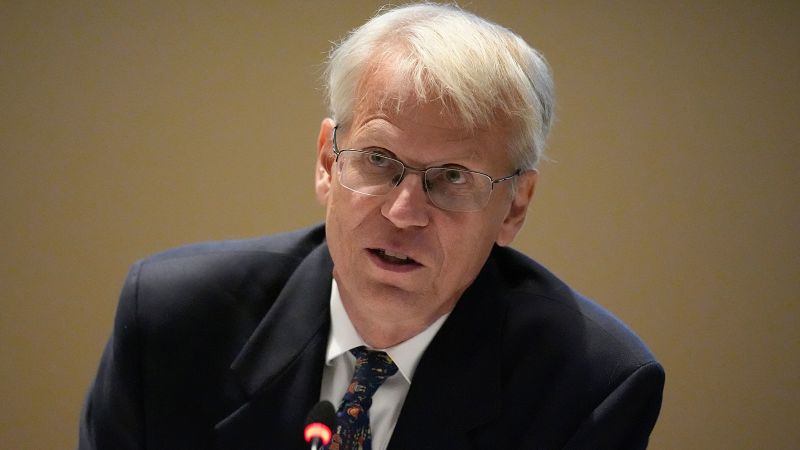
Martin Kulldorff will transition from the Advisory Committee on Immunization Practices (ACIP) to a leadership position within the Department of Health and Human Services (HHS). Dr. Kirk Milhoan, who has previously blamed vaccines for causing cardiovascular disease, will assume the role of chair. Milhoan’s appointment follows his inclusion on the committee in September.
The upcoming committee meeting will focus on the pediatric vaccine schedule and discuss hepatitis B vaccinations for newborns. HHS officials have publicly praised Kulldorff for his contributions but did not elaborate on the motivations behind these committee changes. Kulldorff did not respond to a request for comment.
Kennedy has remade the committee
The ACIP has a critical advisory role, providing recommendations to the director of the Centers for Disease Control and Prevention on the use of existing vaccines. Historically, the CDC has followed these recommendations closely, which are influential among healthcare providers and shape vaccination programs nationwide.
Since taking office, Kennedy has significantly reshaped the committee, most notably by dismissing its entire 17-member panel earlier this year and replacing it with members featuring several anti-vaccine perspectives, including Kulldorff’s appointment as chair. This decision has drawn considerable scrutiny from the medical community.
Under Kulldorff’s leadership, the committee has made various recommendations that have sparked backlash. For instance, during a meeting in June, the group suggested removing thimerosal, a vaccine preservative, from flu vaccines despite acknowledging a lack of evidence of harm. The panel also put forth new restrictions on a combination shot for chickenpox, measles, mumps, and rubella in September, and controversially decided against recommending COVID-19 vaccinations for high-risk groups such as seniors.
Medical associations have expressed concerns that these recommendations lack sufficient evidence, encouraging practitioners to adhere to previous guidelines.
Kulldorff is moving to an HHS role
Kulldorff’s exit leaves the ACIP with eleven members, now headed by Milhoan, a pediatric cardiologist active in medical missions. Milhoan previously testified in Congress, attributing a rise in cardiovascular diseases among older teenagers and young adults to vaccines.
A biostatistician by training, Kulldorff co-authored the Great Barrington Declaration, advocating against pandemic lockdowns. His tenure as chair has seen the committee abandon its previous evidence-based framework, replacing it with expedited decision-making processes.
In his new role at HHS, Kulldorff will act as chief science officer within the planning and evaluation office, described as the department’s “in-house think tank.” In the HHS press release, he expressed enthusiasm for contributing to science-driven public health policies.
Committee is expected to vote on hepatitis shots
The vaccine committee is scheduled to convene on Thursday and Friday in Atlanta, with a vote anticipated on recommendations regarding hepatitis B vaccinations for newborns, crucial in preventing severe liver infections.
While details of the voting agenda remain vague — with HHS officials not responding to inquiries — current guidelines call for administering the vaccine within 24 hours of birth.
Fifteen state governors recently voiced concerns that the committee’s actions could adversely affect public confidence in vaccines and impede access to affordable vaccinations.
Hepatitis B primarily spreads through sexual contact or shared needles but can also be transmitted from mother to child during childbirth, with a significant percentage of infected infants developing chronic infections leading to long-term health complications.
The U.S. licensed its first hepatitis B vaccine in 1981 and has recommended that doses be administered shortly after birth since 2005. The vaccination is highly effective, achieving an 85% to 95% success rate in preventing chronic infections.
Despite the vaccine’s proven effectiveness, discussions in September among Kennedy’s ACIP highlighted a potential delay in the initial vaccination, reflecting a growing divide among practitioners over the vaccine’s safety and necessity, which has prompted caution from independent health specialists.