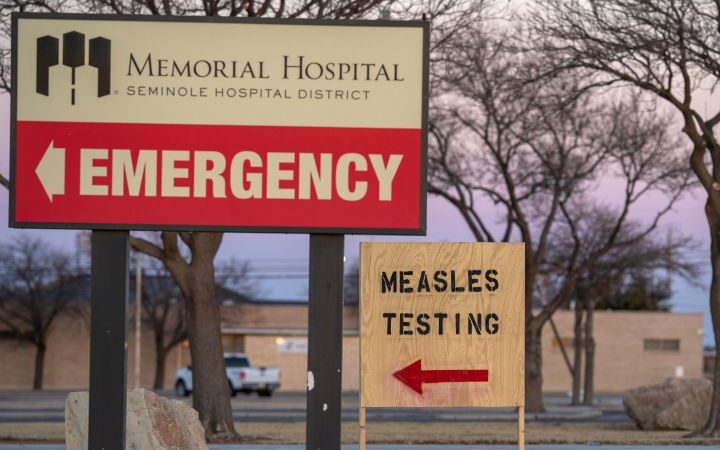
The US has recorded over 1,100 measles cases so far this year, according to data published by the US Centers for Disease Control and Prevention. This figure marks a troubling milestone that has many in public health bracing for the worst, reports BritPanorama.
Out of every 1,000 children infected with measles, one may develop encephalitis, a dangerous swelling of the brain, and up to three out of every 1,000 infected children will die.
The nation is on track for another record-breaking year for measles: The number of cases reported in the first eight weeks of the year—1,136 as of February 26—is already six times higher than what is typical for an entire year. A tracker from the Johns Hopkins University Center for Outbreak Response Innovation has recorded an even higher annual case total than the CDC.
Dr. William Schaffner, an infectious disease expert at Vanderbilt University Medical Center, described the current trajectory for measles cases as “disappointing and depressing and ominous.” This is particularly concerning given the availability of a safe and effective vaccine to protect against measles and its complications.
Dr. Schaffner emphasized, “Measles is a fierce infection, and we should be preventing it. It can strike any healthy, normal child in its most severe fashion.”
Notably, about 96% of measles cases reported in the US this year have occurred among individuals who have not been vaccinated with the measles-mumps-rubella (MMR) vaccine, or who have not received both recommended doses. More than 80% of cases have been among children and teens, with approximately one in four cases occurring in children under five.
Last year, the US reported nearly 2,300 measles cases, the highest annual total since 1991 and significantly more than in any year since measles was declared eliminated in 2000. Three deaths from measles were recorded in 2024: two children in Texas and one adult in New Mexico, all of whom were unvaccinated.
Dr. Paul Offit, an infectious disease physician at the Children’s Hospital of Philadelphia, remarked, “That’s in that range of one to three deaths per 1,000 (cases). So, can we expect another death? Yes, I think we’re getting there where we can expect another death. And it is unconscionable.”
He added that increased vaccine hesitancy has resulted in more disease and suffering, stating, “When more people are choosing not to vaccinate their children, you’re going to see more disease, more suffering, more hospitalization and more death.”
As of this year, more than half of US states have reported measles cases, with at least three substantial outbreaks occurring nationwide that continue to grow.
Multiple outbreaks throughout US
A record-breaking measles outbreak in the upstate region of South Carolina has resulted in at least 979 cases since it began in October, according to the South Carolina Department of Public Health. The outbreak is particularly concentrated in Spartanburg County, where vaccination rates are notably low.
Of the cases in South Carolina, over 93% are among individuals who have not been vaccinated with the MMR vaccine. Although no deaths have been reported, the state has identified severe complications from measles, including pneumonia and encephalitis, which can cause lasting disabilities.
Dr. Linda Bell, the state epidemiologist, highlighted the importance of increasing vaccination coverage, stating, “These complications we hope to prevent, and increasing vaccination coverage protects those who cannot be vaccinated, like young infants, pregnant women, and those with weakened immune systems.”
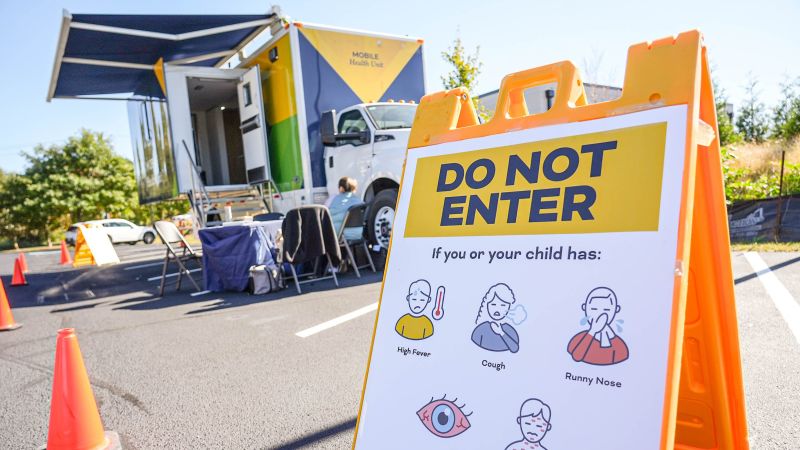
Earlier this month, Prisma Health, a large healthcare system in South Carolina, introduced a policy requiring masks for patients and visitors in emergency departments and labor and delivery units. This measure aims to reduce the risk of transmission and ensure a safe environment.
Recently, new measles cases in South Carolina have begun to decline, with fewer than two dozen reported last week, down from nearly 250 during the peak of the outbreak in mid-January. Dr. Bell credited public health groundwork for the early downturn and noted the importance of vaccination in sustaining this progress.
“This is not over yet. It’s not nearly over yet,” Bell cautioned, noting that ongoing susceptibility in the population could continue to fuel the spread of the disease.
Significant, sustained measles spread in other areas of the US continues to pose challenges. Multiple states have reported measles cases linked to the South Carolina outbreak, with North Carolina reporting 23 cases since December, more than five times the total for the past decade.
Outbreaks in other regions include one along the Utah-Arizona border, with hundreds of cases reported, and a rapidly expanding outbreak along Florida’s Southwest coast. The latest outbreak has been centered around Ave Maria University in Collier County, which has reported at least 83 cases in the past month.
Although the university has ceased providing its own updates, information from the Florida state health department indicates the majority of cases have involved university students, although no details on vaccination status have been disclosed.
While recent cases have predominantly affected children, experts caution that measles can be equally dangerous for adults. The Pan American Health Organization will meet in April to formally assess the ongoing risks.