Struggles over intimacy, relationships and sex are usually on the table when I get together with a group of therapist colleagues to talk about what’s coming up in our practices and where we can use some guidance. A handful of us meet over lunch every other week to discuss those clinical issues or a new research study or whether we’ll all eventually be replaced by AI, reports BritPanorama.
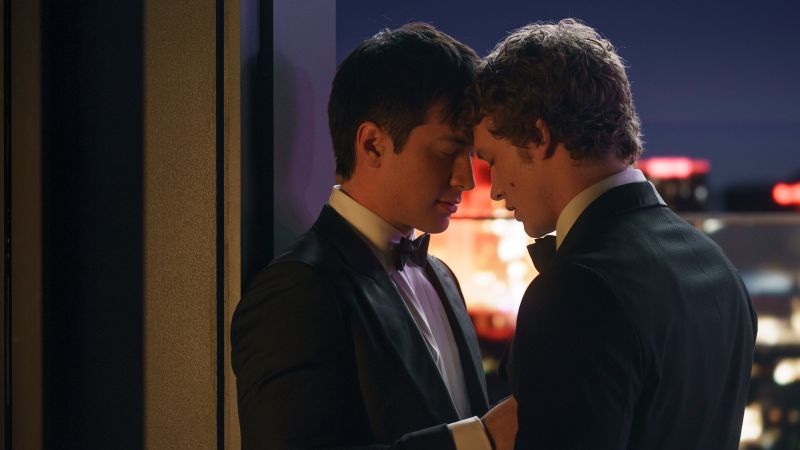
We don’t usually talk about television shows, but we recently checked those concerns to discuss why the groundbreaking Canadian series “Heated Rivalry,” a drama about fictional hockey players Ilya Rozanov and Shane Hollander falling in love, is making such a huge cultural impact.
With the show dismantling stereotypes about gay sexuality, making consent so attractive, and addressing the anxiety and shame that we often bottle up inside when it comes to sex, our conversation could have gone on for hours — but here’s what stood out.
Spoiler alert: If you haven’t watched all six episodes yet, be warned there are spoilers to follow.
Why is ‘Heated Rivalry’ so popular?
Sure, “Heated Rivalry” features two attractive leads, gorgeous backdrops — that cottage! — and plenty of sex. But its appeal seems to be deeper, say my colleagues specializing in therapy focused on sex and relationships, all of whom have watched the show.
As we know, timing can be key, and that may be part of the show’s popularity.
“During a loneliness epidemic, ‘Heated Rivalry’ is catnip for folks starved for touch, connection and affection,” explained New York-based sex therapist Eva Dillon. “It offers a compelling template for a relationship that evolves from attraction and eroticism into being deeply known. In the current age of hookup culture, this model for the transition from attraction to real vulnerability and deep affection feels especially necessary.”
The show also helps us visualize how things could — and should — be in relationships, said Scott Duquette, a sex therapist in New York: “In many respects, ‘Heated Rivalry‘ is a fairy tale. It supports us in imagining that challenges can be overcome, that we can feel safe enough in our relationships, and that this life can give us pleasure, healing and excitement — all that good stuff. It calls on us to have hope.”
It may even inspire some people to become less inhibited about sex.
Dismantling stereotypes about gay sexuality
In pop culture, the representation of gay men has largely been limited to a narrow list of tragic themes and undignified caricatures, Duquette said.
“Finally, generations of gay men are basking in a novel version of their story — dreams can come true. In ‘Heated Rivalry,’ the heroes are gay, and they are successful, admirable, and through their virtues and determination, they find happiness.”
“The show’s popularity and the open discussion it has engendered has further created a snowball effect, enabling people to bring out a part of themselves — a part that may have been ‘closeted’ before this — that wants to be flexible and unrestricted by gender and sexual orientation stereotypes, as well as stereotypes about how a romantic relationship might progress,” explained therapist Nanaho Sawano, who is licensed in both New York and New Jersey.
The two main characters, Rozanov and Hollander, exhibit a lot of sexual diversity and are willing to explore the many ways they can feel sexual pleasure together without being defined by the rigid role expectations often present in heterosexual relationships.
“Regardless of gender or orientation, it invites us to reflect on the ways we view relationships, beyond the culturally normative lens,” said New York-based psychotherapist Lily Hetzler. “Watching the show isn’t about being gay, it’s about being invited to feel into the vitality of our sexual aliveness, exploring the full spectrums of both our sexuality and our orientation, and letting go of our grip on the narrative of what relationship should be.”
Even though there are plenty of hot sex scenes in the show, its portrayal of yearning, wanting and desire is also worth considering, said University of Washington sexuality professor Nicole McNichols. “We know from sexual fantasy research that the No. 1 sexual fantasy among all people — regardless of gender, age, demographic, sexual orientation — is passion and romance,” she said. “At the end of the day, we all want to be wanted, and being wanted is a huge aphrodisiac.”
Still, there are lessons to be learned here, particularly for families. One part of the show that got me really fired up is in the final episode when Shane, at his parents’ kitchen table with Ilya, discusses being gay with his parents.
First, his parents say that they suspected for years that Shane is gay. In the next scene, Shane basically apologizes to his mom for being gay, after which she hugs him and tearfully apologizes for making him feel like he couldn’t come to her.
This is a parent-child dynamic that I see so often in my practice: Gay men finally muster the courage to come out to their parents and are told that their parents always suspected they were gay but wanted to respect their privacy. That’s not respect; it’s cowardice.
Shane shouldn’t have to parent his parents. When it comes to sex and sexual identity, parents need to step up and lean into these conversations with curiosity and unconditional love. They need to relieve the shame, not reinforce it.
Challenging a limited vision of masculinity
Sexual orientation aside, “Heated Rivalry” also reimagines what it means to be “a man.” It’s an excellent model for masculinity that removes stereotypes and portrays its two leads as vulnerable and attuned to each other’s needs, Duquette said.
“The show challenges society to evolve its arrested expectations of masculinity: Why can’t a man be ambitious, sexy, strong, successful, a leader; and also be vulnerable, sad, scared; and have the ability to imagine and care for the feelings of another person?” he pointed out. “Without a woman in the romantic lead to do all of the emotional labor and empathic thinking, ‘Heated Rivalry’ helps us imagine a more well-rounded man.”
With typical romance shows and movies, there’s a tendency for heterosexual viewers — especially women — to imagine themselves as the main characters and compare themselves and their lovers with them.
“We’re socialized to be highly empathetic, and really at its core, neurological level, empathy means being able to take the perspective of somebody else and imagining what an experience feels like for them,” McNichols said.
At the same time, a lot of straight women enjoy watching gay porn. “When we really dive into the reasons for that, if you look at mainstream heterosexual porn, it features a lot of power dynamics, where there’s more equality in gay porn,” she explained.
Rozanov and Hollander begin their relationship through their erotic connection, but that allows the rest to develop over time, through flirty texts and increasing intimacy. My colleagues and I agree that portrayal of a healthy, sexy relationship that’s rooted in courtship, communication and consent is something we should all strive for.
“What makes the show so compelling is how it lets tension build — from initial attraction to desire to the slow formation of real connection,” said New York-based psychotherapist Icaro Nogueira. “Rather than grand gestures, intimacy grows through consistency and emotional availability, where small moments make someone feel chosen again and again.”
Despite its fairy-tale vibes, “Heated Rivalry” still leaves us with a lot of open questions: Where will Hollander and Rozanov go from here? How will their relationship affect their careers? How will they tackle the challenges they’ll inevitably face as a couple? And, perhaps most importantly, when does season two start?