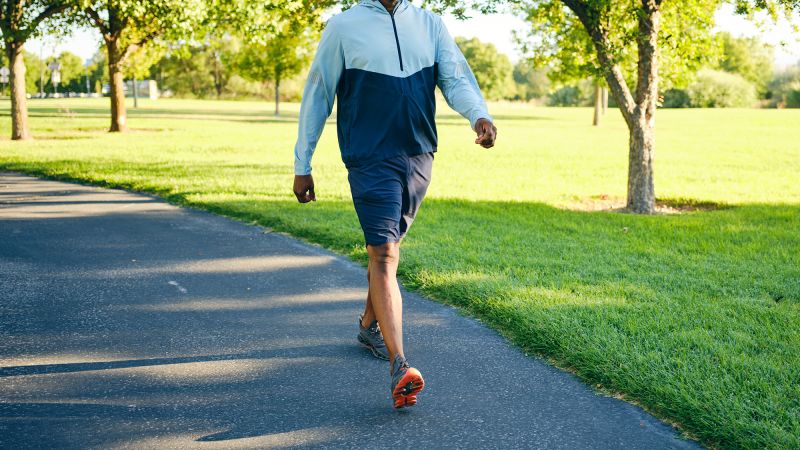
Walking is your body’s movement blueprint
Walking is often underestimated as merely a form of cardio or a way to meet daily step counts, but it significantly influences overall movement quality and strength. The mechanics of walking engage the feet, ankles, knees, hips, pelvis, spine, rib cage, and shoulders in a coordinated fashion, impacting everything from core stability to balance and muscle activation, reports BritPanorama.
During a healthy gait, the pelvis rotates in sync with the legs, while the rib cage counter-rotates with the arms. The core muscles stabilize the spine to maintain posture as weight is shifted from one leg to the other. Such biomechanics are fundamental, reinforcing how the body transfers force during all movements, not just walking.
The American College of Sports Medicine classifies gait as neuromotor training, highlighting its crucial role in functional movement and injury prevention. Although walking alone cannot replace a structured resistance training program, it serves as a foundational practice that primes muscles and joints to handle larger loads effectively.
Can walking serve as strength training?
While walking without added weight isn’t a substitute for resistance training, it can be enhanced with a weighted vest to actually increase muscular demand. Incorporating a vest not only raises the challenge for the lower body and core but also distributes load close to the body’s center of mass, which is advantageous for maintaining stability.
Starting conservatively with a load of just 3% to 5% of body mass allows the body to adapt without compromising mechanics. When incorporating weights on limbs, light loads are advisable to prevent altering natural gait patterns, which could lead to inefficient movement or injury.
What happens when your gait is off
Imbalances in walking patterns can lead to a range of issues. For example, insufficient hip extension may result in a shortened stride and forward-leaning posture. These factors affect not only daily movement but can also create instability in strength training exercises like squats and deadlifts. Likewise, a rigid rib cage during walking can compromise alignment and increase the risk of injury during weight-bearing activities.
Poor pelvic control, marked by excessive dipping or shifting, signals underlying weaknesses that can lead to discomfort and chronic conditions, including back pain and hip strain.
Simple cues to improve your walking quality
Improving walking mechanics can begin with small adjustments:
- Maintain alignment with your rib cage stacked over your pelvis.
- Avoid leaning forward or arching your lower back.
- Push off the ground with your back foot for longer, stronger strides.
- Allow your arms to swing naturally with your legs.
- Keep your gaze forward and your jaw relaxed to reduce upper-body tension.
- Breathe in through your nose and out through your mouth, extending your exhales slightly longer than your inhales.
How proper walking form can also relieve chronic tension
Focusing on walking form can alleviate tension commonly held in the hip flexors, shoulders, and lower back. Paying attention to body mechanics during movement helps identify and correct dysfunctional patterns, fostering a more pain-free experience. Proper alignment encourages diaphragmatic breathing, which facilitates nervous system regulation and can help release protective tension.
Reframing your daily walk
Walking should be viewed not just as a means to an end but as an essential component of overall health and muscle activation. It not only complements strenuous exercise but also fortifies how the body operates in daily life. To enhance strength training outcomes, incorporating mindful walking into daily routines is vital.