Kim McAdams, a parking lot emissions checker in Roswell, Georgia, is known for her barefoot approach, sparking curiosity about the practice of grounding, reports BritPanorama.
For the past four years, she has consistently opted to forgo shoes while working, regardless of the weather. This unconventional choice has led some to wonder about its underlying philosophy, particularly as the concept of grounding has gained traction through viral social media content.
McAdams explained that her aversion to footwear dates back to high school in Ohio, where she paid little attention to her feet, masked by large bell-bottom jeans. “It didn’t matter if I had shoes on or not — you couldn’t see my feet,” she stated.
Reflecting on her experiences, she noted that during the 1970s, the idea of grounding—or earthing—was not widely acknowledged. “I didn’t know it was a thing. I can feel the ground under me; I feel better, I feel healthier,” McAdams said.
The practice is increasingly popular as people seek to enhance their health and reconnect with nature. McAdams associates this desire with ongoing concerns over diet and environmental toxins, stating, “Everybody wants to be grounded, I think it’s because there’s so much stuff going on and… chemicals that are in stuff.”
Though McAdams’ method may seem unusual, it aligns with a broader trend as many, including healthcare professionals, advocate for outdoor time as an influential factor for well-being. “There is a huge body of research, thousands of studies deep, delineating the benefits of nature for your health,” said Dr. Melissa Lem, a clinical assistant professor of family practice at the University of British Columbia. “Anything that gets you outside, mindful and more connected to nature will likely improve your health.”
The documentary “The Earthing Movie” suggests that human beings are electrical organisms that can benefit from direct contact with the ground, although more scientific examination is needed to establish grounding’s health effects. Proponents claim such contact may help reduce inflammation through the absorption of electrons from the Earth.
Clint Ober, often described as the “godfather” of the earthing movement, argues that modern footwear has insulated humans from health benefits connected to Earth. He stated, “Before I was born in 1944, you couldn’t get out of the dirt.” His reflections suggest a link between conventional living and a rise in inflammatory health issues.
Current investigations into grounding continue, with mixed results. While anecdotal experiences abound, such as improved sleep reported by individuals including one observer after a barefoot hike, concrete scientific backing remains limited. Mat White, an environmental psychologist, noted that physical interactions with nature promote microbiome health, which is crucial for reducing inflammation and enhancing immune function.
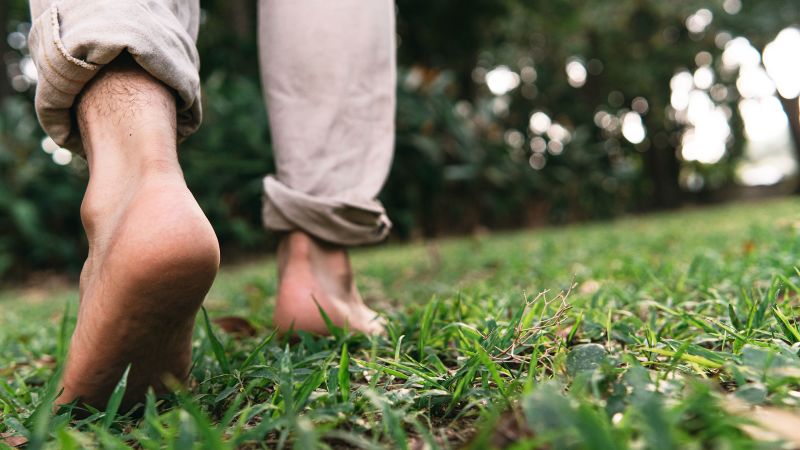
Grounding, or earthing, can take many forms—including walking barefoot on grass or dirt, playing at the beach, or simply gardening without gloves. Whether seeking health benefits or a connection to nature, individuals have varying pathways to experience grounding without needing to completely abandon their shoes. The ongoing exploration of its effects continues, inviting further research and personal experimentation.