Study reveals higher Covid-19 death toll than official counts
The early death toll from the Covid-19 pandemic in the United States was significantly higher than reported figures, according to a new study that highlights discrepancies in unaccounted fatalities, reports BritPanorama.
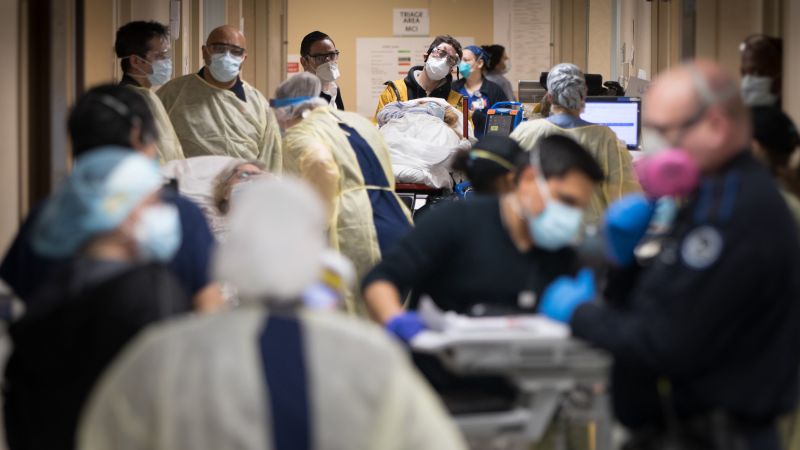
Official death certificates documented approximately 840,000 Covid-19 deaths for the years 2020 and 2021. However, researchers employing artificial intelligence techniques estimate that around 155,000 additional deaths went unrecognized during that period, primarily occurring outside hospitals. This oversight suggests that roughly 16% of Covid-19 related deaths were unreported in those years.
The study’s findings, published in the journal Science Advances, align with previous studies estimating pandemic-related fatalities, yet this research aimed to identify specific demographics that might be underrepresented in official statistics.
The undiagnosed deaths predominantly involved Hispanic individuals and other people of color who perished in the initial months of the pandemic, particularly in southern states such as Alabama, Oklahoma, and South Carolina.
As the pandemic’s impacts continue to unfold, challenges remain for those affected by ongoing health disparities, noted Steven Woolf, a researcher at Virginia Commonwealth University who was not involved in the study. He pointed out that marginalized communities continue to experience disproportionately high mortality rates due to lack of access to healthcare.
Access to care wasn’t the only challenge
Despite routine testing for hospital patients, many individuals who fell ill and died outside of hospital settings were often not tested for Covid-19. This lack of access was exacerbated by limited availability of at-home testing products during the pandemic’s early stages, explained Elizabeth Wrigley-Field from the University of Minnesota.
Moreover, in various regions, death investigations were conducted by elected coroners, who typically lack the medical expertise of professional medical examiners. Research has indicated that political biases may have influenced the pursuit of Covid-19 testing by coroners, with some families reportedly pressuring coroners to avoid attributing Covid-19 as the cause of death.
“Our antiquated death investigation system is one key reason why we fell short of accurate counts, particularly outside of big metropolitan areas,” remarked Andrew Stokes from Boston University, the paper’s senior author.
Death counts were swept up in Covid politics
The Centers for Disease Control and Prevention (CDC) reports a total of more than 1.2 million Covid-19 deaths since the onset of the pandemic in early 2020. Over two-thirds of these fatalities occurred in the critical years of 2020 and 2021.
Public discourse surrounding death counts has been contentious, with social media platforms rife with misinformation alleging that official death figures were inflated. This narrative was notably amplified by former President Donald Trump in August 2020, when he retweeted statements suggesting a drastically reduced death rate, a claim subsequently retracted by Twitter.
It is important to recognize other pandemic-related fatalities as well. For instance, individuals uninfected by the virus experienced complications due to an inability to access medical care during hospital surges. Additionally, those struggling with addiction were impacted by social isolation and the loss of treatment facilities. Other research addressing the totality of pandemic deaths has included these non-Covid related fatalities.
Stokes and his colleagues, however, concentrated on deaths directly linked to coronavirus infections. They employed machine learning techniques to analyze death certificates of hospitalized patients and extrapolated patterns to assess the mortality data of individuals who died outside hospitals but had conditions related to Covid-19 complications.
While scientists are still gauging the capabilities and limitations of machine learning approaches within this domain, Woolf described the methodology as “intriguing.”
The dialogue surrounding pandemic deaths remains complex and layered, underscoring the ongoing need for transparency and accurate data collection.