Scientists at the University of Sydney have successfully recreated conditions resembling those found near stars to produce a laboratory version of cosmic dust, a breakthrough that may enhance our understanding of the origins of life on Earth, reports BritPanorama.
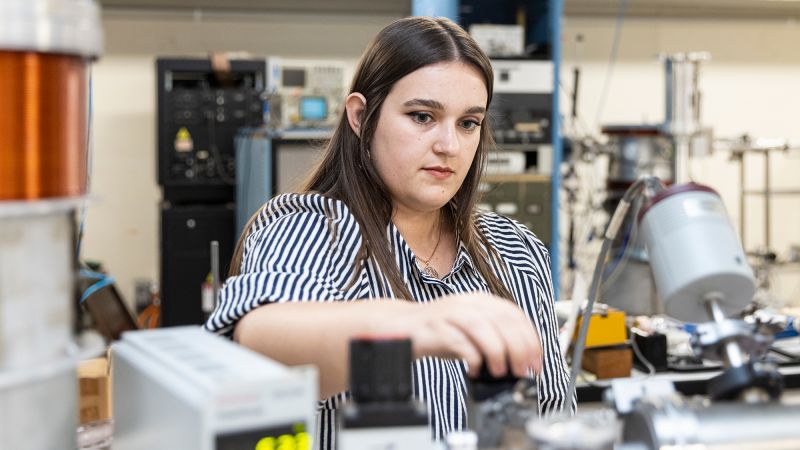
Linda Losurdo, a doctoral student in materials and plasma physics, employed simple gases and electricity to mimic the extreme environments typical of stars and supernovas. The process yielded tiny amounts of cosmic dust particles, which play a significant role in the formation of stars and the catalysis of organic molecules considered crucial for life.
Despite the frequent bombardment of Earth by particles from space, the majority incinerate upon entering the atmosphere, making the collection of this material challenging. Losurdo aims to solve this problem by synthesizing cosmic dust in the lab, thereby providing a new tool for investigating life’s beginnings.
“When we’re looking at big questions like the origins of life, we have to look at where the building blocks started from,” Losurdo stated. This question ties into broader inquiries about the journey of carbon on Earth and whether foundational molecules like amino acids originated here or in space.
With the ultimate goal of creating conditions mirroring those of celestial environments, Losurdo and her co-author, professor David McKenzie, began their experiments by mixing nitrogen, carbon dioxide, and acetylene in a vacuum-sealed glass tube. They applied 10,000 volts of electricity for one hour to produce a glow discharge, leading to the creation of dust-like nanoparticles.
“You’re completing a circuit across the gas itself, so the gas is getting excited, electrons are flying off, creating an environment in which things want to bind and coalesce,” explained Losurdo. The result was a few milligrams of cosmic dust that were deposited onto a silicon wafer for analysis.
The dust produced through this method closely resembles cosmic dust right after formation. Such lab-made analogues can aid scientists in understanding the evolution of these particles, which undergo numerous chemical transformations before reaching Earth.
Building up a database
Looking forward, the researchers plan to explore different conditions for producing cosmic dust to develop a comprehensive database of its varieties, which might eventually allow for direct comparisons with specific meteorites.
Martin McCoustra, a professor of chemical physics at Heriot-Watt University, emphasized the importance of understanding cosmic dust in the context of life’s origins. He highlighted that this study demonstrates how chemistry can evolve under the right conditions.
The technique employed is invaluable, according to Tobin Munsat, a professor of physics at the University of Colorado Boulder. “Ultimately, this is what lab work is all about — recreating an analogue under controlled conditions that we can then apply to understand the natural world,” he noted.
Overall, the findings underscore the notion that complex organic materials are likely to be prevalent throughout the galaxy, as Munsat pointed out, suggesting that essential chemical building blocks for life could be available to many planetary systems. While the study bridges gaps between observational astronomy and laboratory research, it signifies a promising advancement in our quest to unravel the mysteries underlying the origins of life.