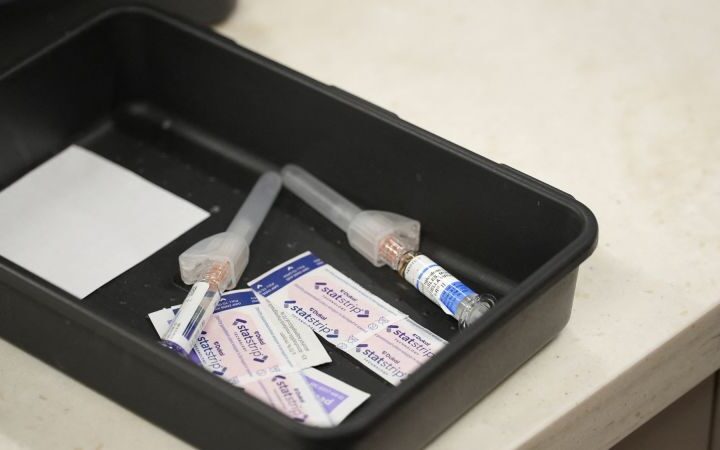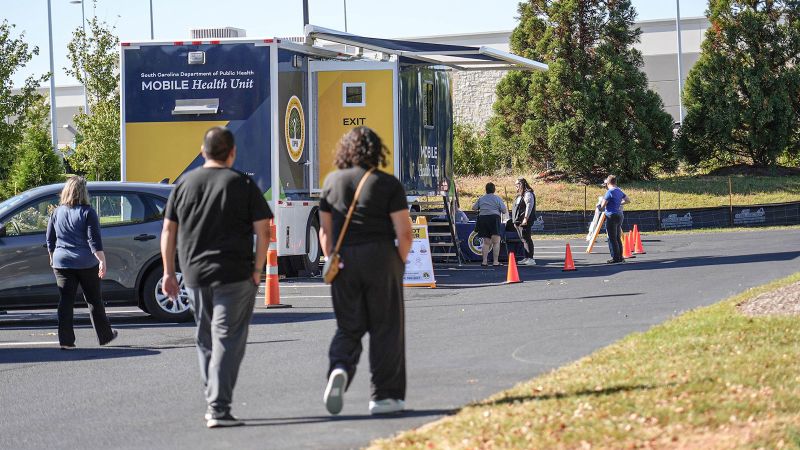
In early November, the South Carolina Department of Public Health opened a pop-up clinic offering free measles vaccines to the public in a library parking lot as the state grapples with a significant outbreak, reports BritPanorama. Spartanburg County has recorded over 50 measles cases since early October, prompting officials to encourage unvaccinated individuals to visit the clinic.
However, attendance has been disconcertingly low. On a recent Monday afternoon in Boiling Springs, only one person came to get vaccinated. Linda Bell, the state epidemiologist, acknowledged the slow progress during a press briefing, stating, “We had hoped to see a more robust uptake than that in our mobile health units.”
The outbreak in South Carolina mirrors a broader trend in the United States, where the Centers for Disease Control and Prevention (CDC) has reported more than 1,700 measles cases and 45 outbreaks this year. The largest outbreak originated in Texas, resulting in hundreds of infections and the tragic deaths of two children.
For the first time in over two decades, the United States stands at a precipice, poised to lose its measles elimination status—a designation indicating that outbreaks are rare. South Carolina’s situation, though not yet as dire as those in states like New Mexico and Arizona, reveals alarming vulnerabilities driven by low vaccination rates and rising vaccine skepticism exacerbated by misinformation during the COVID-19 pandemic.
“Everyone talks about it being the canary in the coal mine because it’s the most contagious infectious disease out there,” remarked Josh Michaud, associate director for global and public health policy at KFF, a health information nonprofit. He warned that the conditions observed now suggest we are likely to see more measles outbreaks in the near future.
Schools and ‘small brush fires’
Spartanburg County has one of the lowest vaccination rates in South Carolina, a trend established even before the pandemic, according to Chris Lombardozzi, senior vice president with the Spartanburg Regional Healthcare System. Nearly 10% of children in the county’s schools received exemptions or did not meet vaccination requirements last year.
Lombardozzi identified misinformation propagated on social media and by non-medical leaders as contributors to the low uptake of vaccinations in the area. The pandemic further amplified these fears, transforming skepticism about COVID-19 vaccines into doubts about childhood vaccinations, which had previously less contentious.
This environment has made communities like Spartanburg particularly susceptible to outbreaks of vaccine-preventable diseases. Michaud described the frequent, smaller outbreaks as “constant, small brush fires of measles outbreaks.”
In Spartanburg, the percentage of students vaccinated has dropped from 95.1% to 90% between the 2020-21 and 2024-25 academic years, according to public health officials, with a minimum of 95% required to prevent widespread infection.
While South Carolina mandates vaccinations for children in both public and private schools, the process for securing religious exemptions is relatively straightforward, requiring only notarization without a doctor’s note or specifics on the family’s beliefs. This laxity has led to a dramatic rise in such exemptions, particularly in the Upstate, where their issuance has increased sixfold over the past decade.
A public charter school, Global Academy of South Carolina, was notably affected at the outbreak’s onset, with only 17% of its 605 students able to provide vaccination documentation for the current academic year.
‘Health freedom’
In April, Health and Human Services Secretary Robert F. Kennedy Jr. emphasized the importance of the MMR vaccine while visiting the family of a measles victim in Texas. However, his prior comments casting doubt on vaccine safety have undermined such endorsements, including his previous unsubstantiated claims linking vaccines to autism.
Kennedy’s narratives have contributed to the growing idea of “health freedom” or freedom of choice regarding vaccines, a concept gaining traction among some political circles. This movement has instilled a caution among state lawmakers when addressing the current measles outbreaks or the MMR vaccine’s efficacy.
Despite public health messages urging vaccinations, the South Carolina Department of Public Health has faced criticism for not being as proactive as during the COVID-19 vaccine rollout. The contrast is stark: while COVID-19 vaccination efforts featured promotional campaigns with incentives like “Shot and a Chaser,” the response to measles has been less visible and less aggressively marketed.
As of mid-November, over 130 individuals remain in quarantine due to the outbreak, with most being students at local schools and cases tied to a church and the nearby Greenville-Spartanburg International Airport. Linda Bell cautioned that travel during the upcoming holiday season heightens exposure risks and urged people to consider vaccination.
The Department of Public Health is monitoring vaccination rates actively, with reports indicating that providers across Spartanburg administered more than twice as many measles vaccines in October compared to the same month the previous year. However, ongoing challenges remain in combatting both the outbreak and the underlying trends that have led to such vulnerabilities.