Sky-gazers prepare for planetary parade
On Saturday, six planets will align in the sky, offering a rare opportunity for sky-gazers to observe the celestial phenomenon, weather permitting, reports BritPanorama.
This planetary parade occurs due to the alignment of the planets’ orbits around the sun, according to Heidi Haviland, a planetary scientist at NASA’s Marshall Space Flight Center in Huntsville, Alabama.
Mercury, Venus, Saturn, and Jupiter will be visible to the naked eye, while Uranus and Neptune will require binoculars or a telescope. Notably, viewers can watch without needing protective eyewear, unlike with solar eclipses.
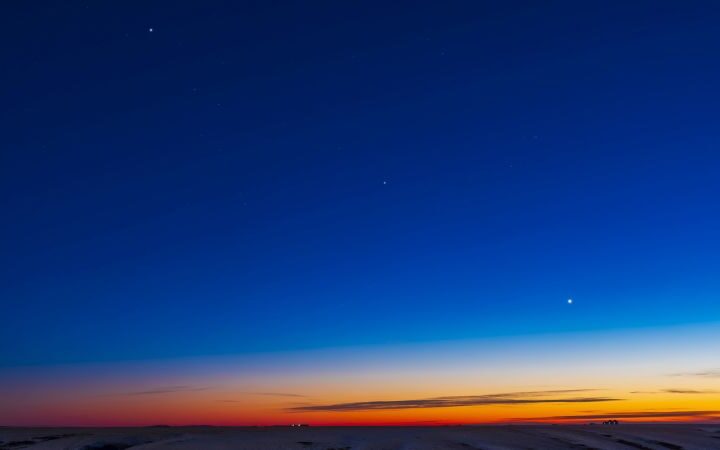
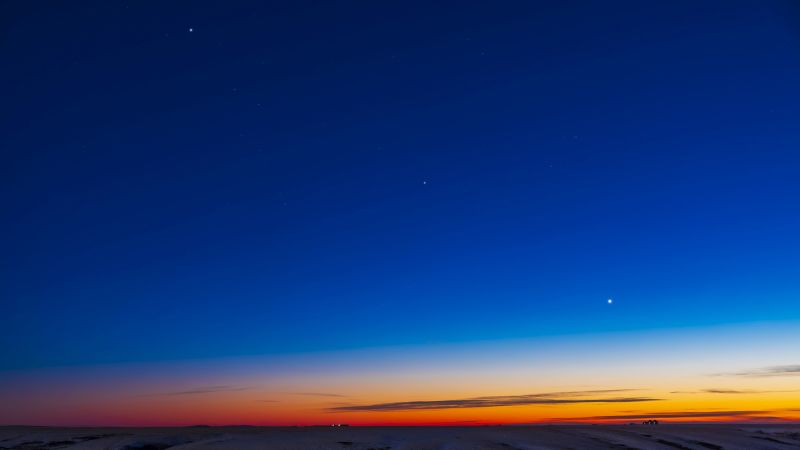
The best viewing times will vary by location, with optimal visibility at twilight. Early risers may catch the parade before sunrise, while night owls should observe right after sunset, Haviland advised.
The planets need to be at least 10 degrees above the horizon for clear visibility; otherwise, they could be obscured by Earth’s atmosphere. These precise positions are a crucial factor scientists consider when planning missions to other planets, noted Haviland.
The planetary parade serves as a reminder of the mechanics of solar system orbits. Haviland explained how such alignments influence space missions, recalling how the InSight mission to Mars required a year-long wait for an optimal alignment between Earth and Mars.
How to tell the planets apart
To help viewers identify the planets, Haviland offered some tips. Venus will likely be the first to appear, shining brightly with a steady white glow on the western horizon after sunset.
Mars will present as a red dot, while Saturn will exhibit a yellowish hue. Jupiter will be high overhead, potentially offering a distinct sight.
Mercury, the smallest planet in the solar system, will be the hardest to spot without aids, visible 30 to 60 minutes after local sunset, appearing white and low on the horizon.
For the best view of the planetary parade, it is recommended to avoid city lights and seek locations with clear skies, suggested Joel Wallace, a public information officer at the Marshall Space Flight Center.
Upcoming celestial events
In addition to the planetary parade, on Tuesday, a total lunar eclipse will be visible for those in Asia, Australia, the Pacific Islands, and the Americas. This phenomenon, known as a blood moon, will present a striking red hue and marks the last total lunar eclipse visible from North America until December 2028.
Later in the year, sky-gazers can anticipate a blue moon on May 31, which refers to the second full moon within a calendar month, despite the moon itself not appearing blue.
On June 8 and 9, Venus and Jupiter will appear close together in the sky, providing another exciting sight for observers. As the planets cycle through their orbits, these events exemplify the dynamic nature of our solar system.