Scientists create virtual replicas of diseased hearts to improve treatment
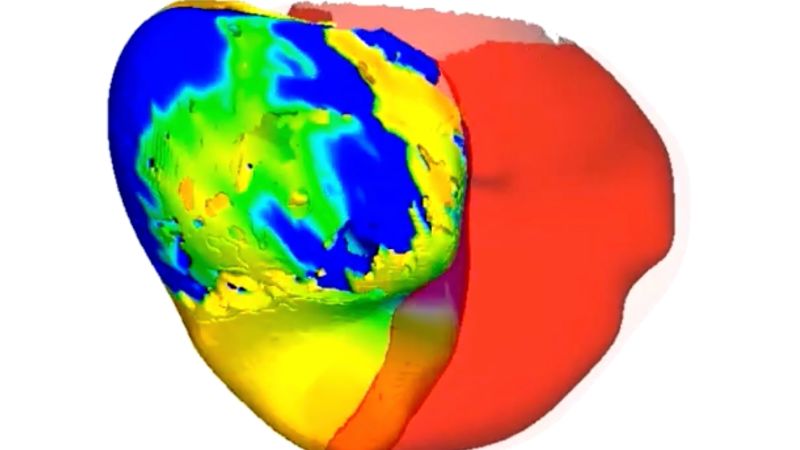
Scientists have developed highly accurate virtual replicas of patients’ diseased hearts, enabling the simulation of dangerous irregular heartbeats in these digital models and providing insights for improved real-world treatment, reports BritPanorama.
This innovative approach was highlighted in a clinical trial focused on ventricular tachycardia, a challenging arrhythmia that contributes to roughly 300,000 fatalities annually in the U.S. due to sudden cardiac arrest. The results indicate that these custom models could enhance patient management significantly.
The study, conducted by researchers at Johns Hopkins University, marks an initial step in what could be a transformative application of digital twin technology in healthcare. The U.S. Food and Drug Administration permitted the use of these models to assist in treating just ten patients, suggesting the need for expansive studies moving forward.
Revealed in the New England Journal of Medicine, the findings represent a growing trend among healthcare professionals to leverage advanced technologies, previously used in sectors like aerospace, for improved health outcomes. This trend could lead to a paradigm shift in how complex heart conditions are approached.
Dr. Jeffrey Goldberger, a cardiology expert at the University of Miami who was not involved in the study, reflected on the progress made since his earlier work with rudimentary iterations of these technologies 15 years ago. “This is what we envisioned,” he remarked.
While doctors have utilized 3D models, both physical and digital, for simulating diseases and rehearsal, Natalia Trayanova, a biomedical engineer at Johns Hopkins, emphasizes that true digital twins can forecast how a real organ will respond to various treatments. Her team has developed interactive models that incorporate advanced MRI scans and individual patient data.
“We treat the twin before we treat the patient,” Trayanova explained, questioning whether the simulated treatment works and if new complications arise that require additional intervention.
The condition of ventricular tachycardia is marked by a rapid heartbeat caused by irregular electrical disturbances in the heart’s lower chambers, leading to inadequate blood circulation. Trayanova describes the heart during these episodes as “quivering.”
Current treatments primarily involve ablation, where catheters are threaded through the body to target and destroy errant tissues, but this often involves a trial-and-error process that can leave patients vulnerable and in need of repeated interventions. Trayanova’s digital twins offer a potential solution to this uncertainty.
The technology visually depicts how the heart’s electrical impulses navigate healthy regions, illustrating obstacles in damaged areas—a process compared to a hurricane’s swirling winds. “It allows me to recreate the functioning of the patient’s organ and then predict what is the best way to ablate,” she noted.
By virtually simulating ablation procedures, physicians can determine optimal treatment paths and assess whether interventions mitigate the issue or introduce new complications. “Then we poke it again,” Trayanova said, demonstrating the iterative nature of this advanced medical technology.
Targeted treatment plans were developed for each of the trial’s ten participants, allowing cardiologists to utilize these digital maps for precise interventions. Over a year after the study, eight participants remained free of arrhythmias, while only two reported minor transient episodes during recovery. This outcome surpasses the typical success rate of around 60%, as highlighted by Dr. Jonathan Chrispin, the lead author.
Crucially, this technology not only improves effectiveness but also limits unnecessary tissue destruction by honing in on essential areas. “We could potentially make these procedures shorter, safer, and more effective,” Chrispin added.
Looking ahead, the team plans to expand their research with larger trials across different medical institutions and intends to apply their digital twin model to treat a more prevalent arrhythmia known as atrial fibrillation. Other researchers are actively investigating the applicability of digital twins in the context of cancer treatment.