Scientists have made significant progress in understanding the origins of complex life on Earth, focusing on the adaptations of ancient microbes to the presence of oxygen. This research sheds light on how simple microbes that existed billions of years ago may have evolved, a key aspect that underpins the evolution of life as we know it, reports BritPanorama.
Humans, along with all plants, fungi, and animals, are classified as eukaryotes—organisms characterized by cells with a defined DNA-containing nucleus and organelles such as mitochondria that convert nutrients into energy. This classification stems from evolutionary developments tied to significant atmospheric changes.
During the Great Oxidation Event which occurred between 2.4 billion and 2.1 billion years ago, oxygen levels in the Earth’s atmosphere markedly increased. Subsequently, identifiable traces of eukaryotes, preserved as microfossils, began to emerge, suggesting that the presence of oxygen has been crucial for the development of complex life.
Many scientists propose that eukaryotes originated from the merging of two different types of microbes. However, one type, known as Asgard archaea, has predominantly been found in oxygen-poor environments, such as hydrothermal vents, complicating this evolutionary narrative.
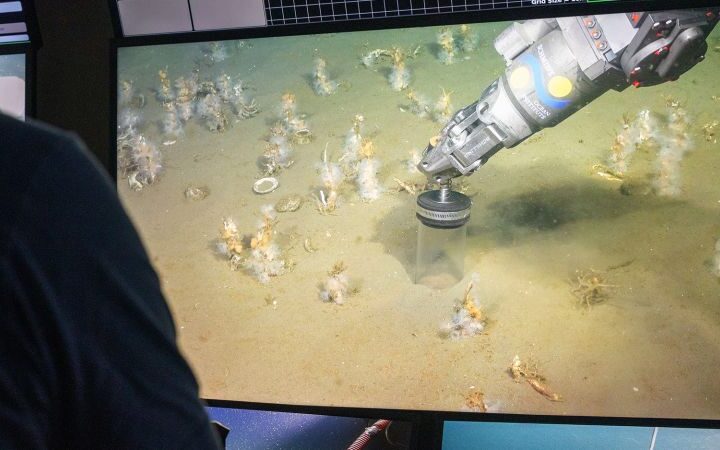
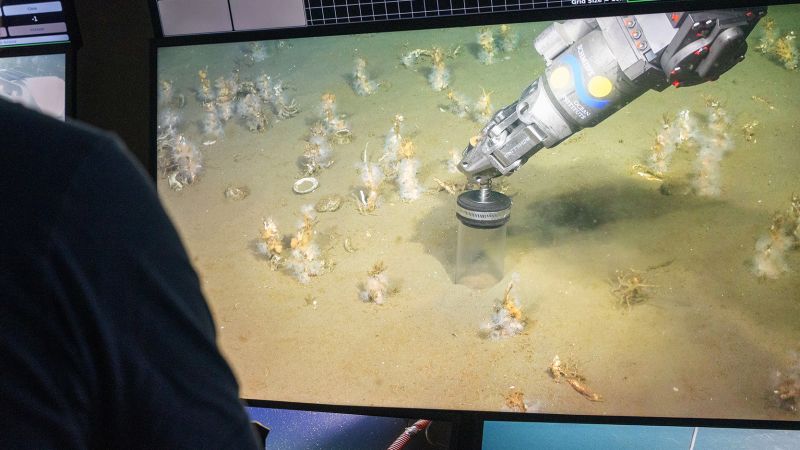
Recent research reveals new lineages of Asgard microbes in shallow coastal sediments, some of which appear to be oxygen-tolerant, contradicting earlier assumptions. A study published in February 2025 in the journal Nature indicates that these Asgards adapted to their environments by utilizing oxygen.
Brett Baker, a marine science and integrative biology associate professor at the University of Texas at Austin, stated, “The fact that some of the Asgards, which are our ancestors, were able to use oxygen fits in with this very well. Oxygen appeared in the environment, and Asgards adapted to that. They found an energetic advantage to using oxygen, and then they evolved into eukaryotes.”
The investigation into the role of Asgards is pivotal for resolving the broader mystery of how microbes transformed into eukaryotes, with potential implications for understanding human origins as well.
A microbe with mythological roots
Asgard archaea, named after the celestial abode of Norse gods, is a superphylum that evolved from a common ancestor. Within this group, a specific phylum was first discovered in 2015 near an undersea volcano named Loki’s Castle, reflecting both its appearance and its mythological connotation. This discovery was crucial in identifying the Lokiarchaeota.
Further exploration has uncovered more phyla of Asgard microbes, named after various gods from Norse mythology. These microbes show a remarkable similarity to eukaryotes, containing genes that are characteristic of more complex life forms.
According to Baker, “They were hailed as sort of the missing link in the evolution of life, from single-celled microbial life to complex life like plants and animals.”
Recent findings from Baker and his colleagues suggest that eukaryotes share a close relationship with the Heimdall group of Asgard microbes. This work supports the theory that increased oxygen levels on Earth coincided with the appearance of complex life forms.
To further investigate the metabolic processes of various Asgard microbes, extensive DNA sequencing projects have been undertaken, yielding a deeper understanding of their evolutionary relationships.
While the initial belief was that the ancient ancestor of complex life thrived in oxygen-free environments, emerging evidence indicates that Asgards might have adapted earlier to oxygen-rich settings. Their eventual interaction with bacteria could have facilitated the origins of eukaryotic cells.
The research emphasizes that transitioning to complex life may not have necessitated inventing oxygen metabolism from scratch; rather, foundational mechanisms were already in place. However, as noted by experts, there remains a significant evolutionary time gap that complicates our understanding of these ancient processes.
The findings also propose that more research is necessary to biologically validate the genetic predictions made about these ancient microbes and their potential capabilities. Moreover, as modern Asgards likely continue to adapt, understanding their role in past environmental contexts is paramount.
Baker’s team aims to make strides in observing the evolution of lab-grown Asgard microbes into eukaryotic cells, a process known as eukaryogenesis, in the coming years. This endeavor could potentially illuminate the significant transition in the evolution of life on Earth.
Asgards are humanity’s closest living relatives from an ancient event, signifying their importance in unraveling the complexities of our biological ancestry, a narrative interwoven with the development of oxygen utilization.