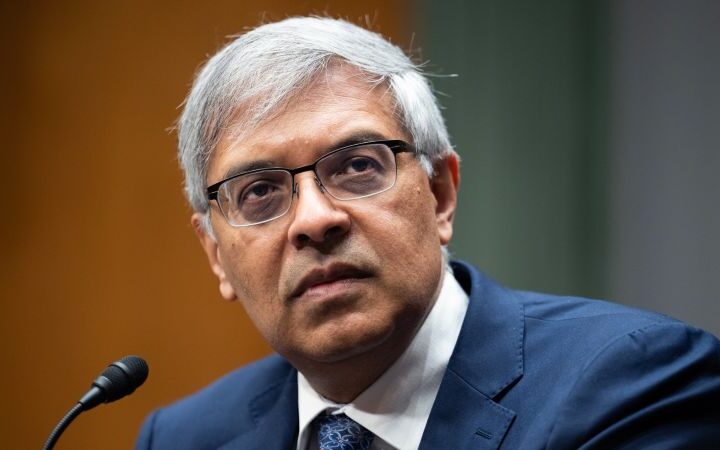
The National Institutes of Health (NIH) has experienced a significant decline in its workforce, evidenced by the resignation of prominent scientists amid ongoing policy changes that many believe hinder essential research. Marc Ernstoff, a physician known for his pioneering work in immunotherapy for cancer patients, stated that his role as a federal scientist became untenable under the Trump administration, reports BritPanorama.
Other scientists echoed similar sentiments, including Philip Stewart from Rocky Mountain Laboratories, who retired two years earlier than planned due to increasing challenges in his role focused on tick-borne diseases. Echoing this, Alexa Romberg, an addiction prevention scientist, lamented the loss of significant research when federal grants disappeared.
Romberg emphasized the critical need for continued research in tobacco prevention, highlighting it as a leading contributor to preventable mortality. “If one is thinking about the ‘Make America Healthy Again’ agenda and the prevention of chronic disease,” she remarked, “tobacco use is the No. 1 contributor to early morbidity and mortality that we can prevent.”
Historically, the NIH is recognized as the largest public funder of biomedical research worldwide, with a stated mission to “enhance health, lengthen life, and reduce illness.” Over the decades, both major parties have consistently supported funding for the NIH, which has increased to nearly $48.7 billion for the fiscal year 2026.
However, under President Trump’s administration, the NIH has faced an exodus of staff members. Approximately 4,400 people have left the agency — more than 20% of its workforce — critically undermining the U.S.’s ability to handle disease outbreaks and chronic illnesses. Sylvia Chou, who worked at the National Cancer Institute for over 15 years before leaving, warned, “People are gonna get hurt… there’s gonna be a lot more health challenges and even deaths, because we need science in order to help people get healthy.”
Why they’re leaving
A recent investigation revealed that around six scientists departed from their roles earlier than expected due to disruptions caused by the tumultuous year of 2025. Previously, the NIH workforce had steadily increased, growing from approximately 17,700 employees in fiscal year 2019 to around 21,100 in fiscal year 2024. These gains have since been reversed.
The Trump administration’s campaign against perceived disloyalty among government workers led to many resignations. The NIH’s workforce now stands at about 17,100 people, marking its lowest level in over two decades. According to federal data, most departures were not due to firings, as roughly 80% either retired, quit, or transferred to different roles.
As Chou pointed out, the “fundamental destruction” of the NIH undercuts its foundational mission. She claimed ongoing health challenges, stemming from weakened research capabilities, could have dire consequences for public health.
Additionally, staff reported severe restrictions on communication and action. Heightened constraints were imposed on presenting research to the public, particularly on issues deemed politically sensitive, such as health equity. Many initiatives aimed at advancing minority health and aiding early-career scientists have been curtailed under the current administration.
A ‘fundamental destruction’
Health and Human Services spokesperson Emily Hilliard asserted that the agency has pivoted toward evidence-based research, distancing itself from previous ideological concerns. Hilliard’s statement claimed the NIH is still actively recruiting top talent and is committed to high-quality scientific advancements, asserting efforts to streamline operations and reduce redundancies.
However, skepticism remains among many scientists regarding the NIH’s capacity to fulfill its public mission. Researchers, such as Daniel Dulebohn, who spent nearly two decades at Rocky Mountain Laboratories, expressed doubts about rebuilding the agency after its current turmoil.
Dulebohn highlighted the potential impact of the ongoing brain drain from NIH, considering that many of those who departed played crucial roles in combating infectious diseases and such removals could stymie future breakthroughs in healthcare.
Troyer, a former lead at the National Human Genome Research Institute, lamented the extreme harm to the NIH caused by the significant staffing losses, leading to delays in managing critical health research. She resigned soon after Trump issued an executive order that limited grant funding for projects perceived to undermine American values.
‘Enough is enough’
As reactions to the NIH’s challenges continue, many researchers are looking abroad for career opportunities. The uncertainty surrounding funding has complicated hiring efforts domestically, threatening the United States’ longstanding leadership in biomedical research. The implications of this shift could resonate globally, as scientists warn of potential losses in innovation and effective treatments.
Experts indicate that halted research may not easily be resumed elsewhere, raising concerns about the long-term effects on public health outcomes. This transition could hinder future access to research necessary for understanding and treating diseases, posing risks to both American health and scientific advancement.
The story surrounding these developments underscores the fragile state of national health research, with many believing it reflects broader trends in science and government under the current political climate. The continued fallout raises critical questions about the future of federal scientific research and its vital role in public health.