Earth’s core may contain vast amounts of hydrogen, scientists report
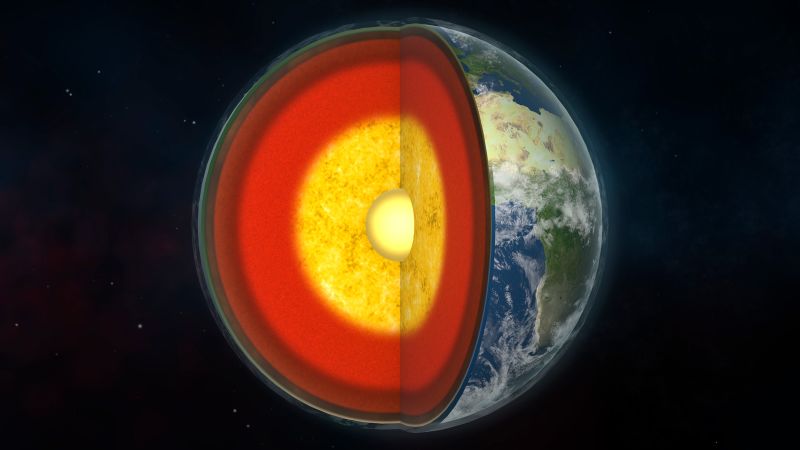
Recent research suggests that hydrogen may constitute a significant portion of Earth’s core, potentially amounting to as much as nine times the mass of all the oceans combined, reports BritPanorama.
The study estimates that hydrogen could make up about 0.36% to 0.7% of the core’s total weight, indicating that the planet acquired most of its water during its formation, rather than from external sources like comet impacts, according to lead author Dongyang Huang from Peking University. Previous theories suggested that such proportions might originate from water delivered via comets after Earth had formed.
“Earth’s core would store most of the water in the first million years of Earth’s history,” Huang stated, adding that the mantle and crust would follow in water abundance, with the surface containing the least. This finding sheds light on the processes that contributed to Earth’s hydrological makeup.
The implications of this research extend to understanding planetary formation and the conditions necessary for life. Scientists assert that hydrogen’s presence in the core might have played a role in forming Earth’s magnetic field, vital for creating a habitable environment.
To estimate hydrogen levels, researchers utilized advanced techniques involving high-pressure simulations and atomic-level observations. While the findings provide a new direction in understanding the composition of Earth’s core, experts caution that further research is necessary to refine these estimates and address inherent uncertainties in measuring core elements. “The amount of core hydrogen could be much higher than the new estimate suggests,” noted Kei Hirose from the University of Tokyo.
The study not only adds to the narrative of Earth’s early history but also emphasizes the importance of hydrogen as an essential element for life, along with other vital elements like carbon and nitrogen. As ongoing research continues to unravel the mysteries of planetary formation, understanding the role of hydrogen remains crucial.
This evolving field of study may inform future discussions on Earth’s developmental processes, further bridging gaps in scientific knowledge regarding our planet’s essential characteristics.