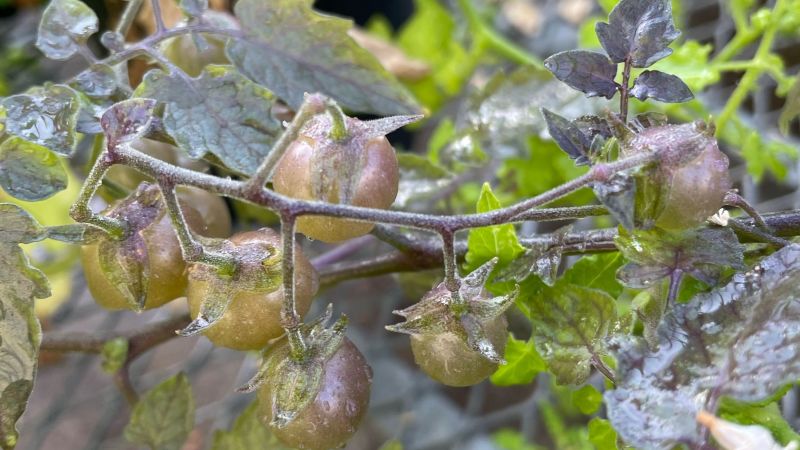
Wild tomatoes exhibit signs of reverse evolution in the Galápagos
Researchers have discovered that a wild-growing tomato species in the Galápagos Islands appears to exhibit characteristics of “reverse evolution.” The species, Solanum pennellii, was found to produce compounds not seen in tomatoes for millions of years, according to a study released in June in Nature Communications, reports BritPanorama.
The study began in 2024, focusing on alkaloids—natural compounds that act as pesticides. During their investigation, scientists noted that tomatoes from the younger western islands produced unexpected alkaloid compounds. These contrasts were stark when compared to samples from the older eastern islands, which had more modern defensive traits.
Adam Jozwiak, a molecular biochemist involved in the research, observed that the tomatoes from the younger islands did not lag in evolutionary terms but showcased a potential reversion to ancestral traits. “It’s not very common to see reverse evolution,” Jozwiak stated, revealing how environmental pressures may have prompted this regression to earlier states, a finding that challenges conventional understanding of evolutionary progress.
The morphological differences included darker vines and a purplish fruit color, yet even more notable were the molecular distinctions. The younger tomatoes mirrored some traits typically associated with eggplants, another member of the nightshade family, which modern tomatoes do not share. This suggests a re-emergence of ancestral genes, previously lost to evolution.
“We think that maybe environmental conditions put the pressure on these tomatoes to revert back to original or to ancestral state,” Jozwiak added, indicating that such findings enhance understanding of evolution itself. By examining these unique molecular characteristics, researchers may be able to inform agricultural practices, developing better crops and pest management strategies while potentially uncovering broader principles of evolution across species.
Understanding the environmental impact on plant evolution
The origin of Solanum pennellii traces back to South America, where it likely reached the Galápagos via birds transporting seeds. Jozwiak estimates that the evolutionary changes occurred within the last half million years after the younger islands formed through volcanic activity. The environment on the older islands is relatively stable and diverse compared to the harsher, nutrient-poor conditions on the younger islands.
These ancient genetic traits not only provide the plants with defenses against pests but might also enhance nutrient absorption and disease resistance. The researchers detected a simple alteration in the amino acid makeup as the mechanism behind the reversion. By genetically modifying tobacco plants in the same way, they confirmed the functionality of these ancestral compounds.
While studies into S. pennellii shed light on evolutionary flexibility, Jozwiak acknowledges further investigations are necessary to understand the full benefits of these transformations and the reasons behind them. “Evolution was always kind of forced by environmental conditions, by competition,” he noted, emphasizing the intricacies of how traits may adapt or revert in changing environments.
This research not only contributes invaluable insights into plant evolution but also resonates with discussions around human evolutionary potential, raising questions about whether similar ancestral traits might be reinstated over time.
As scientists continue to explore these dynamics, understanding the complexities of evolution amidst environmental pressures remains an ongoing quest, revealing the intricate tapestry of life’s adaptations and the constant interplay between species and their habitats.