Scientist Veerabhadran Ramanathan has been awarded the prestigious Crafoord Prize by the Royal Swedish Academy of Sciences, recognizing his pivotal contributions to climate science, reports BritPanorama.
Ramanathan, now a distinguished research professor at the Scripps Institution of Oceanography at UC San Diego, is celebrated for expanding the scientific understanding of how various greenhouse gases impact global warming. In a notable statement, Ilona Riipinen, a professor of atmospheric sciences at Stockholm University and a committee member for the prize, emphasized, “He has expanded our view of how humankind is affecting the atmosphere’s composition, the climate and air quality and how these three interact.” The award is valued at 8 million Swedish krona (approximately $900,000).
Ramanathan’s initial breakthrough in climate science occurred in the 1970s during his time as a postdoctoral fellow when he discovered that chlorofluorocarbons (CFCs) had a significant greenhouse effect, much more potent than that of carbon dioxide. His findings, published in *Science* and featured on the front page of *The New York Times* in 1975, outlined how CFCs, widely used in refrigeration and aerosols, could lead to greater warming effects. “I was just a postdoc immigrant from India. I didn’t know if I should tell NASA about this or not. I just sent the paper off,” Ramanathan recalled. His work laid the foundation for subsequently recognizing the role of other greenhouse gases in contributing to climate change.
Ramanathan studied engineering in Bengaluru before moving to the United States for a doctoral degree. His early work focused on the atmospheric influences of trace gases, including methane and nitrous oxide. This exploration led to significant revelations about the accelerated pace of global warming, against prevailing scientific beliefs at the time. A collaborative paper he co-authored in 1985 asserted that these trace gases were just as critical as CO2 for long-term warming, shifting perceptions within the climate science community.
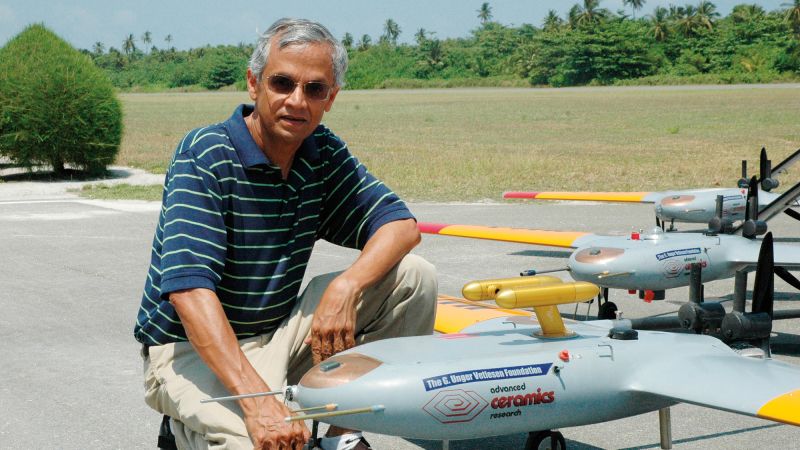
His advocacy contributed to the adoption of the 1987 Montreal Protocol, which banned CFCs due to their health impacts and role in ozone depletion. Studies estimate that without these restrictions, global temperatures could have risen significantly, underscoring his influence on climate policy. Over his distinguished career, Ramanathan has utilized various technologies, including satellites and drones, to further investigate the complexities of the Earth’s atmosphere, providing empirical evidence consistent with climate models.
Ramanathan has also served as a council member of the Pontifical Academy of Sciences, advising three popes on climate policy, a role that prompted him to consider the ethical dimensions of climate change. His approach has resonated with both researchers and decision-makers, as illustrated by Örjan Gustafsson from Stockholm University, who noted, “His quiet but effective way of communication has been key to involving both the research community and decision makers.” Encouraging younger generations, Ramanathan advocates for evidence-based science and active engagement in politics to address the climate crisis.
Now 81, he drives a Tesla but humorously cherishes a Chevrolet Impala model on his mantelpiece, symbolizing both his journey and his commitment to sustainable practices. The legacy of his work endures, reflecting his central role in the ongoing conversation about climate change and the necessity of informed action.